Best Shopify Conversion Apps (2026)
Last updated: April 2026 · Pricing verified April 22, 2026 · Reviewed by the Libautech team, builders of Sticky Add to Cart, Announcement Bar, Bundles & Upsell, and 6 other Shopify apps used by 5,000+ merchants across 50+ countries.
Key Takeaways
- The average Shopify store converts at 1.5-2.5% — moving that number to 3-4% through the right app stack typically doubles revenue without spending more on traffic. Conversion optimization is the highest-leverage growth move available to Shopify merchants in 2026.
- Conversion optimization breaks into four jobs — friction reduction at add-to-cart, urgency and free-shipping incentives, AOV mechanics (upsells and bundles), and social proof with lead capture. The best conversion stacks combine apps across multiple jobs rather than picking one "conversion app."
- Mobile conversion rates typically lag desktop by 50% (1.8% vs 3.9%) — sticky add-to-cart buttons and optimized cart drawers close most of that gap by making purchase actions always visible on small screens.
- A one-second delay in UI response can drop conversion rates by 7% — speed matters more than features when stacking conversion apps. Pick Built for Shopify apps that load widgets asynchronously rather than free apps that add synchronous scripts.
- For most Shopify stores doing $10K-100K/month, the highest-ROI stack runs under $50/mo total: Libautech Announcement Bar or Sticky ATC for friction and urgency ($6.99/mo), a bundle/upsell app for AOV, ReConvert for post-purchase thank-you page offers, and Judge.me or Loox for reviews. That combination typically lifts conversion 30-60% and AOV 15-30% within 60 days.
- The fastest wins are rarely the most talked-about apps — sticky add-to-cart buttons and free-shipping progress bars routinely outperform flashier AI-personalization tools at a fraction of the cost. Start with mechanical friction-reduction basics before investing in advanced AI optimization.
The Four Jobs of Shopify Conversion Optimization Apps
Most "best Shopify conversion apps" lists rank 20 tools by review count and call it a day. That framing misses how conversion actually works. A sticky add-to-cart button, a review widget, a popup, and a post-purchase upsell flow solve completely different problems — and a store running all four typically outperforms a store running one "all-in-one" conversion platform at 3x the price. Conversion optimization breaks into four distinct jobs, and the right stack combines apps across all four rather than over-indexing on any single category.
The first job is friction reduction at add-to-cart. Every click between a visitor seeing a product and completing checkout is an abandonment opportunity. Sticky add-to-cart buttons that stay visible as customers scroll, cart drawers that let shoppers review and update carts without navigating away, and one-click checkout flows all remove clicks. On mobile specifically, sticky ATC closes most of the 50% conversion gap between mobile (typically 1.8%) and desktop (typically 3.9%) — the difference is that on small screens, the "Buy Now" button is often below the fold by the time the customer decides to purchase.
The second job is urgency and free shipping incentives. Announcement bars, countdown timers, and free-shipping progress bars tell customers exactly what action triggers a reward. "Add $23 more for free shipping" is a specific, achievable prompt that lifts cart values 15-30% in categories with free-shipping thresholds. Urgency-based announcement bars — "Sale ends tonight," "Only 3 left in stock" — convert hesitating shoppers into buyers by creating a specific decision deadline. Used honestly (real deadlines, real stock levels), these mechanics work; used dishonestly with fake timers that reset, they hurt brand trust and repeat-purchase rates.
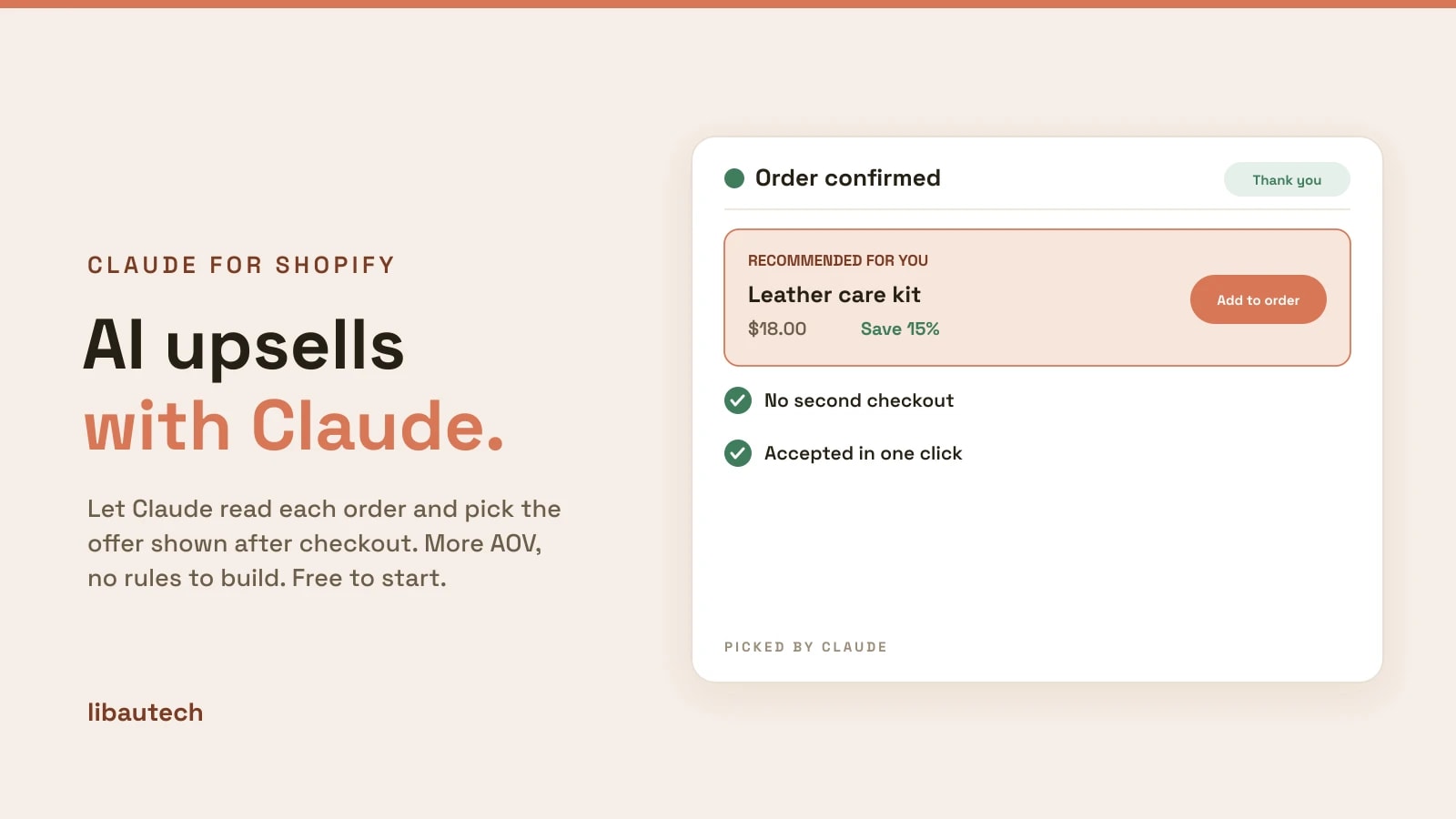
The third job is AOV mechanics (upsells and bundles). Once a customer has decided to buy, the math shifts from conversion optimization to value-per-customer optimization. Upsells on the product page ("Customers also bought X"), bundles at the cart ("Complete the set for 15% off"), and post-purchase upsells on the thank-you page ("Add this to your order in one click") each target different decision moments. Post-purchase upsells typically convert at 10-15% because the payment friction has already been removed — the customer has given you their card, and a one-click add is genuinely frictionless. Pre-purchase upsells convert at 3-8% but lift AOV on every order rather than only on upsell-accepting orders.
The fourth job is social proof and lead capture. Product reviews, photo/video reviews, trust badges, and exit-intent popups all address the same fundamental question — does a hesitating visitor have the confidence to buy now or the incentive to come back later? Reviews answer the "should I trust this?" question; popups capture email addresses for future recovery; exit-intent offers give departing visitors a last-chance reason to stay. A well-configured review widget on product pages typically lifts conversion 10-20% in categories where reviews matter most (apparel, beauty, supplements, home goods).
This post ranks 8 apps across all four jobs with verified April 2026 ratings and pricing, and explains which combinations make sense for different store profiles.
Conversion optimization stacks with other growth tools. See our guides on best Shopify abandoned cart recovery apps for the email/SMS/push recovery layer that catches the abandonments conversion apps do not prevent, best Shopify popup apps for the lead capture specialists covering the fourth job in detail, and best Shopify countdown timer apps for the urgency mechanics that pair with announcement bars.
Quick Comparison: 8 Best Shopify Conversion Apps (2026)
| App | Rating | Free Plan | Paid From | Job | Best For |
|---|---|---|---|---|---|
| Libautech Sticky Add to Cart | ⭐ 5.0 (9) | — | $6.99/mo | Friction reduction | Mobile conversion lift via sticky ATC button |
| Libautech Announcement Bar | ⭐ 4.8 (26) | Yes | $6.99/mo | Urgency + free shipping | Announcements, countdowns, free-shipping progress bars |
| Libautech Bundles & Upsell | ⭐ 5.0 (39) | — | $14.99/mo | AOV mechanics | Product-page upsells, bundles, FBT, cart add-ons |
| ReConvert | ⭐ 4.9 (5,093+) | Yes | $14.99/mo | AOV (post-purchase) | Thank-you page upsells, one-click post-purchase offers |
| Loox | ⭐ 4.9 (21,896) | 14-day trial | ~$10/mo | Social proof | Photo/video reviews, visual brands (fashion/beauty) |
| Judge.me | ⭐ 5.0 (40K+) | Yes (Forever) | $15/mo | Social proof | Free reviews with Google rich snippets, SEO lift |
| Privy | ⭐ 4.6+ | Yes | $24/mo | Lead capture | Popups, exit-intent, email/SMS capture, spin wheels |
| Frequently Bought Together | ⭐ 4.9+ | Free tier | $9.99/mo | AOV mechanics | Amazon-style FBT bundles, quick setup |
Job 1: Friction Reduction at Add-to-Cart
1. Libautech Sticky Add to Cart
Best for: Shopify stores serious about mobile conversion who want a sticky add-to-cart button that stays visible as customers scroll, closing the mobile-desktop conversion gap without heavy cart drawer complexity.
Libautech Sticky Add to Cart holds 5.0 stars across 9 reviews with Built for Shopify certification. The app does one job well: keep the "Add to Cart" or "Buy Now" button visible as customers scroll through product pages on both desktop and mobile. On mobile specifically, where 60%+ of ecommerce traffic now lands and conversion rates typically lag desktop by 50%, having a persistently visible purchase button is genuinely one of the highest-leverage conversion fixes available.
The logic is mechanical rather than clever. A customer reads product copy, scrolls through images, checks the size chart, reads reviews — and at some point during that scroll, decides to buy. If the Add to Cart button is above the fold and the customer has scrolled two screens down, they now have to scroll back up to complete the action. Some do; many abandon. A sticky button eliminates the scroll-back friction entirely. Merchants testing sticky ATC typically see 5-15% mobile conversion lift within the first week, with the gain concentrated on product pages with long-form content.
Core features: sticky ATC button on desktop and mobile with independent styling for each, customizable button text ("Add to Cart," "Buy Now," "Get It Now"), scroll-trigger thresholds (only show after customer scrolls past the original button), full color and typography control to match brand, and Built for Shopify certification meaning async loading with no Core Web Vitals impact.
Where it falls short: single-purpose focus means stores wanting full cart drawer functionality (slide-out cart, in-cart upsells, cart-level shipping progress bars) need additional apps. Small review base (9) reflects that the app is newer than established alternatives, though the Libautech team's 9-app portfolio with 5,000+ merchants provides external validation. Pro tier only — no free plan, which is fair at $6.99/mo but puts off stores validating sticky ATC for the first time before committing any budget.
Pricing: Pro $6.99/mo. Package plan $14.99/mo (includes all Libautech Premium apps: Announcement Bar, Bundles & Upsell, Sticky ATC, Currency Converter, Shoppable Videos UGC, Amazon Buy Button). 7-day free trial.
Job 2: Urgency and Free Shipping Incentives
2. Libautech Announcement Bar
Best for: Shopify stores wanting a single app that handles announcement bars, countdown timers, free-shipping progress bars, and rotating promotional messages — the full urgency stack without installing multiple specialized apps.
Libautech Announcement Bar holds 4.8 stars across 26 reviews with Built for Shopify certification, and handles six distinct bar types in one app: announcement bars, free-shipping progress bars (both progressive and static), countdown timers, cart-progress bars, rotating bars, and scrollable bars. Most stores that install dedicated apps for each of these bar types eventually consolidate to a single app — conflicts between overlapping scripts create layout bugs, and six apps cost meaningfully more than one.
The free-shipping progress bar is the feature that most directly lifts AOV. "Add $23 more for free shipping" sitting at the top of every page (with the amount updating automatically as the customer adds items) turns free-shipping thresholds into a visible goal. Categories with typical free-shipping thresholds of $50-75 see 15-30% AOV lifts from progress bars alone because hesitating cart-value decisions get resolved in favor of "one more item."
Countdown timers work for genuine time-bounded offers (flash sales, end-of-month promotions, holiday cutoffs) but damage trust when used dishonestly. Merchants running permanent "sale ends tonight" timers that reset every night get shortest-term conversion lifts followed by longer-term repeat-purchase collapse as customers notice the pattern. Use real deadlines for real offers.
Core features: six bar types with independent scheduling, fully customizable layout with rich text editor, unlimited active bars on paid tiers, page and device targeting (show specific bars only on product pages on mobile), performance tracking by bar, geo/product targeting (Pro), estimated delivery date display, bar scheduling for time-bounded campaigns, auto currency conversion for international stores, premium support on paid tiers.
Where it falls short: free plan limits are tight for stores needing multiple simultaneous bars — Pro tier unlocks unlimited bars plus advanced targeting. Smaller review base (26) than dedicated popup specialists like Privy, though all 26 reviews at 4.8 stars reflect strong satisfaction within the merchant base. Not a popup/exit-intent specialist; for lead capture workflows, use Privy as a companion.
Pricing: Free plan available. Pro $6.99/mo. Package plan $14.99/mo (includes all Libautech Premium apps). 7-day free trial on paid tiers.
Job 3: AOV Mechanics (Upsells and Bundles)
3. Libautech Bundles & Upsell
Best for: Shopify stores wanting comprehensive AOV mechanics — product-page upsells, frequently-bought-together bundles, cart add-ons, and cross-sell campaigns — in a single app with flat-rate pricing that does not scale with revenue.
Libautech Bundles & Upsell holds 5.0 stars across 39 reviews with Built for Shopify certification. The app covers five distinct upsell placements: product-page add-ons (suggest a laptop bag when customer views a laptop), frequently-bought-together bundles (Amazon-style product pairing with discount), cart upsells (offer complementary product when customer reviews cart), post-purchase one-click upsells (thank-you page add-ons that do not require re-entering payment), and Shopify Plus checkout add-ons (upsells inside the native checkout flow).
The pricing is the strategic differentiator. Most upsell apps scale cost with revenue — commissions on upsell sales, per-order fees, or tiered subscriptions that increase as order volume grows. Libautech Bundles & Upsell uses tiered pricing billed on the extra revenue the app generates, capped at $49.99 a month, not a percentage of your sales. For high-volume stores, this changes the math dramatically — at 20% AOV lift on $500K monthly revenue, even a 3% upsell commission costs $3,000/mo while flat-rate pricing at $9.99-49.99/mo captures the same functionality at a fraction of that.
Core features: product-page upsell widget with customizable placement, frequently-bought-together bundles with automatic discount sync, cart upsells triggered by cart contents, post-purchase upsells on the thank-you page with one-click acceptance, Shopify Plus checkout extensions, supports both percentage and flat-dollar discounts on upsell products, no revenue cap, and 7-day free trial on all tiers.
Where it falls short: smaller review base (36) than category leaders like ReConvert (5,093+) or Bold Upsell — the Libautech Built for Shopify badge and 5,000+ merchant portfolio across 9 apps provide validation, but new merchants comparing review counts will see the gap. Post-purchase thank-you page editor is less visually polished than ReConvert's purpose-built thank-you page drag-and-drop editor; stores where thank-you page customization is the primary use case may prefer ReConvert for that specific job. No free plan — $14.99/mo Starter is the entry tier.
Pricing: Starter $14.99/mo. Pro $29.99/mo. Unlimited $49.99/mo. Flat-rate, no revenue cap. 7-day free trial.
4. ReConvert
Best for: Shopify stores that want a post-purchase thank-you page specialist — one-click upsells on the order confirmation page, drag-and-drop thank-you page editor, and A/B testing for post-purchase offers.
ReConvert holds 4.9 stars across 5,093+ reviews on the Shopify App Store — one of the highest-reviewed upsell apps in the entire category. The app's positioning is narrow and deep: the post-purchase thank-you page is where 10-15% AOV lifts happen because the payment friction has already been removed, and ReConvert builds everything around that single moment.
Core features: drag-and-drop thank-you page editor (replace Shopify's default thank-you page with a fully branded, conversion-optimized version), one-click post-purchase upsells (customer clicks "Add to my order" and the item is added without re-entering payment details), multi-step upsell funnels (offer A → if accepted offer B, if declined offer C), Selleasy-style segmentation to trigger different offers based on cart contents, A/B testing for offers and copy, birthday collection and post-purchase surveys (useful for later segmentation and retention emails), and checkout extension blocks for Shopify Plus stores.
The 15% AOV lift claim (prominent in ReConvert marketing) is well-supported by merchant reviews — the pattern in the 5,093+ reviews is consistent mention of 10-25% AOV gains within the first month. For stores where the primary upsell moment is the thank-you page rather than the product page or cart, ReConvert's specialization genuinely matters.
Where it falls short: pricing scales with order volume — entry tier at $14.99/mo covers up to 199 orders; past that, tiers step up meaningfully with an additional 0.75% fee on incremental revenue on some plans. Custom products are not always supported. Navigation can be unintuitive for non-technical merchants configuring complex funnels. Some merchant reviews flag slow post-purchase page load times when offer images are heavy. ReConvert's recent rebrand-and-restructure has drawn mixed support feedback in 2025-2026.
Pricing: Free plan for development stores. Upsell Premium Pro $14.99/mo (up to 199 orders). Higher tiers scale with volume plus 0.75% revenue fee on some plans.
5. Frequently Bought Together
Best for: Shopify stores that want Amazon-style product pairing on product pages without configuring complex upsell logic — drop in the widget, let the algorithm suggest pairings, ship bundles at discount.
Frequently Bought Together holds a 4.9-star rating and is one of the longest-established upsell apps on Shopify. The positioning is intentionally narrow: recreate the Amazon "Frequently bought together" widget on Shopify product pages, with automatic product pairing driven by purchase-history algorithms. Drop the widget on the product page, let the app learn which products customers buy together, and display bundles with automatic discount offers.
For stores where complex upsell logic is overkill — mid-catalog merchants with 50-500 products who want automatic pairing rather than manual configuration — FBT delivers the 80% of upsell value with 20% of the setup effort. Merchants with simple catalogs report 5-15% AOV lifts within the first month simply from enabling the widget.
Core features: automatic product pairing using purchase-history algorithms, manual override to curate specific pairings on high-margin products, percentage or flat-dollar discount on accepted bundles, customizable widget styling to match store theme, works on product pages out of the box, and Shopify-native integration with minimal setup.
Where it falls short: single-placement focus (product page only) means merchants wanting cart upsells, post-purchase offers, or checkout extensions need additional apps. The algorithm works best with 500+ completed orders of pairing data — new stores see weaker recommendations until purchase history builds. Less granular control over specific bundle logic than Libautech Bundles & Upsell or Bold Upsell. Pricing scales with catalog size on some tiers.
Pricing: Free tier available. Paid plans from approximately $9.99/mo.
Job 4: Social Proof and Lead Capture
6. Loox — Product Reviews
Best for: visual-heavy Shopify brands (fashion, beauty, home decor) that want Instagram-style photo and video reviews on product pages to build trust and lift conversion through authentic customer content.
Loox holds 4.9 stars across 21,896 reviews on the Shopify App Store — one of the largest review bases of any app in the entire ecosystem, reflecting how widely deployed photo/video reviews are across Shopify. The positioning is visual: Loox collects and displays product reviews with customer-submitted photos and videos, turning review sections into authentic UGC showcases. For categories where customers want to see products on real bodies, in real homes, or in real use cases, visual reviews convert meaningfully better than text-only reviews.
The core mechanic is simple: automated post-purchase review requests prompt customers to submit photos or videos along with star ratings, Loox displays the content on product pages with customizable gallery layouts, and discount incentives ("Leave a photo review, get 10% off your next order") drive higher review submission rates than plain text requests. Merchants typically see 5-15% conversion lift on product pages with 20+ photo reviews versus the same pages with no reviews.
Core features: automated review request emails with customizable timing, photo/video review collection with discount incentives, grid and carousel display widgets, review import from AliExpress/Amazon (for dropshippers migrating or launching), Google Shopping review integration for rich snippets in search results, email/SMS campaigns tied to review engagement, and Klaviyo/ReConvert integrations for coordinated post-purchase flows.
Where it falls short: the distinctive Loox widget styling is recognizable across Shopify stores, which weakens brand differentiation for merchants who value visual uniqueness. 14-day free trial only — no permanent free plan, unlike Judge.me. Paid tiers scale with order volume and feature set; mid-tier plans run $30-100/mo for stores doing moderate volume. Review request deliverability can suffer if not paired with a proper email marketing platform (Klaviyo, Omnisend).
Pricing: 14-day free trial. Paid plans from approximately $10/mo for basic functionality, scaling based on monthly order volume.
7. Judge.me
Best for: Shopify stores that want a genuinely free review app with Google rich-snippets SEO benefits — the highest-ROI review tool in the Shopify ecosystem because the free plan is fully functional.
Judge.me is the free-tier review app of choice on Shopify, with 40,000+ reviews on the Shopify App Store and consistent 5.0-star ratings. The positioning is genuinely unusual for a category leader: the Forever Free plan includes unlimited review requests, photo reviews, product review display widgets, Google Shopping integration for rich snippets, Google search rich snippets (the star ratings that appear under search results), and a reasonable baseline of review collection automation. For most stores, the free tier covers every feature they actually need.
The Google rich-snippets integration is the underrated strategic value. When Judge.me pushes your product reviews to Google's structured-data feed, product pages start displaying star ratings directly in Google search results. Merchants report 20-35% click-through-rate lifts from Google search after enabling rich snippets, because the yellow stars in the SERP meaningfully increase visual prominence against competitor listings. This is organic SEO value that compounds over time without ongoing spend.
Core features: Forever Free plan covers unlimited review requests, photo reviews, all major display widgets, Google Shopping integration, SEO rich snippets, and unlimited products; paid tiers ($15/mo Awesome plan) unlock video reviews, review Q&A, custom email branding, and advanced analytics. Fast loading (genuinely light scripts, no Core Web Vitals impact). Multi-language support for international stores. Bulk review import from other platforms for migration.
Where it falls short: the default styling is less visually polished than Loox's Instagram-inspired design — stores in fashion/beauty categories where visual presentation matters may prefer Loox despite the price gap. Video reviews locked to paid tier. Advanced analytics locked to paid tier. Smaller percentage of reviews include photos/videos than Loox's incentive-driven system without paid-tier upgrade. Support response times can be slower than paid-tier specialists during peak periods.
Pricing: Forever Free plan covers most functionality. Awesome plan $15/mo for video reviews, Q&A, custom email branding.
8. Privy — Popups, Email & SMS
Best for: Shopify stores that want a single app covering exit-intent popups, email/SMS capture, and spin-wheel gamification — the lead capture specialist that pairs with announcement bars and cart recovery email platforms.
Privy (owned by Attentive as of 2024) is the established popup and lead capture specialist on Shopify, covering exit-intent popups, email capture forms, SMS opt-in, spin-to-win gamified popups, and cart abandonment emails in one platform. The positioning targets small-to-mid Shopify stores that want simple conversion-mechanic tools without the complexity of Klaviyo or Omnisend.
The spin-wheel popup is the feature most merchants underrate. Gamified email capture ("Spin to win 5-20% off") typically converts at 10-15% versus 2-3% for standard email capture forms because visitors feel invested in the outcome before they even enter their email. Once they land on a discount code through the spin, they are significantly more likely to use it immediately than visitors who simply received a 10% off coupon in an email.
Core features: exit-intent popups triggered when mouse moves toward close button, spin-to-win gamified email capture, email and SMS opt-in forms with customizable designs, abandoned cart email automation (lower-tier alternative to Klaviyo), free-shipping progress bar, onsite announcement banners, popup targeting by page type, device, customer segment, and traffic source. Integrates with Shopify, Klaviyo, Mailchimp, and most email platforms.
Where it falls short: email marketing automation depth is limited compared to Klaviyo or Omnisend — stores doing $10K+/month in email revenue typically outgrow Privy's email side and migrate to dedicated email platforms. Some merchant reviews flag slower support response times since the Attentive acquisition. Spin-wheel aesthetics can feel dated compared to newer popup tools (OptiMonk, WisePops). Pricing scales with contact count and can become expensive past 10K contacts.
Pricing: Free plan available (limited contacts). Paid plans from $24/mo, scaling with contact volume.
Which App to Choose
For Shopify stores focused on mobile conversion closing the desktop gap: Libautech Sticky Add to Cart. 5.0/9, Built for Shopify, $6.99/mo, closes 50% mobile-desktop conversion gap for under $10/mo.
For stores wanting announcement bars, countdown timers, and free-shipping progress bars in one app: Libautech Announcement Bar. 4.8/26, Built for Shopify, six bar types, free plan available, $6.99/mo Pro.
For comprehensive AOV mechanics across product-page upsells, bundles, and cart add-ons with flat-rate pricing: Libautech Bundles & Upsell. 5.0/39, Built for Shopify, $14.99/mo Starter, no revenue cap.
For post-purchase thank-you page specialization with one-click upsells and drag-and-drop editor: ReConvert. 4.9/5,093+, industry-standard post-purchase app, $14.99/mo entry.
For Amazon-style frequently-bought-together bundles on product pages with minimal setup: Frequently Bought Together. 4.9+, automatic product pairing algorithm, $9.99/mo entry.
For visual brands wanting Instagram-style photo/video reviews: Loox. 4.9/21,896, photo-review specialist, ~$10/mo entry.
For free review functionality with Google rich-snippets SEO benefits: Judge.me. Forever Free plan, unlimited reviews, rich snippets for search CTR lift.
For exit-intent popups, spin-wheel email capture, and lead generation: Privy. $24/mo entry, gamified popups convert 3-5x better than standard forms.
For most Shopify stores doing $10K-100K/month, the highest-ROI conversion stack runs under $50/month total: Libautech Announcement Bar ($6.99/mo) for urgency and free-shipping bars, Libautech Bundles & Upsell ($14.99/mo) for product-page and cart AOV mechanics, ReConvert ($14.99/mo) for post-purchase thank-you page upsells, and Judge.me (free) for reviews with rich snippets. That ~$37/month stack typically lifts conversion 30-60% and AOV 15-30% within 60 days — a 5-15x ROI on subscription cost in the first month alone. Adding Libautech Sticky ATC (+$2.99/mo on the Libautech Package plan) closes the mobile conversion gap for under $40/mo total.
The Libautech Package plan at $14.99/mo deserves specific mention: that single subscription includes Announcement Bar, Sticky ATC, Bundles & Upsell, Currency Converter, Shoppable Videos UGC, and Amazon Buy Button — covering four of the eight conversion jobs for less than most single-feature apps cost. For stores building their first conversion stack, the Package plan is the lowest-friction starting point.
How We Ranked These Apps
This ranking is based on four criteria applied to every Shopify conversion app tested in 2026. First, Shopify App Store rating and verified review volume as of April 22, 2026 — the signal of long-term merchant satisfaction at scale across thousands of real stores. Second, which of the four conversion jobs each app solves best (friction reduction, urgency, AOV mechanics, social proof/lead capture) rather than a generic feature checklist — the highest-performing conversion stacks combine specialists across multiple jobs. Third, pricing structure and total cost at realistic merchant volumes — per-order pricing (ReConvert) scales differently than flat-rate pricing (Libautech apps), and the math differs meaningfully at scale. Fourth, page-speed impact and Built for Shopify certification — a one-second UI delay drops conversion rates by 7%, so apps that load asynchronously with zero Core Web Vitals impact genuinely matter more than apps with slightly better features that slow the site.
Every pricing figure in this post was verified directly from the live Shopify App Store listing on April 22, 2026. App pricing structures change — always confirm current pricing on the official listing before installing. Ratings and review counts reflect the Shopify App Store at the time of our last update.
Frequently Asked Questions
What is the average Shopify conversion rate in 2026?
Most Shopify stores convert between 1.5% and 2.5%, with top-quartile stores hitting 3-4% and top-decile stores hitting 5-8%. The biggest variable is mobile performance — mobile conversion rates typically lag desktop by 50% (1.8% vs 3.9% is the industry average), which is why mobile-specific optimizations (sticky ATC, cart drawers, mobile-optimized checkout) are among the highest-leverage conversion fixes available.
What is the best Shopify conversion app in 2026?
Depends on which conversion job you need to solve. For mobile friction reduction, Libautech Sticky Add to Cart (5.0/9, Built for Shopify, $6.99/mo). For urgency and free-shipping bars, Libautech Announcement Bar (4.8/26, six bar types in one app). For AOV mechanics, Libautech Bundles & Upsell (5.0/39, tiered, capped at $49.99) or ReConvert (4.9/5,093+, post-purchase specialist). For social proof, Loox (visual) or Judge.me (free with Google rich snippets). Most serious stores run 3-4 apps across multiple jobs rather than picking a single "conversion app."
How many conversion apps should a Shopify store run?
The sweet spot is 3-5 apps covering the four conversion jobs (friction, urgency, AOV, social proof). Stores running 8-15 conversion apps typically underperform focused 3-5-app stacks because app conflicts create layout bugs, overlapping scripts slow page speed, and the compounding Core Web Vitals damage cancels the individual-app conversion lifts. Quality over quantity — one well-configured app per job beats three poorly-configured apps per job.
How much should I spend on Shopify conversion apps?
For stores under $10K/month: use free tiers (Libautech Announcement Bar free, Judge.me free). Total cost near $0. For stores $10K-100K/month: $30-50/mo covers a strong 3-4 app stack (Libautech Package $14.99/mo for Sticky ATC + Announcement Bar + Bundles & Upsell + 3 more apps, plus ReConvert $14.99/mo, plus Judge.me free = ~$25/mo). For stores $100K-1M/month: $100-300/mo for premium tiers across all four jobs. In every bracket, the incremental revenue from conversion lift typically exceeds app cost by 10-30x in the first month.
Will conversion apps slow down my Shopify store?
Built for Shopify apps (including all Libautech apps, Loox, Judge.me) load widgets asynchronously with no Core Web Vitals or Lighthouse score impact. Non-BFS apps that inject synchronous scripts into product pages can add 100-500ms of page load time per app, and the compounding effect of 5+ non-BFS apps can drop Lighthouse scores by 20-30 points. Prioritize Built for Shopify-certified apps; when comparing two similar apps, the BFS-certified one is almost always the better long-term pick even if it costs slightly more.
What conversion apps does Shopify include natively?
Shopify includes a basic abandoned cart email (one message), native product reviews (Shopify Reviews, limited features), basic checkout customization on Plus, and discount codes — enough for stores under $5K/month to run without additional conversion apps. Past that volume, native tools hit ceilings quickly: one abandoned cart email recovers 30-40% less revenue than a 3-email sequence through Klaviyo or Omnisend, and native reviews lack the Google rich-snippets integration that makes Judge.me and Loox more effective.
What is the difference between pre-purchase and post-purchase upsells?
Pre-purchase upsells appear on product pages, cart pages, or during checkout — before the customer completes payment. They convert at 3-8% but lift AOV on every order where customers see the offer. Post-purchase upsells appear on the thank-you page after payment is complete — the customer clicks "Add to my order" and the item adds to the original order without requiring them to re-enter payment details. Post-purchase upsells convert at 10-15% because payment friction has been removed. Libautech Bundles & Upsell handles both placements; ReConvert specializes in post-purchase only.
How do I measure which conversion apps are actually working?
Measure three things before and after installing any conversion app: overall conversion rate (sessions that complete checkout, visible in Shopify Analytics), average order value (total revenue divided by order count), and revenue per session (total revenue divided by total sessions). The third metric combines both conversion rate and AOV and is the single best measure of whether conversion apps are adding net value. Run each new app for 30 days minimum before judging it — short-term spikes often regress to the mean. A/B testing is ideal but genuinely hard to set up on Shopify without enterprise analytics tools; pre/post comparison on 30-day windows is the practical standard.
Do I need a sticky add-to-cart button if my product page is short?
Less necessary than on long product pages, but still valuable on mobile. Even short product pages on mobile often push the Add to Cart button below the fold once product images and the size selector render. Sticky ATC on mobile specifically closes this gap regardless of content length — the button is always visible in the sticky footer. For desktop on short product pages (under 800px of total scroll), the benefit is smaller but still measurable.
What is the single highest-ROI conversion app to install first?
For stores not yet running any conversion apps, Judge.me is the easiest win: free forever, genuinely fast, enables Google rich snippets for search CTR lift, and typically drives 10-20% conversion improvement on product pages with 20+ reviews. Close second: Libautech Announcement Bar free tier for a free-shipping progress bar (15-30% AOV lift in categories with free-shipping thresholds). Both apps cost nothing to start, load asynchronously with no site-speed impact, and pay for themselves in the first week.
Think Your App Belongs on This List?
We update these lists as new tools launch and existing ones improve. If you are a developer building a Shopify conversion optimization app and want your app considered for inclusion, submit it here — tell us what your app does, who it is for, and include a link to your Shopify App Store listing. We review every submission.