
8 Best Shopify Marketplace & Buy Button Apps (2026)
Last updated: April 2026 · Pricing verified April 22, 2026 · Reviewed by the Libautech team, builders of Amazon Buy Button and 8 other Shopify apps used by 5,000+ merchants across 50+ countries.
Key Takeaways
- Most marketplace app lists conflate two genuinely different jobs — inbound marketplace Buy Buttons (show Amazon/eBay/Walmart purchase options ON your Shopify product page) versus outbound marketplace listing sync (publish your Shopify catalog TO Amazon/eBay/Etsy to sell on those channels). The right app depends on which direction you need the data to flow.
- Marketplace apps solve four distinct jobs — inbound Buy Button apps that route Shopify shoppers to Amazon/eBay/Walmart listings with affiliate commissions (Libautech Amazon Buy Button), outbound multi-marketplace listing and inventory sync platforms (Marketplace Connect, LitCommerce, CedCommerce, Salestio), TikTok Shop and emerging channel specialists (AfterShip for TikTok Shop), and product feed management for comparison shopping engines (Feedyio).
- Libautech Amazon Buy Button (4.7/64+ reviews, 721+ active stores, 137% YoY install growth) is the specialist for stores that also sell on Amazon and want to capture customers who prefer purchasing through Amazon Prime or an existing Amazon account. Supports Amazon marketplace, Amazon Prime, eBay, and Walmart with affiliate commission pass-through so merchants earn from both platforms.
- The strategic argument for inbound Buy Buttons: roughly 60% of US product searches start on Amazon, and the customers who prefer Amazon Prime's checkout experience or existing Amazon account credentials convert higher through Amazon even when the same product is available on the Shopify store. Capturing the Amazon-preferring segment via in-page Buy Buttons with affiliate commission pass-through means earning revenue on customers who would otherwise have bounced.
- Marketplace Connect (formerly Codisto, Walmart-owned) is the Shopify-official outbound sync solution with deepest Amazon ASIN matching and native Walmart integration. LitCommerce (4.8/793) is the broadest multi-channel alternative covering 20+ marketplaces including TikTok Shop, Temu, and Shein.
- The single biggest strategic question in this category: do you want to own the customer relationship (outbound sync with two-way order import into Shopify admin) or maximize short-term conversion at cost of owning the customer (inbound Buy Buttons routing to Amazon). Both answers are legitimate depending on business model — affiliate-revenue stores win with inbound Buy Buttons; brand-building stores win with outbound sync that keeps customer data in their own CRM.
Who Needs a Marketplace Integration App, and Why?
A marketplace integration app connects your Shopify store to channels like Amazon, eBay, Walmart and TikTok Shop, so you can list products, sync inventory and manage orders from one place. It puts your catalog in front of huge audiences already searching to buy, without running each marketplace by hand. A buy-button app can also send shoppers straight to your listing on a marketplace they already trust.
You need one if you want to sell beyond your own store, already list on marketplaces manually, or want to reach buyers where they shop. A single-channel brand focused only on its own site may not need it yet.
The Four Jobs of Shopify Marketplace Apps
Most marketplace app lists rank 15 tools by feature checklist and recommend Marketplace Connect for everyone. That framing misses the fundamental distinction in this category. An inbound Buy Button app that shows Amazon/eBay purchase options on your Shopify product page solves a completely different job from an outbound multi-channel listing platform that syncs your catalog to Amazon Seller Central. One directs Shopify shoppers outward to marketplace listings with affiliate pass-through; the other publishes your catalog onto marketplaces to capture traffic that never visits your Shopify store. Picking the wrong job type costs meaningful revenue.
The first job is inbound marketplace Buy Buttons. Some portion of Shopify store visitors prefer to purchase through Amazon, either because Amazon Prime's one-click checkout reduces friction, because they have stored payment methods and shipping addresses in their Amazon account, or because they trust Amazon's returns process more than a less-known brand's fulfillment. Inbound Buy Button apps (Libautech Amazon Buy Button, Buy Now Button) add a "Buy on Amazon," "View on Amazon Prime," or "View on eBay" button alongside the native Add to Cart button on product pages, with affiliate commission links that pay the merchant when customers click through and purchase. The economic argument: merchants already listing on Amazon capture both the direct Amazon sale (at Amazon commission rates) plus the affiliate commission through their Shopify PDP, double-dipping revenue on customers who would have bought on Amazon anyway.
The second job is outbound multi-marketplace listing and inventory sync. This is the larger category — platforms that publish your Shopify catalog onto Amazon, eBay, Etsy, Walmart, and other marketplaces with real-time inventory sync, centralized order management, and automated fulfillment routing. Shopify Marketplace Connect (formerly Codisto, now Walmart-owned), LitCommerce, CedCommerce, and Salestio each handle the outbound sync job with different depth across specific marketplaces. The economic argument here is different: rather than optimizing conversion on Shopify traffic, outbound sync expands addressable audience to include the 150M+ Amazon Prime members and 140M+ eBay users who never visit Shopify stores.
The third job is TikTok Shop and emerging channel specialists. TikTok Shop specifically has become a significant revenue channel for beauty, fashion, and lifestyle brands in 2024-2026, with merchants reporting $50K-500K+ monthly revenue from TikTok Shop alone when properly integrated. Dedicated TikTok Shop apps (AfterShip for TikTok Shop) handle the specific TikTok Shop workflow — product sync with LIVE shopping compatibility, order fulfillment routing, and the 2026 TikTok Shop Award-winning depth that generalist multi-marketplace platforms lack. For stores where TikTok Shop is the primary or secondary marketplace strategy, specialization wins.
The fourth job is product feed management for comparison shopping engines. Google Shopping, Facebook/Instagram Shop, Meta catalog, Pinterest Shop, and other comparison shopping engines require optimized product feeds with specific taxonomies, category mappings, and shipping attributes. Feed management apps (Feedyio, DataFeedWatch) generate and maintain these feeds automatically, which matters because feed quality directly affects Google Shopping ad performance and organic product discovery. For stores running Google Shopping ads at scale, a dedicated feed tool delivers meaningfully better ad performance than generic feed exports.
This post ranks 8 apps across all four jobs with verified April 2026 ratings and pricing, and explains which combinations make sense for different store profiles.
Marketplace apps stack with broader growth tools. See our guides on best Shopify currency and translation apps for international store expansion that pairs with outbound marketplace sync, best Shopify upsell and cross-sell apps for the conversion toolkit that precedes marketplace decisions, and best Shopify shoppable video and UGC apps for the video commerce layer that drives TikTok Shop performance.
Quick Comparison: 8 Best Shopify Marketplace Apps (2026)
| App | Rating | Free Plan | Paid From | Primary Job | Best For |
|---|---|---|---|---|---|
| Libautech Amazon Buy Button | ⭐ 4.7 (64+) | Yes | ~$9.99/mo | Inbound Amazon/eBay/Walmart Buy Button | Merchants who also sell on Amazon capturing Prime-preferring shoppers |
| Shopify Marketplace Connect | ⭐ 4.7+ | Free to install | Commission-based | Amazon + Walmart outbound sync | Shopify-official sync for Amazon and Walmart |
| LitCommerce | ⭐ 4.8 (793) | Free trial | $29/mo | 20+ marketplace outbound sync | Broadest marketplace coverage including Temu, Shein, TikTok |
| CedCommerce Amazon Channel | ⭐ 4.7+ | Free plan | $29/mo | Per-marketplace modules | Merchants needing Amazon-specific depth with per-channel modules |
| Salestio | ⭐ 4.8+ | Free trial | GMV-based | Store-native Amazon/eBay/Etsy sync | Deepest Shopify admin integration with transparent GMV pricing |
| Sellbrite | ⭐ 4.5+ | Free plan | $49/mo | Standalone multichannel dashboard | GoDaddy-owned standalone multichannel dashboard |
| AfterShip for TikTok Shop | ⭐ 4.8 (298) | Yes | $9/mo | TikTok Shop specialist | 2026 TikTok Shop Award winner for TikTok-specific sync |
| Feedyio Product XML Feeds | ⭐ 5.0 (107) | Yes | ~$14.99/mo | Product feed management | Google Shopping, Meta, Pinterest feed optimization |
Job 1: Inbound Marketplace Buy Buttons
1. Libautech Amazon Buy Button
Best for: Shopify stores that also sell on Amazon and want to capture customers who prefer purchasing through Amazon Prime or existing Amazon accounts — earning affiliate commissions on clicks while keeping the primary Shopify PDP intact.
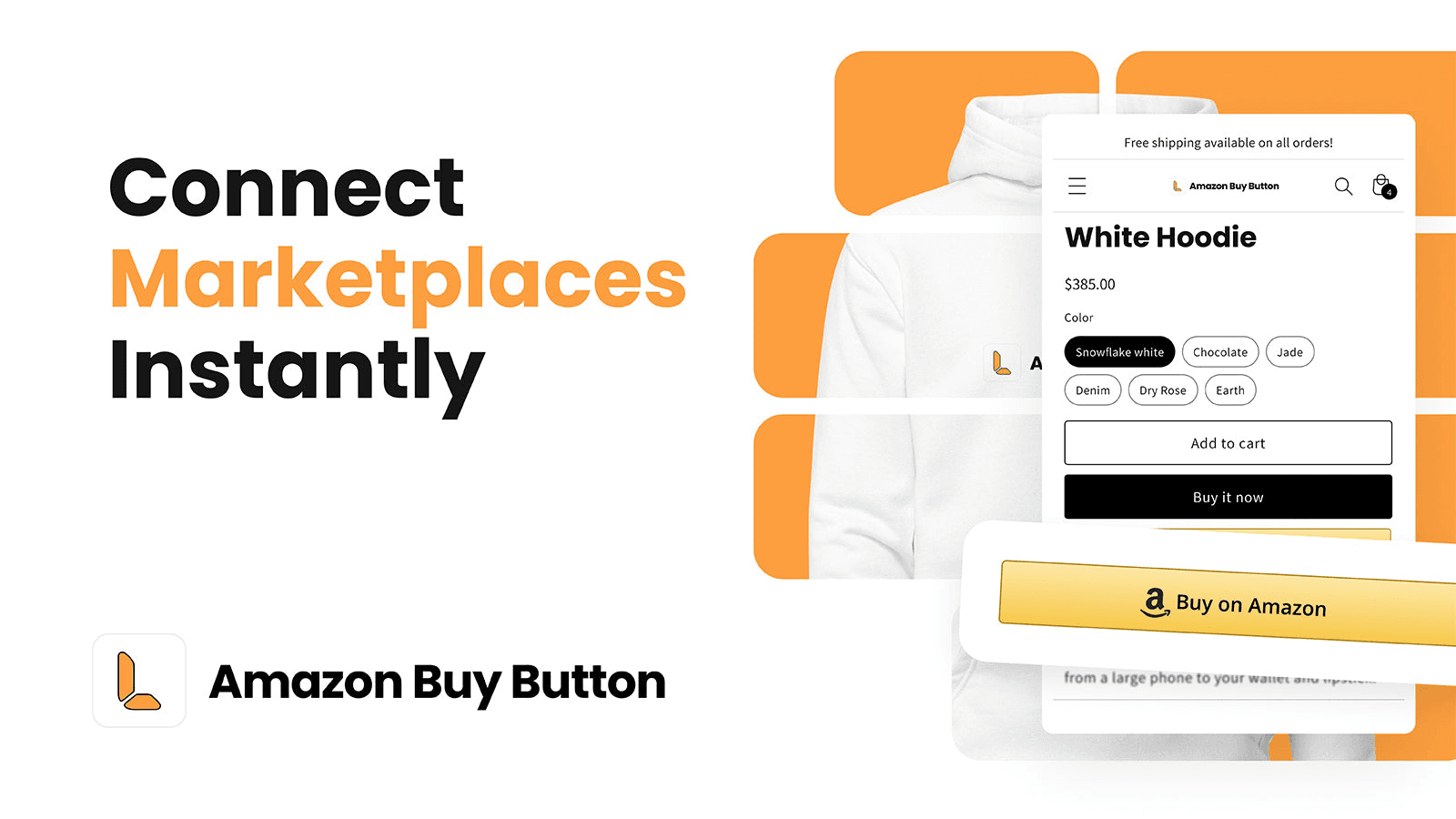
Libautech Amazon Buy Button holds 4.7 stars across 64+ reviews and is installed on 721+ Shopify stores with 137% year-over-year install growth. The positioning is specifically the inbound marketplace Buy Button job: add a "Buy on Amazon," "View on Amazon Prime," "View on eBay," or "View on Walmart" button alongside the native Add to Cart button on product pages. When customers click through, the merchant earns affiliate commission on the resulting marketplace purchase plus retains the original Amazon/eBay/Walmart sale revenue. The double-commission mechanic matters for merchants already listing on these marketplaces because it captures revenue from the subset of Shopify shoppers who prefer marketplace checkout.
The strategic argument is the Amazon-preferring shopper segment. Roughly 60% of US product searches start on Amazon. Customers landing on a Shopify product page may still prefer completing purchase through Amazon because Amazon Prime offers one-click checkout, stored shipping addresses, trusted returns processes, and existing Prime membership benefits. Without an Amazon Buy Button, these shoppers either bounce to Amazon search (where competitors may outrank the merchant's listing) or abandon entirely. With an Amazon Buy Button, the merchant captures the Amazon-preferring segment through a direct link to their own Amazon listing plus affiliate commission pass-through.
Core features: Amazon Buy Button with one-click redirect to merchant's Amazon listing, support for Amazon marketplace, Amazon Prime, eBay, and Walmart buttons, multiple affiliate account management for different marketplaces, custom affiliate tag integration for commission tracking, independent affiliate tag URL for tested campaigns, country targeting to show region-specific marketplace buttons, three button design variants for theme matching, desktop and mobile optimized rendering, advanced backend algorithm that claims Amazon organic ranking improvement through cross-platform traffic, and prevention of competitor product exposure by keeping shoppers focused on the merchant's specific Amazon listing rather than Amazon search results.
The Libautech portfolio advantage: Amazon Buy Button is part of the nine-app Libautech Package plan at $14.99/mo, which also includes Bundles & Upsell, Sticky Add to Cart, Announcement Bar, Currency Converter, Shoppable Videos UGC, and other conversion apps. For stores building a complete conversion stack where Amazon Buy Button is one component, the Package plan delivers meaningfully more functionality than a standalone Amazon integration at similar cost.
Where it falls short: not an outbound sync platform — Libautech Amazon Buy Button does not publish your Shopify catalog onto Amazon, sync inventory two-ways, or manage Amazon order fulfillment. For merchants needing Amazon Seller Central integration with real-time inventory sync, dedicated outbound sync platforms (Marketplace Connect, LitCommerce, CedCommerce, Salestio) are the correct tools. Smaller review base than enterprise outbound sync platforms like LitCommerce (793 reviews) — merchants comparing review volume for outbound needs will see the gap, though the Buy Button category simply has fewer dedicated competitors. The double-commission argument only works if you're already listing products on Amazon; stores not yet on Amazon see limited benefit from Buy Buttons alone.
Pricing: Free plan available. Included in Libautech Package plan at $14.99/mo (bundles 6+ Libautech apps). Standalone paid tiers scale with feature depth and marketplace count.
Job 2: Outbound Multi-Marketplace Listing and Inventory Sync
2. Shopify Marketplace Connect (formerly Codisto)
Best for: Shopify stores focused on Amazon and Walmart marketplace expansion — the Shopify-official sync solution with deepest Amazon ASIN matching and native Walmart integration through the Walmart Marketplace ownership.
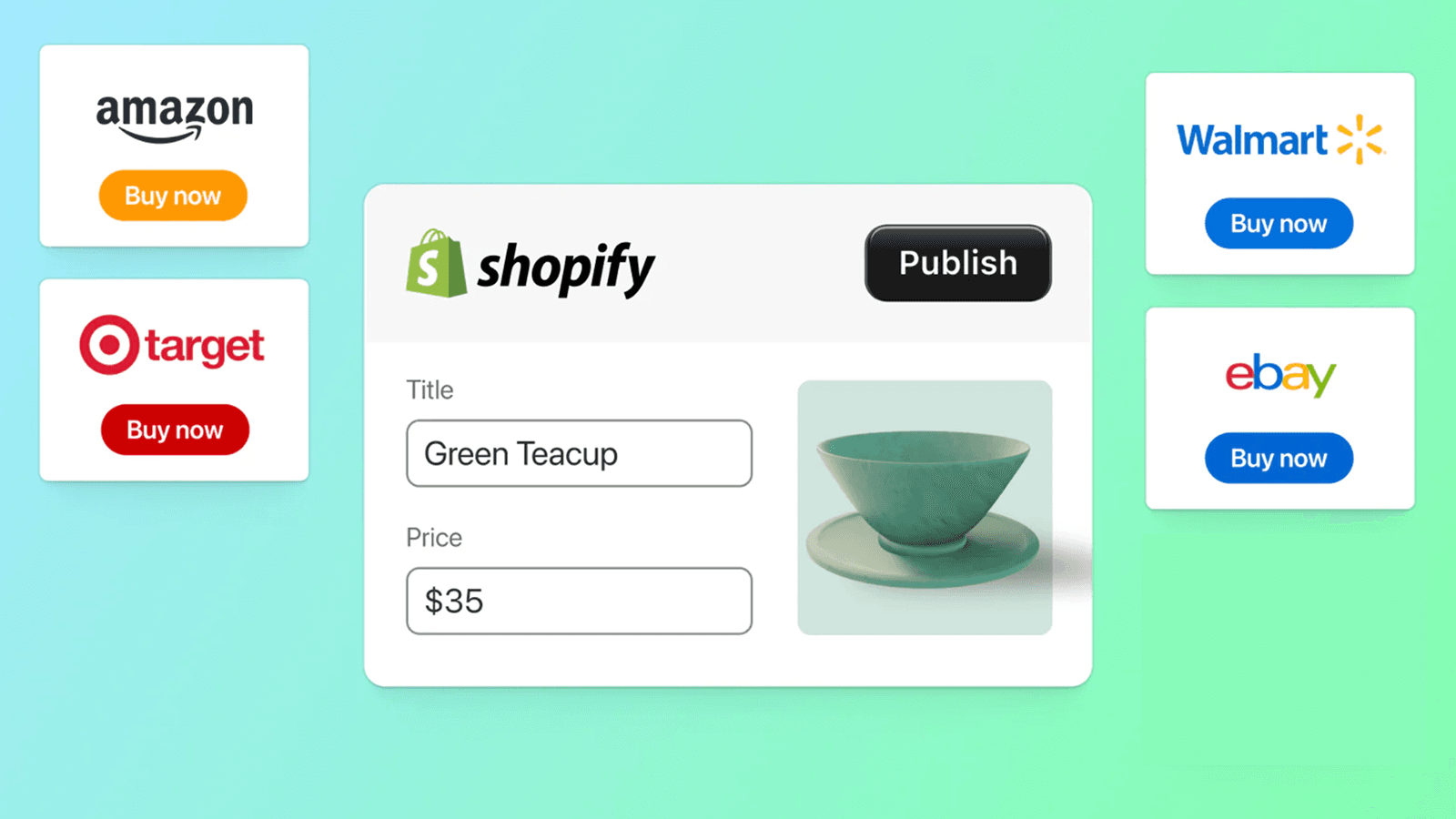
Shopify Marketplace Connect (formerly Codisto, acquired by Walmart) is the Shopify-official outbound marketplace sync solution. The positioning: as the Walmart-owned platform, Marketplace Connect has the deepest Walmart Marketplace integration of any Shopify app — direct API access, faster inventory sync, fewer listing rejections than third-party alternatives. The Amazon ASIN matching capability is the second major differentiator: the app helps merchants link existing Shopify products to Amazon catalog entries efficiently, reducing the manual work of establishing new Amazon listings from scratch.
Core features: two-way sync between Shopify and Amazon + Walmart + eBay + Target Plus, deep Amazon ASIN matching capabilities, real-time inventory updates across channels, order import into Shopify admin, product listing management from Shopify admin, native Walmart Marketplace integration (Walmart-owned benefit), multi-location inventory support, Shopify Plus compatibility, and commission-based pricing structure.
Where it falls short: Etsy support is not available, which limits appeal for handmade or vintage goods merchants. Commission-based pricing can compound at scale versus flat-rate alternatives — some stores find GMV-based pricing (Salestio) or tiered subscriptions (LitCommerce) more predictable. Narrower channel coverage than LitCommerce's 20+ marketplace list. Not a good fit for stores whose primary marketplace focus is TikTok Shop, Temu, or Shein — those channels require dedicated specialists.
Pricing: Free to install. Commission-based pricing on marketplace transactions.
3. LitCommerce
Best for: Shopify stores wanting the broadest multi-marketplace coverage — 20+ channels including Amazon, eBay, Etsy, Walmart, TikTok Shop, Temu, Shein, Wish, OnBuy, and Reverb — in one consolidated dashboard.
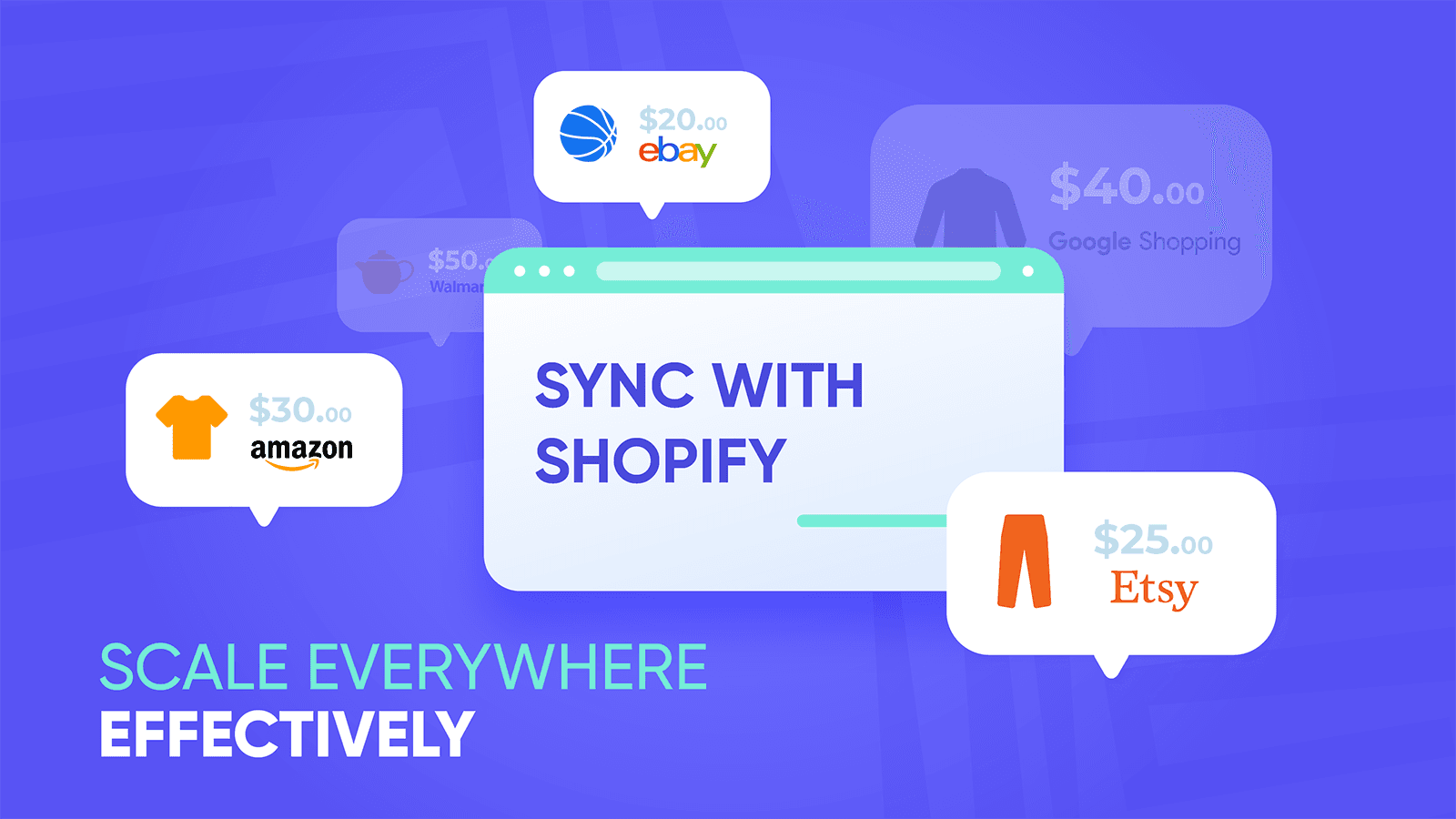
LitCommerce holds 4.8 stars across 793 reviews with free trial available. The positioning is maximum marketplace breadth: rather than focusing on specific marketplaces (Marketplace Connect's Amazon + Walmart focus) or per-channel modules (CedCommerce's separate-module approach), LitCommerce handles 20+ marketplaces through one unified dashboard with real-time inventory sync, order centralization, and user-friendly interface that eliminates manual marketplace management.
The TikTok Shop, Temu, and Shein support is the emerging-channel differentiator. As these platforms become meaningful revenue channels for DTC brands, merchants benefit from having sync support already built into their existing marketplace platform rather than layering additional specialist apps. LitCommerce's 2024-2026 expansion into Shein and Temu positions it ahead of most competitors on emerging marketplaces.
Core features: sync across Amazon, eBay, Etsy, Walmart (US & Canada), TikTok Shop, Temu, Shein, Reverb, OnBuy, Wish, Shopee, and 10+ additional marketplaces, real-time inventory sync preventing overselling, centralized order management dashboard, automatic stock level updates, product listing optimization per marketplace, pay-as-you-go pricing with free trial, and user-friendly dashboard centralizing all marketplace operations.
Where it falls short: breadth comes at depth trade-off — specific marketplace features (deep Walmart integration, Etsy-specific handmade workflows, Amazon Vendor Central support) are less sophisticated than dedicated per-marketplace specialists. Pay-as-you-go pricing is flexible but can compound at scale for stores with high marketplace volume. Integration depth with Shopify admin is less native than Salestio or Marketplace Connect.
Pricing: Free trial available. Pay-as-you-go paid plans from approximately $29/mo.
4. CedCommerce Amazon Channel
Best for: Shopify stores wanting per-marketplace module depth — dedicated Amazon modules, eBay modules, Etsy modules installed separately with marketplace-specific features rather than one generalist multi-channel platform.
CedCommerce provides per-marketplace modules for Amazon, eBay, Etsy, Walmart, and other channels. The positioning: rather than one generalist platform, each CedCommerce module focuses specifically on its marketplace's workflows, API capabilities, and compliance requirements. For stores where marketplace-specific depth matters (Amazon FBA inventory management, Etsy handmade category compliance, eBay listing templates), per-module specialization outperforms generalist platforms.
Core features: per-marketplace Amazon channel with FBA inventory sync, Amazon Vendor Central support, Blank Box feature for unbranded fulfillment, order routing between MCF and third-party logistics, upsell and bundle flow post-purchase, multi-marketplace support across US/Canada/UK/Germany/France/Australia/Japan and more, currency conversion and markup pricing, and affiliate revenue retention with no commission cut.
Where it falls short: per-module approach means installing and managing multiple CedCommerce apps if you sell on multiple marketplaces, creating admin overhead. Module pricing compounds when stores need multiple channels. UI consistency across modules can feel fragmented compared to unified platforms. Better positioned for single-marketplace specialists than multi-marketplace strategies.
Pricing: Free plan available per module. Paid modules from $29/mo each.
5. Salestio
Best for: Shopify stores wanting deepest Shopify admin integration for Amazon, eBay, and Etsy sync — near real-time two-way synchronization with transparent GMV-based pricing and direct order import into Shopify admin.
Salestio positions around Shopify-native integration depth. The positioning: rather than operating as separate dashboard (Sellbrite) or external sync engine (LitCommerce), Salestio embeds directly into the Shopify admin panel with near real-time two-way sync of products, inventory, orders, and pricing across Amazon, eBay, and Etsy. For merchants who prefer managing marketplace operations inside Shopify admin rather than switching to separate tools, the native integration matters.
Core features: Shopify admin embedded interface, near real-time two-way sync of products + inventory + orders + pricing, direct order import into Shopify admin, Amazon + eBay + Etsy marketplace coverage, transparent GMV-based pricing model, multi-location inventory support, variant mapping with per-marketplace price rules, automatic fulfillment sync, and Shopify Plus compatibility.
Where it falls short: narrower marketplace coverage than LitCommerce — Salestio focuses on Amazon/eBay/Etsy rather than covering 20+ channels. No TikTok Shop, Temu, or Shein support yet. GMV-based pricing is transparent but scales with marketplace revenue growth, which can exceed flat-rate alternatives at high volume. Not a good fit for stores needing Walmart integration (Marketplace Connect's specialty).
Pricing: Free trial available. GMV-based pricing scaling with marketplace revenue.
6. Sellbrite
Best for: Shopify stores wanting a standalone multichannel listing and inventory dashboard outside the Shopify admin — the GoDaddy-owned alternative for merchants who prefer managing marketplace operations independently from their Shopify storefront.
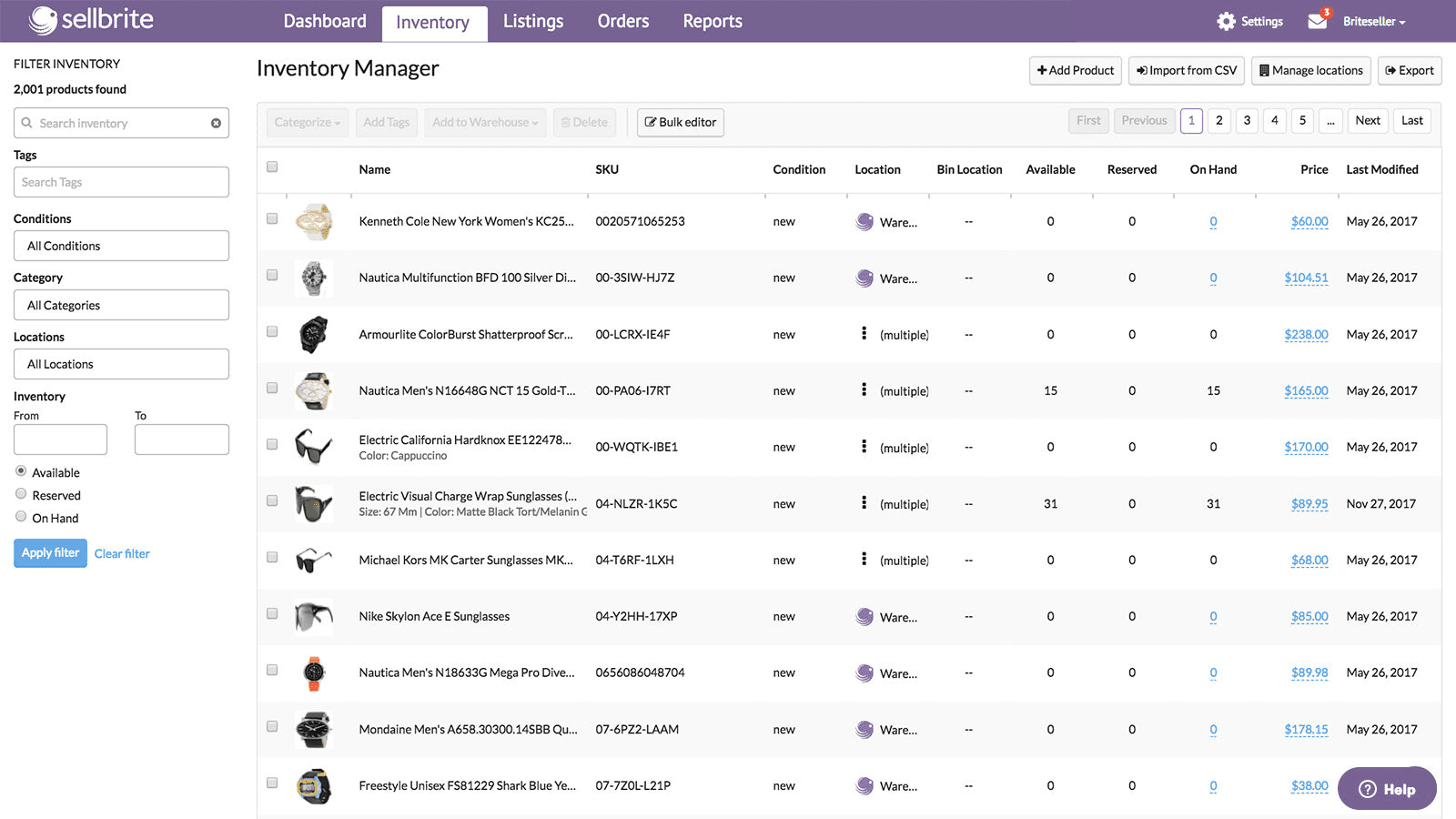
Sellbrite (GoDaddy-owned) positions as a standalone multichannel dashboard. The argument: some merchants prefer to manage marketplace operations entirely separately from their Shopify admin — in a dedicated multichannel dashboard that handles Amazon, eBay, Etsy, and Walmart without cluttering the Shopify interface. For stores at larger scale where marketplace team members are different from Shopify ecommerce team members, separation of concerns can improve operational clarity.
Core features: standalone multichannel dashboard covering Amazon + eBay + Etsy + Walmart, batch sync model with regular inventory updates, centralized listing management, GoDaddy ecosystem integration for stores already using GoDaddy tools, order management across marketplaces, and reporting dashboard consolidating marketplace performance.
Where it falls short: batch sync model updates inventory at regular intervals rather than real-time, creating risk of overselling during high-velocity sales events. Separate dashboard approach means merchants switch between Shopify admin and Sellbrite for daily operations, which adds cognitive overhead. Less Shopify-native than Salestio or Marketplace Connect. Pricing is subscription-based with tiered limits on SKU count and order volume.
Pricing: Free plan available. Paid plans from approximately $49/mo scaling with SKU count.
Job 3: TikTok Shop and Emerging Channel Specialists
7. AfterShip for TikTok Shop
Best for: Shopify stores running TikTok Shop as primary or secondary marketplace strategy — the 2026 TikTok Shop Award-winning specialist with deep TikTok-specific sync, LIVE shopping compatibility, and order fulfillment optimization.
AfterShip for TikTok Shop holds 4.8 stars across 298 reviews and won the 2026 TikTok Shop Award for platform excellence. The positioning: TikTok Shop's specific workflows (LIVE shopping, creator partnerships, Shop Mall rankings, TikTok-native checkout) are sufficiently different from Amazon/eBay that a TikTok-specialist app outperforms generalist multi-marketplace platforms on the specific TikTok Shop job. For beauty, fashion, lifestyle, and trend-driven brands where TikTok Shop is meaningful revenue channel, specialization wins.
Core features: TikTok Shop product sync with LIVE shopping compatibility, automated order fulfillment routing, Shop Mall listing optimization, conversion rate (CVR) tracking specific to TikTok Shop, integration with TikTok creator affiliate programs, Built for Shopify certification, 2026 TikTok Shop Award recognition, and tight TikTok-specific API integration.
Where it falls short: single-marketplace focus means merchants needing Amazon, eBay, or Walmart sync require additional apps. Not a fit for stores outside the TikTok Shop primary strategy. TikTok Shop category compliance (beauty, food, health categories) requires additional verification beyond the app's capabilities. Pricing scales with TikTok Shop order volume.
Pricing: Free plan available. Paid plans from $9/mo scaling with TikTok Shop order volume.
Job 4: Product Feed Management for Comparison Shopping Engines
8. Feedyio Product XML Feeds
Best for: Shopify stores running Google Shopping, Meta/Facebook/Instagram Shop, and Pinterest Shop campaigns — the Built for Shopify specialist for optimized product feed generation and comparison shopping engine connectivity.
Feedyio holds 5.0 stars across 107 reviews with Built for Shopify certification. The positioning is distinct from marketplace outbound sync: rather than syncing to Amazon/eBay/Etsy where customers complete purchases on those marketplaces, Feedyio generates optimized product XML feeds for comparison shopping engines (Google Shopping, Facebook/Instagram Shop, Pinterest Shop, Microsoft Shopping, Bing Shopping) where ads drive traffic back to the merchant's Shopify store for conversion.
Core features: optimized product XML feed generation for Google Shopping, Meta, Pinterest, Bing, and 20+ comparison engines, automatic category mapping to Google Shopping taxonomy, custom feed attributes and filters per channel, real-time feed updates as products change, Built for Shopify certification with async performance, multi-currency and multi-language feed support, and responsive merchant support.
Where it falls short: not a marketplace app in the Amazon/eBay sense — Feedyio handles comparison shopping engines where customers click ads and return to Shopify, not marketplaces where customers buy on the marketplace itself. Stores wanting Amazon/eBay/Etsy sync need different tools. Feature depth assumes merchants understand Google Merchant Center and Meta catalog requirements.
Pricing: Free plan available. Paid plans from approximately $14.99/mo.
Which App to Choose
For inbound Amazon/eBay/Walmart Buy Buttons routing Shopify shoppers to marketplace listings with affiliate commissions: Libautech Amazon Buy Button. 4.7/64+, 721+ stores, Libautech Package at $14.99/mo bundling 6+ conversion apps, or free standalone tier.
For Shopify-official outbound sync with Amazon and Walmart depth: Shopify Marketplace Connect. Walmart-owned, deep ASIN matching, commission-based pricing.
For broadest marketplace coverage (20+ channels including TikTok Shop, Temu, Shein): LitCommerce. 4.8/793, pay-as-you-go pricing, $29/mo entry.
For deepest Shopify admin-embedded integration with Amazon/eBay/Etsy: Salestio. 4.8+, near real-time sync, transparent GMV pricing.
For per-marketplace module depth with marketplace-specific features: CedCommerce. Per-module approach, $29/mo per marketplace.
For standalone multichannel dashboard separate from Shopify admin: Sellbrite. 4.5+, GoDaddy-owned, $49/mo entry.
For TikTok Shop as primary or secondary marketplace strategy: AfterShip for TikTok Shop. 4.8/298, 2026 TikTok Shop Award winner, $9/mo entry.
For Google Shopping, Meta, and Pinterest feed optimization: Feedyio. 5.0/107, Built for Shopify, $14.99/mo entry.
For most Shopify stores doing $10K-100K/month, the honest recommendation depends on direction of data flow and business model. If you already sell on Amazon and want to capture Shopify shoppers who prefer Amazon checkout: Libautech Amazon Buy Button (free plan, Package at $14.99/mo) adds the Buy Button and captures affiliate revenue on marketplace redirects. If you want to expand into Amazon/eBay/Walmart as new sales channels: Shopify Marketplace Connect for Amazon + Walmart focus or LitCommerce for broadest coverage. If TikTok Shop is meaningful revenue channel: AfterShip for TikTok Shop as specialized add-on. If running Google Shopping ads at scale: Feedyio for feed optimization.
The strategic question across all four jobs: do you want to own the customer relationship or maximize short-term conversion? Inbound Buy Buttons (Libautech) maximize conversion on existing Shopify traffic but route customers to Amazon where the brand loses customer email, purchase history, and remarketing data. Outbound sync platforms (Marketplace Connect, LitCommerce, Salestio) keep customer data in Shopify admin with two-way order import but require competing for attention on Amazon search results. Both approaches are legitimate depending on whether you're optimizing for affiliate revenue or brand-building — and many stores run both approaches simultaneously, with Libautech Amazon Buy Button on product pages plus outbound Marketplace Connect sync on Amazon Seller Central.
How We Ranked These Apps
This ranking is based on four criteria applied to every Shopify marketplace app tested in 2026. First, Shopify App Store rating and verified review volume as of April 22, 2026 — the signal of long-term merchant satisfaction at scale. Second, which of the four marketplace jobs each app solves best (inbound Buy Buttons, outbound multi-marketplace sync, TikTok Shop specialization, or product feed management) rather than a generic feature checklist — the strongest marketplace strategies match app specialization to the merchant's specific data-flow direction and marketplace mix. Third, pricing structure and total cost at realistic merchant volumes — commission-based pricing (Marketplace Connect) scales differently than flat-rate subscriptions (LitCommerce, Salestio) or per-module approaches (CedCommerce), and the math differs meaningfully past $100K/month in marketplace-driven revenue. Fourth, Shopify integration depth and Built for Shopify certification — apps that embed natively into the Shopify admin (Salestio, Marketplace Connect) reduce operational overhead versus apps requiring separate dashboards (Sellbrite), and certified apps load without Core Web Vitals damage on product pages where Buy Buttons appear.
Every pricing figure in this post was verified directly from the live Shopify App Store listing on April 22, 2026. App pricing structures change frequently as the category evolves — always confirm current pricing on the official listing before installing. Ratings and review counts reflect the Shopify App Store at the time of our last update.
Frequently Asked Questions
What is the difference between inbound Buy Buttons and outbound marketplace sync?
Inbound Buy Buttons (Libautech Amazon Buy Button, Buy Now Button) add "Buy on Amazon" or "View on eBay" buttons to your Shopify product pages that route shoppers to your marketplace listings with affiliate commission pass-through. Outbound sync platforms (Marketplace Connect, LitCommerce, Salestio) publish your Shopify catalog onto Amazon, eBay, Etsy, and other marketplaces so customers can discover and buy your products on those channels directly. The two jobs are genuinely different — inbound optimizes conversion on existing Shopify traffic; outbound expands addressable audience to marketplace shoppers who never visit your Shopify store.
What is the best Shopify marketplace app in 2026?
Depends on direction. For inbound Buy Buttons: Libautech Amazon Buy Button (4.7/64+, free plan, $14.99 Package) for Amazon/eBay/Walmart Buy Button routing with affiliate commissions. For outbound multi-marketplace sync: Shopify Marketplace Connect (Walmart-owned, Amazon + Walmart focus) or LitCommerce (4.8/793, 20+ marketplaces). For TikTok Shop specialization: AfterShip for TikTok Shop (4.8/298, 2026 Award winner). For product feeds: Feedyio (5.0/107, Built for Shopify).
Should I use inbound Buy Buttons or outbound marketplace sync?
Both when feasible. Inbound Buy Buttons capture Amazon-preferring shoppers who would bounce from Shopify anyway, earning affiliate revenue on clicks. Outbound sync expands reach to the 150M+ Amazon Prime members and 140M+ eBay users who never visit Shopify stores. Many stores run both simultaneously — Libautech Amazon Buy Button on Shopify PDPs capturing inbound conversion, plus Marketplace Connect syncing the catalog to Amazon Seller Central for outbound reach.
Does the Libautech Amazon Buy Button work for stores that don't sell on Amazon?
Partially. The primary benefit comes from stores already listing products on Amazon where Buy Buttons capture Amazon-preferring shoppers plus affiliate commissions on their own listings. Stores not yet on Amazon can still use the Buy Button for affiliate revenue on generic Amazon product matches, but the double-commission mechanic that makes inbound Buy Buttons especially profitable requires your own Amazon listings. Most merchants who install Libautech Amazon Buy Button are multi-channel sellers running both Shopify and Amazon stores.
What marketplaces does Libautech Amazon Buy Button support?
Amazon marketplace (all countries), Amazon Prime, eBay, and Walmart. The app supports multiple affiliate accounts per marketplace, custom affiliate tag integration for commission tracking, and country targeting to show region-specific marketplace buttons automatically based on shopper location. For merchants running Amazon, eBay, and Walmart listings simultaneously, the multi-marketplace Buy Button captures each customer segment preferring specific marketplace checkout experiences.
Will marketplace apps slow down my Shopify store?
Most inbound Buy Button apps (Libautech Amazon Buy Button) load widgets asynchronously with minimal page-speed impact. Outbound sync apps (Marketplace Connect, LitCommerce, Salestio) typically run as admin-only integrations without frontend widgets, so they don't affect storefront page speed. The exception: some outbound apps add tracking scripts for cross-marketplace attribution that can add 100-300ms of page load time. Prioritize Built for Shopify certified apps where available.
How much commission do marketplace Buy Buttons pay?
Amazon's affiliate commission rate varies by product category from 1% (computers, electronics) to 10% (luxury beauty). Merchants earning affiliate commission through Libautech Amazon Buy Button on their own Amazon listings effectively earn back a portion of Amazon's referral fee — a meaningful double-dip mechanic on multi-channel sales. eBay and Walmart affiliate commissions follow similar structures at slightly different rates. For serious multi-channel merchants, combined inbound affiliate revenue can reach 5-15% of marketplace-driven sales on top of direct marketplace revenue.
Which is better: Marketplace Connect or LitCommerce?
Depends on marketplace mix. Shopify Marketplace Connect is the better choice for stores focused on Amazon and Walmart, since Walmart's ownership of the platform provides deepest Walmart Marketplace integration plus strong Amazon ASIN matching. LitCommerce is the better choice for stores needing broader coverage across 20+ marketplaces including TikTok Shop, Temu, Shein, and Wish. Many stores start with Marketplace Connect for core Amazon + Walmart sync and layer LitCommerce or specialist apps for emerging channels.
How much do marketplace apps cost on Shopify?
Wide range depending on model. Commission-based pricing (Marketplace Connect) scales with marketplace revenue. GMV-based pricing (Salestio) charges percentage of marketplace gross merchandise value. Flat subscription tiers (LitCommerce $29/mo, CedCommerce $29/mo per module, Sellbrite $49/mo) offer predictable costs. For inbound Buy Buttons, Libautech Amazon Buy Button has a free plan and is included in the Libautech Package at $14.99/mo bundling 6+ apps. Match pricing model to your expected marketplace revenue trajectory before committing.
What is the single highest-ROI marketplace strategy to implement first?
For stores already selling on Amazon: install Libautech Amazon Buy Button on your top 20 products to capture the Amazon-preferring shopper segment with affiliate commission pass-through. The implementation takes under an hour and revenue impact shows within 30 days. For stores not yet on Amazon: focus on outbound marketplace sync (Marketplace Connect for Amazon + Walmart, or LitCommerce for broader coverage) to expand into new customer segments rather than optimizing existing Shopify traffic. For stores where TikTok Shop is core strategy: AfterShip for TikTok Shop is the specialist worth pairing with broader multi-marketplace sync.
Think Your App Belongs on This List?
We update these lists as new tools launch and existing ones improve. If you are a developer building a Shopify marketplace integration or Buy Button app and want your app considered for inclusion, submit it here — tell us what your app does, who it is for, and include a link to your Shopify App Store listing. We review every submission.