
Best Free Upsell Apps for Shopify (2026)
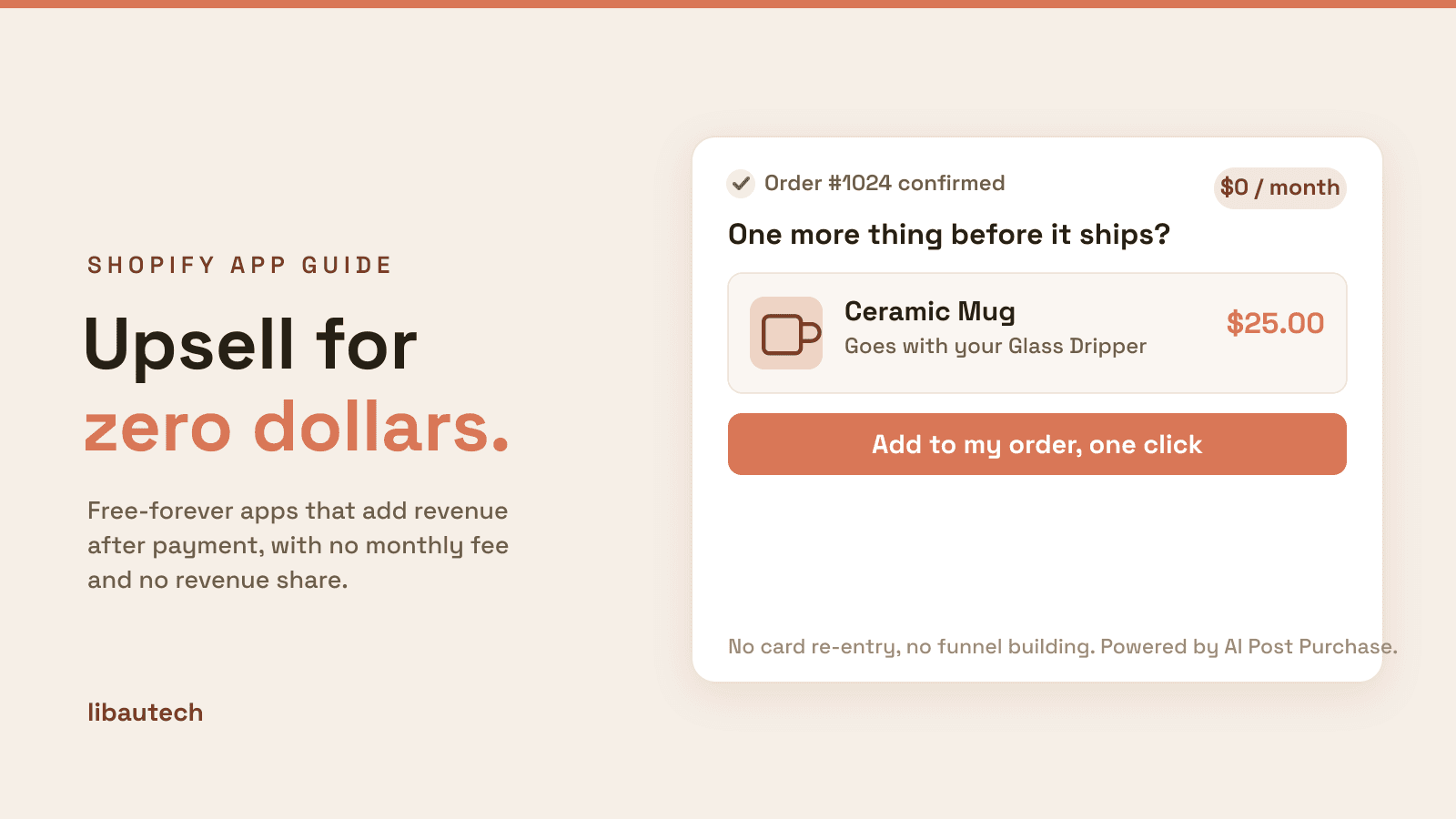
The best genuinely free upsell app for Shopify in 2026 is Libautech AI Post Purchase, our own app, because it is free forever, not a capped trial: Claude reads each order and shows a one-click post-purchase upsell automatically, with no order caps, no revenue share and no paid tier. It is new, so weigh that. Every other app on this list is entirely free too, one free plan with nothing to upgrade to: AOV.ai Bundles, Essent Cart Drawer, SMART Checkout Rules & Upsells, Upsell App by Essentialwolf, Bundlex, Ego Free Gifts BOGO Upsell, SmartFlow, and Shopify's own Shopify Bundles. That is rarer than it sounds, and this list is only those apps.
Key takeaways
- Every app here is entirely free: one free plan, no paid tier, no usage fee and no revenue share. We checked each on its live listing and excluded anything freemium.
- Most "free" upsell apps are not this. They are freemium (a capped free plan that pushes you to paid) or free to install (no monthly fee, but a cut of the sales they make). Both can become a bill as you grow. This list leaves them out on purpose.
- We make Libautech AI Post Purchase and rank it first because it is free forever with no caps or revenue share, and it runs post-purchase, so it cannot hurt a sale. It is new with few reviews yet, so we say so plainly.
- Genuinely free apps trade breadth for price. Most do one job well rather than a full suite, so pair a couple if you want coverage across the journey.
On this page
What makes these genuinely free
"Free" on the App Store hides three different models, and only one of them means you never pay.
Entirely free. One plan, priced at zero, with no paid tier to upgrade to and no fee on the sales it makes. Every app on this list is here because it is this, verified on its live pricing page. Libautech AI Post Purchase and Shopify's own apps work this way.
Free plan (freemium). A capped tier, usually limited by orders or features, built to convert you to paid as you scale. Most upsell apps are this, and we left them off this list: a free plan capped at 50 orders means re-platforming during your first good month.
Free to install. No monthly fee, but a usage or revenue-share fee arrives as the app generates sales. Also excluded here, because a cut of your upsell revenue is not free, it is just a bill that shows up later.
None of those models is bad. But "best free" should mean the app that stays free no matter how well it works, which is the only kind on this page.
Which free upsell is yours
| Your goal | Best free pick | Why |
|---|---|---|
| A free post-purchase upsell | Libautech AI Post Purchase | Free forever, one click after payment, zero risk to the sale. |
| Free bundles and quantity breaks | AOV.ai Bundles | The most-reviewed entirely-free option here. |
| Free upsells in the cart | Essent Cart Drawer | A free slide cart with in-cart offers and a shipping bar. |
| Free checkout upsells and rules | SMART Checkout Rules | Free upsell and reordering rules at checkout. |
| One free app across every page | Upsell App by Essentialwolf | Free offers on product, cart, checkout and post-purchase. |
| Free gifts and BOGO offers | Ego Free Gifts BOGO Upsell | Free gift with purchase, BOGO and Buy X Get Y, all free. |
| Free native product bundles | Shopify Bundles | First-party, free forever, with inventory sync. |
How we ranked these, and a word on bias
The disclosure first. We make Libautech AI Post Purchase, and we rank it first, so read this with that in mind. We rank it first on one specific axis: it is free forever, with no order cap and no revenue share, running post-purchase where it cannot hurt a sale. Being straight about the trade-offs: it is a new app with few reviews yet, and it does one thing, post-purchase, so it has none of the product-page or cart coverage the others carry. If public proof or breadth matters more than the pricing model, AOV.ai Bundles and Essent Cart Drawer are the most-reviewed picks, and we say so in the best free app for each situation section.
The bar to make this list is strict: the app must have a single free plan with no paid tier, no usage fee and no revenue share, verified on its live listing. That rules out most of the category, including popular freemium apps like Essential, Selleasy and ReConvert, and free-plan bundlers like MaxBundle that carry paid tiers above the free plan. We ranked what remained on how much it covers for free, the depth of public proof, and how cleanly it runs. Ratings and review counts are from the Shopify App Store as of August 2026.
The 9 genuinely free upsell apps compared
| App | Rating | Reviews | Cost | Upsell surface |
|---|---|---|---|---|
| Libautech AI Post Purchase (our app) | New | New | Free forever | Post-purchase, one click |
| AOV.ai Bundles Quantity Breaks | 5.0 | 1,515 | Free | Bundles, quantity breaks |
| Essent Cart Drawer Cart Upsell | 5.0 | 837 | Free | Cart drawer upsells |
| SMART Checkout Rules & Upsells | 5.0 | 624 | Free | Checkout upsells and rules |
| Shopify Bundles | 2.8 | 543 | Free | Fixed bundles, multipacks |
| Upsell App by Essentialwolf | 4.7 | 265 | Free | Product, cart, checkout, post-purchase |
| Bundlex Product Bundles Upsell | 4.9 | 130 | Free | Product bundles |
| Ego Free Gifts BOGO Upsell | 5.0 | 44 | Free | Free gifts, BOGO, cart add-ons |
| Upsell & Cross-Sell SmartFlow | 5.0 | 10 | Free | Post-purchase funnels |
Every price verified on the live App Store listing, August 2026: each app has one free plan and no paid tier, usage fee or revenue share. Libautech AI Post Purchase is our own app and is new, with few reviews yet.
1. Libautech AI Post Purchase
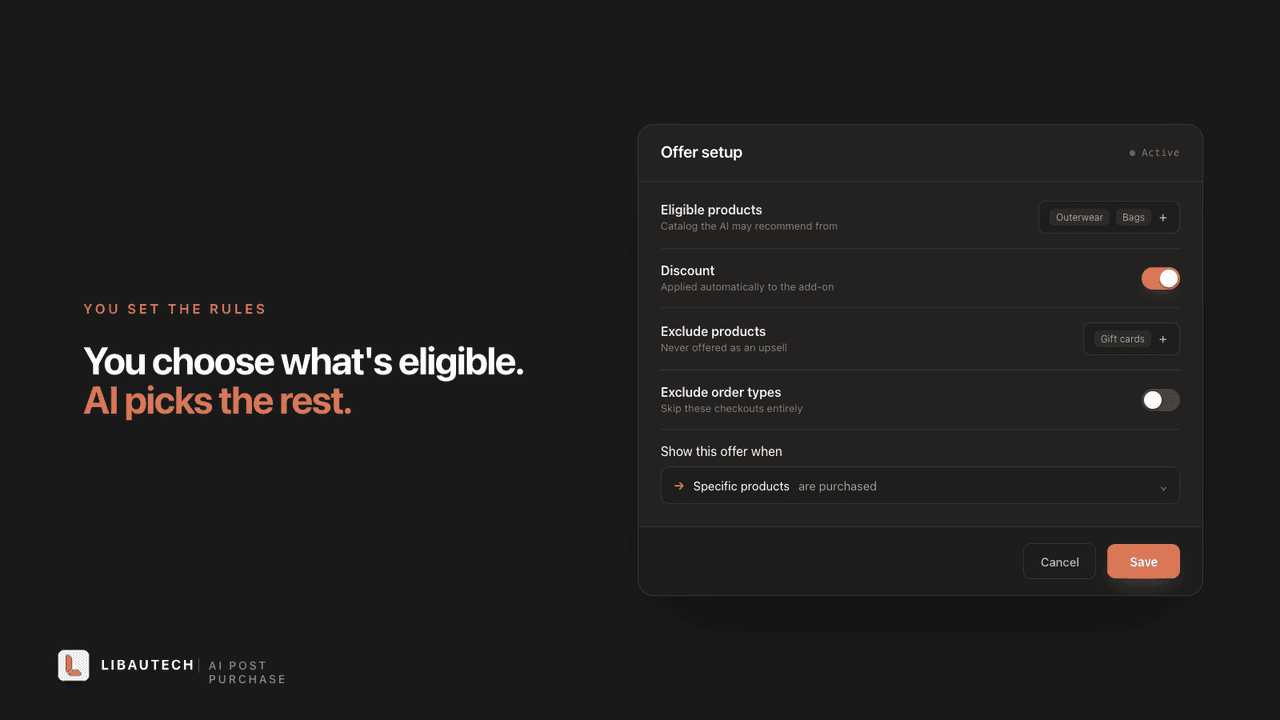
Disclosure: this is our app, so weigh our take accordingly. AI Post Purchase is free forever, with no order caps tied to a subscription and no revenue share. Install it, approve which products may be offered, and Claude selects one upsell per order, shown between payment and the thank-you page, where accepting is a single click with no card re-entry. Because the offer fires after payment, it cannot hurt the conversion that already happened.
Strengths: genuinely free forever, no funnel building, and zero risk to the sale because it runs post-purchase.
Watch-outs: it is a new app with few reviews yet, so it has none of the public proof the others carry, and it is post-purchase only, with no product-page or cart placements.
Best for: stores that want a free-forever post-purchase upsell live in minutes, with no ongoing cost.
2. AOV.ai Bundles Quantity Breaks
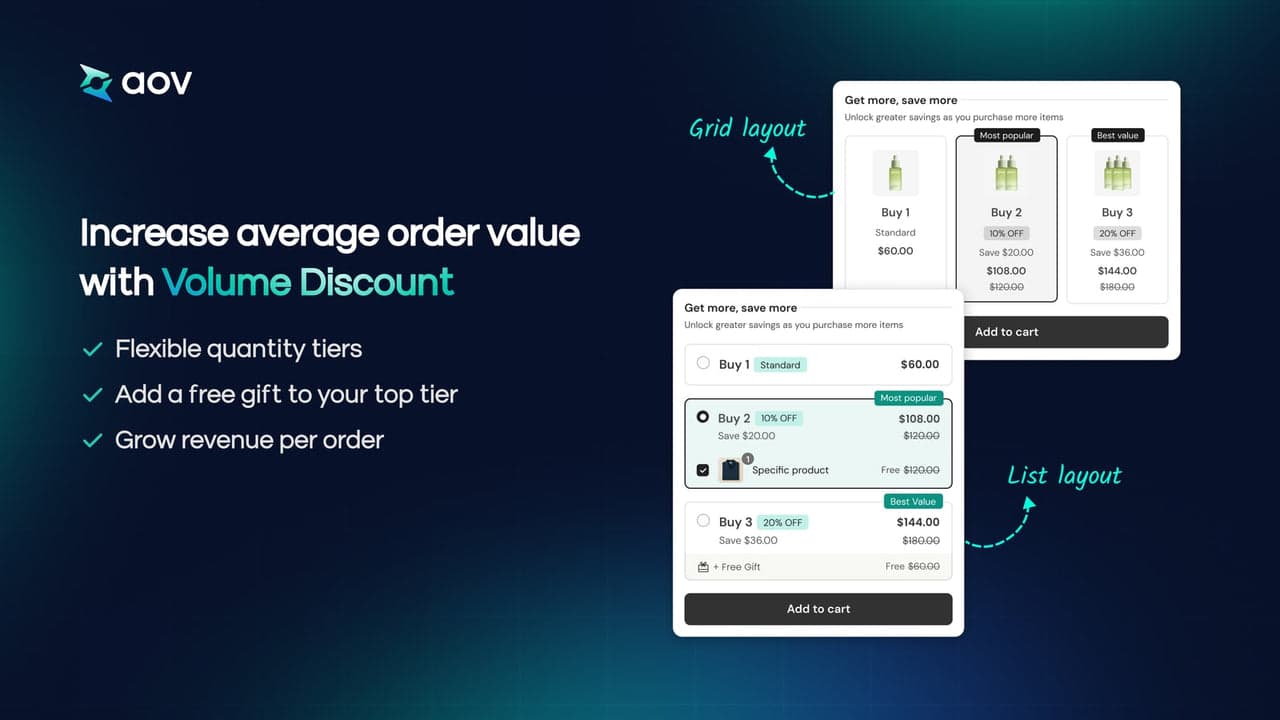
AOV.ai Bundles Quantity Breaks (5.0 across more than 1,500 reviews) is the most-reviewed genuinely free app on this list. It builds product bundles and "buy more, save more" quantity breaks on the product page, entirely free, so a store can lift average order value before checkout without paying a cent.
Strengths: the deepest review base among the free-forever options, a 5.0 rating, and bundles plus quantity breaks in one.
Watch-outs: it is focused on pre-purchase bundles, so pair it with a post-purchase or cart app for full coverage.
Best for: stores wanting free product-page bundles and quantity breaks. Free.
3. Essent Cart Drawer Cart Upsell
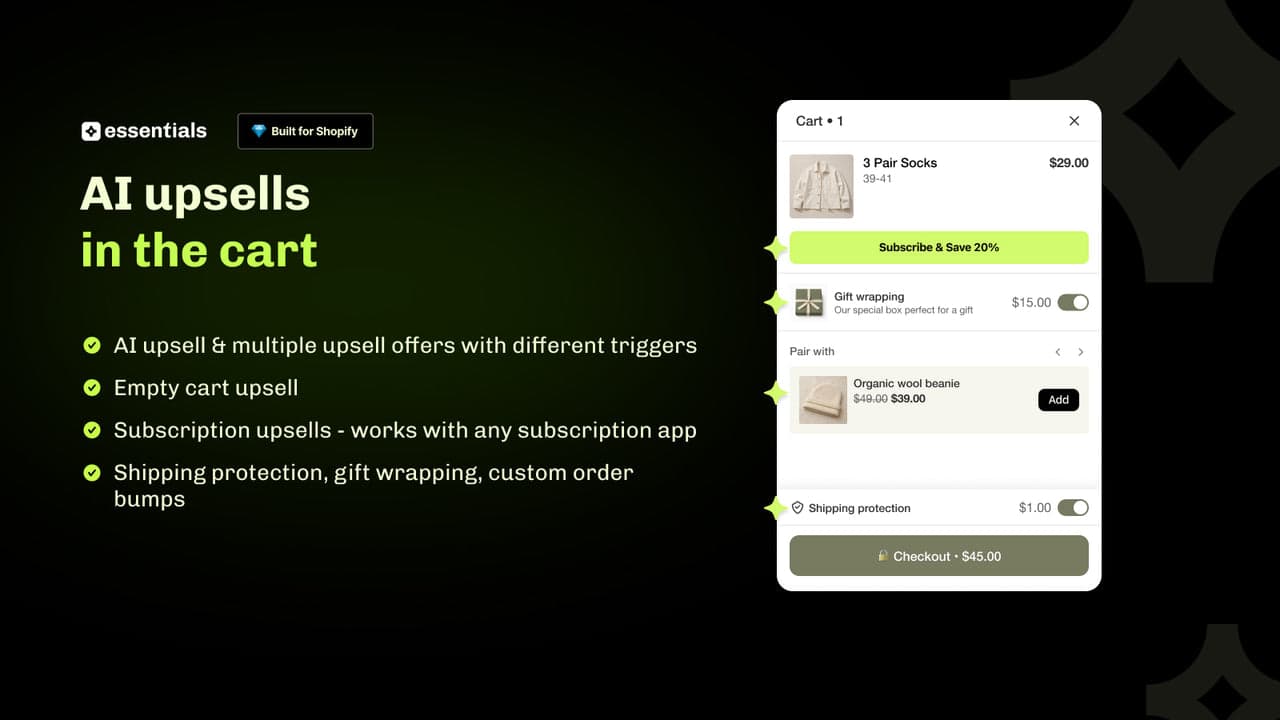
Essent Cart Drawer Cart Upsell (5.0 across roughly 840 reviews) is a free slide-out cart with in-cart upsells and a free-shipping progress bar. It raises order value in the cart, where a shopper is already committing, at no cost and with a top rating.
Strengths: a fast free cart drawer, in-cart upsells and a shipping bar, and a 5.0 rating.
Watch-outs: it covers the cart rather than the product page or post-purchase, so it is one surface, not a suite.
Best for: stores wanting free upsells inside a slide cart. Free.
4. SMART Checkout Rules & Upsells
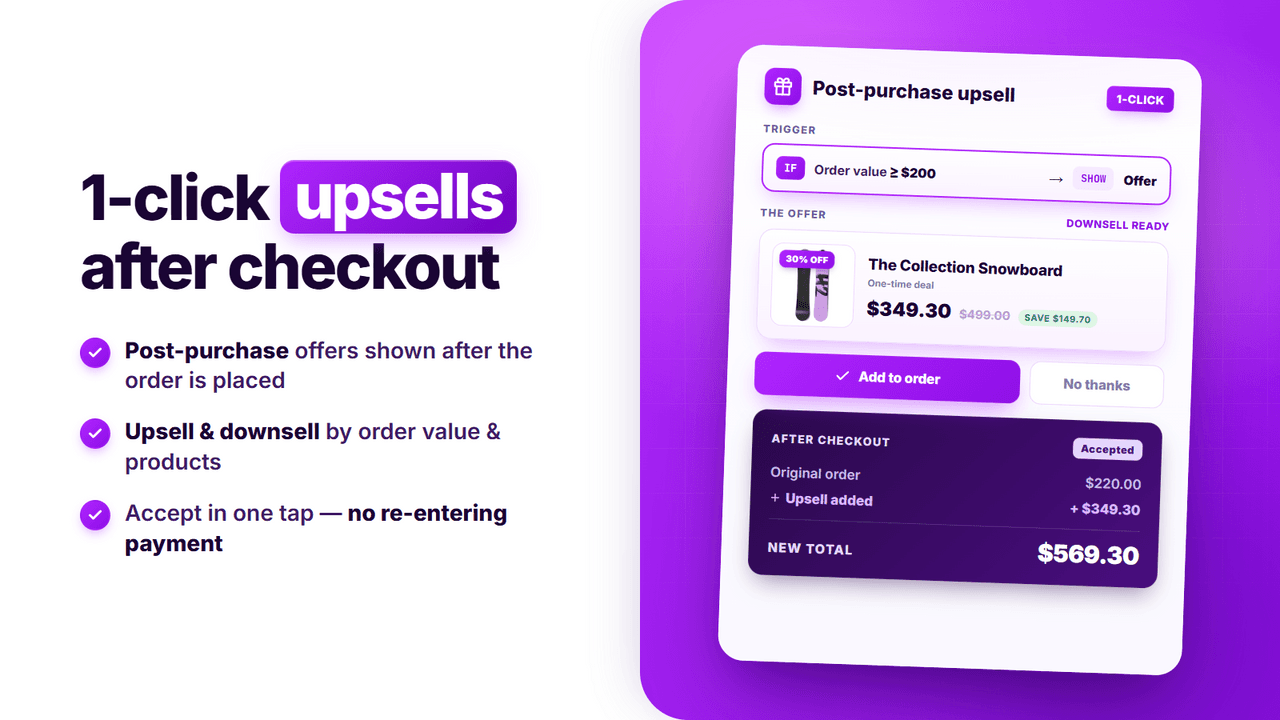
SMART Checkout Rules & Upsells (5.0 across roughly 620 reviews) is a free app for the checkout, adding upsells and rules such as hiding or reordering payment and shipping options by condition. It puts free control at the checkout step, where small changes move conversion.
Strengths: free checkout upsells and customization rules, and a 5.0 rating.
Watch-outs: the richest checkout customization is a Shopify Plus and Checkout Extensibility feature, so capabilities depend on your plan.
Best for: stores wanting free upsells and rules at checkout. Free.
5. Shopify Bundles
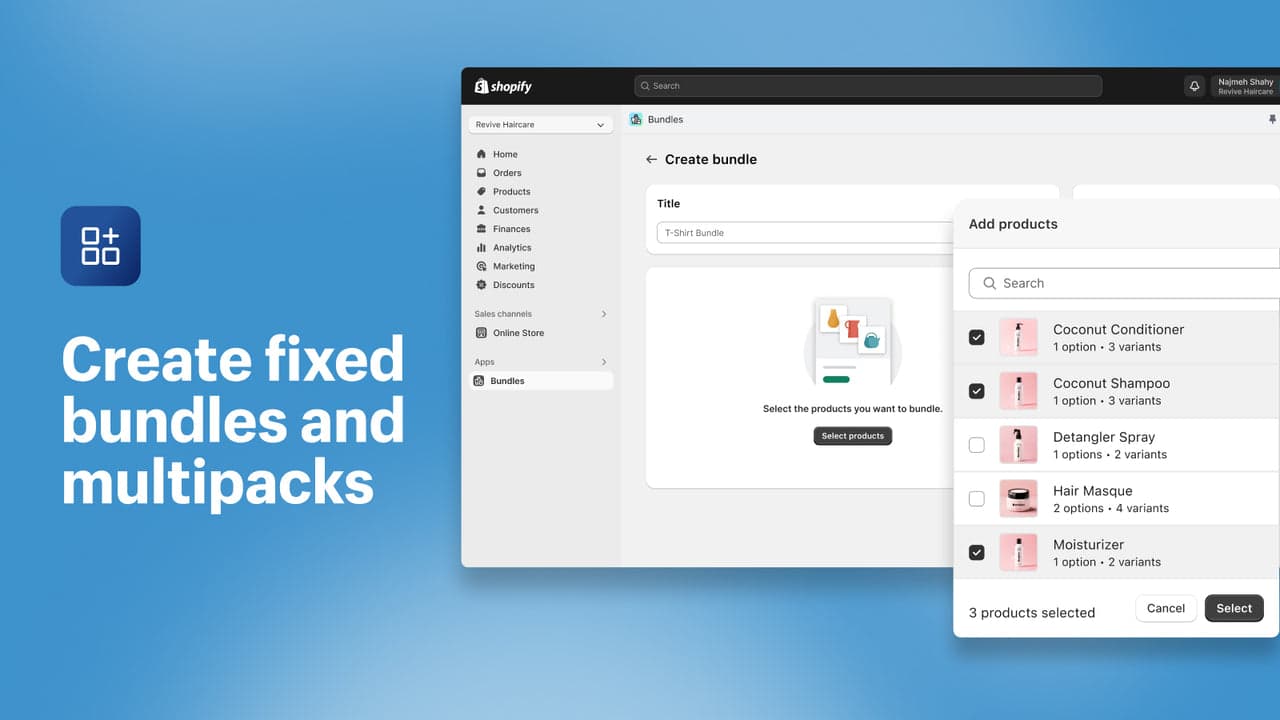
Shopify's own bundles app (2.8 across 543 reviews) creates fixed bundles and multipacks straight from the admin, on every plan, at no cost. Each bundle becomes its own product with its own price and SKU, and component inventory syncs automatically.
Strengths: first-party, free forever, and the cleanest zero-cost way to raise order value before checkout.
Watch-outs: fixed bundles only, no cross-sell recommendations or post-purchase, and the modest rating reflects merchants wanting more flexibility.
Best for: stores that want free, native, pre-purchase bundles with reliable inventory.
6. Upsell App by Essentialwolf
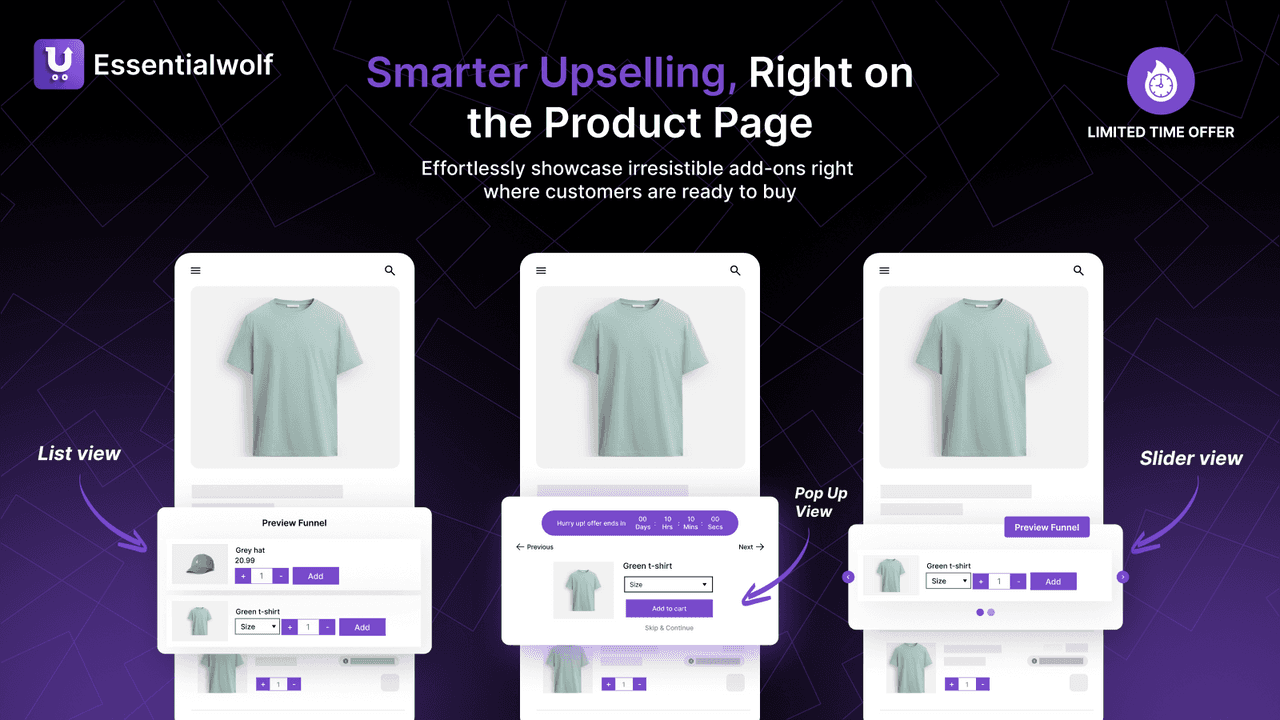
Upsell App by Essentialwolf (4.7 across roughly 265 reviews) is the broadest free app on this list: it runs upsell and cross-sell offers on the product page, cart, checkout, post-purchase and thank-you page, with an AI or manual mode for building funnels. That it does all of this for free, with no paid tier, is unusual for the category.
Strengths: the widest surface coverage of any free-forever app here, an all-in-one placement set, and a solid 4.7 rating.
Watch-outs: covering every page from one app means more to configure, so plan your funnels rather than switching everything on at once.
Best for: stores wanting one free app that reaches every stage of the journey.
7. Bundlex Product Bundles Upsell
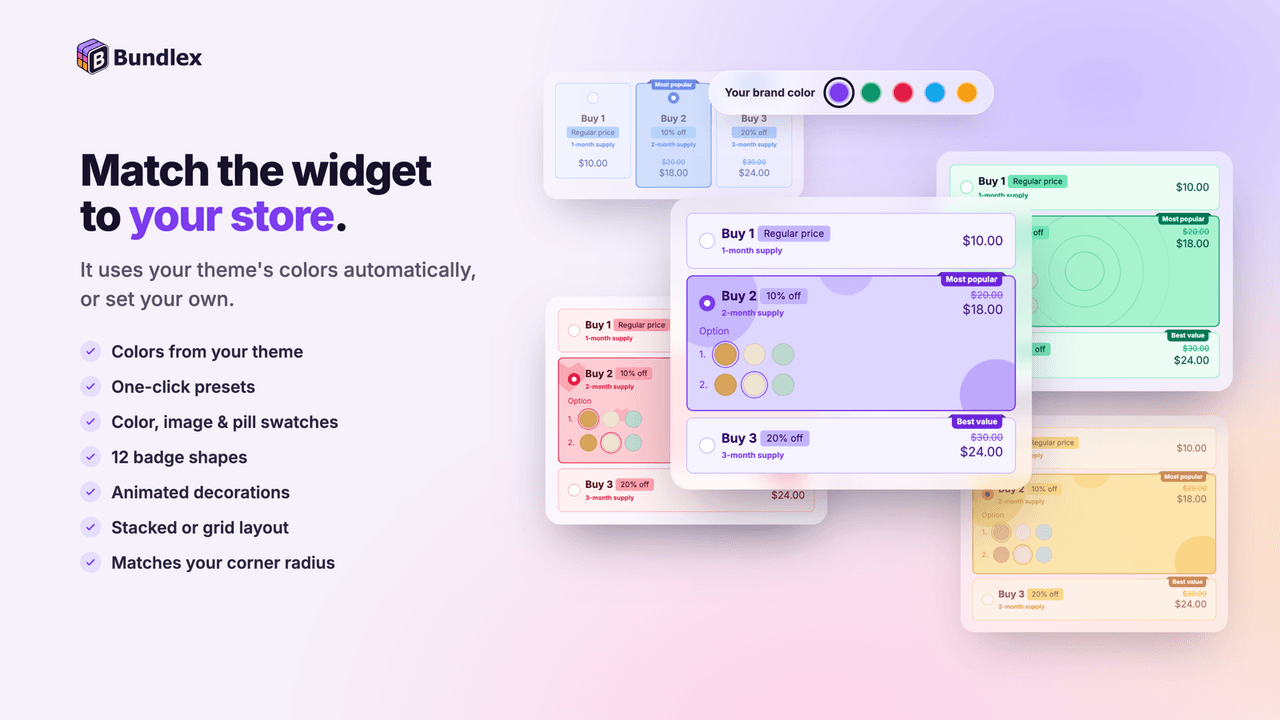
Bundlex Product Bundles Upsell (4.9 across roughly 130 reviews) is a free product-bundle app that shows bundle and cross-sell offers on the product page. It is a newer, smaller option, but genuinely free, with a strong rating so far.
Strengths: free product-page bundles, a 4.9 rating, and a simple setup.
Watch-outs: a smaller review base than the leaders, so pilot it on your theme.
Best for: stores wanting a simple free product-page bundle app. Free.
8. Ego Free Gifts BOGO Upsell
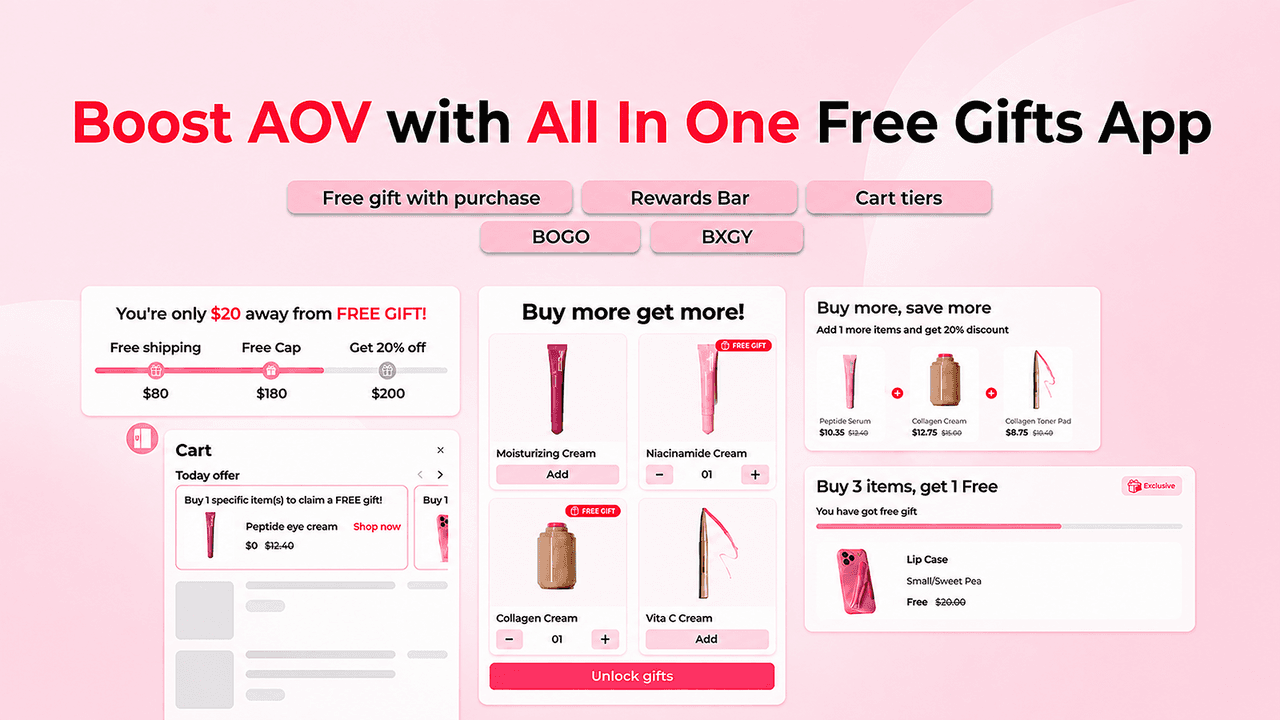
Ego Free Gifts BOGO Upsell (5.0 across roughly 44 reviews) handles the promotion side of upselling for free: free gift with purchase, BOGO, Buy X Get Y and cart add-ons, with widgets across the product page, cart and cart drawer, and it works alongside Shopify discounts. It is the free pick when your lever is a gift or a bundle deal rather than a straight upsell.
Strengths: free gift, BOGO and BXGY offers in one app, a 5.0 rating, and native discount compatibility.
Watch-outs: a small review base so far, and it is built around gift and BOGO mechanics rather than post-purchase offers.
Best for: stores running free-gift or BOGO promotions who want them free.
9. Upsell & Cross-Sell SmartFlow
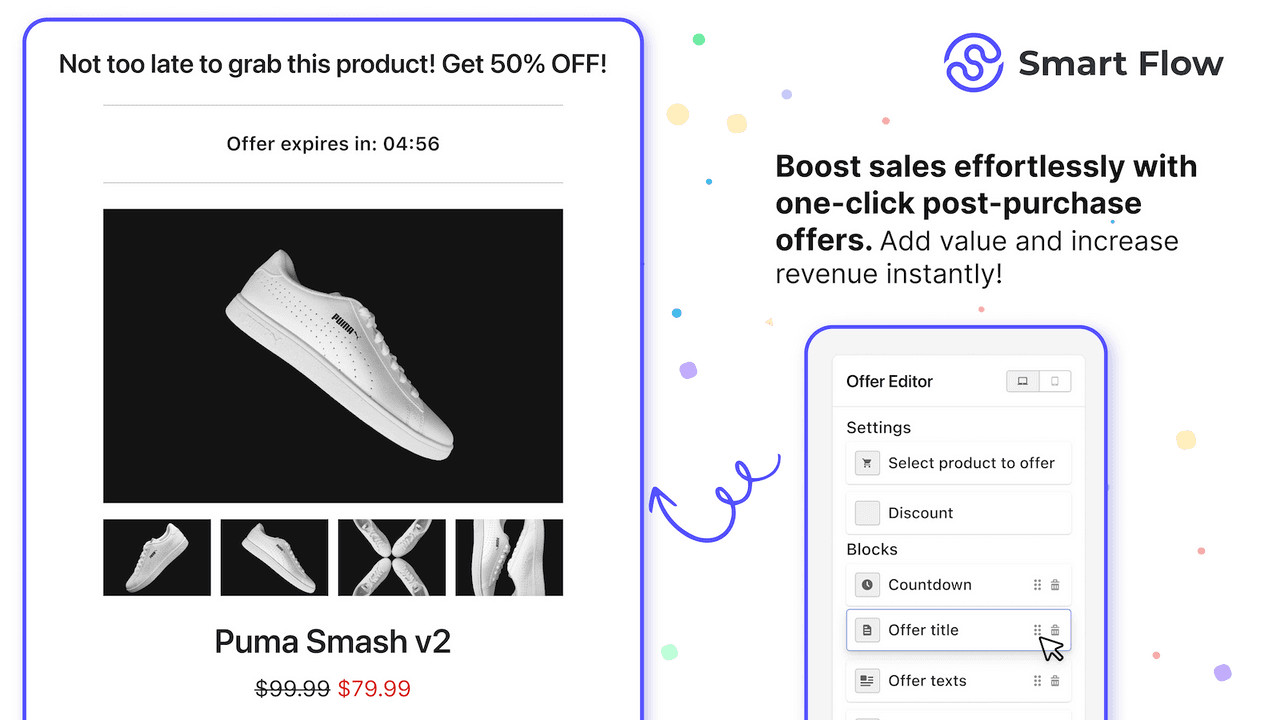
Upsell & Cross-Sell SmartFlow (5.0 across roughly 10 reviews) is a free post-purchase funnel builder: one-click upsells and downsells, premade templates, thank-you-page deals, A/B testing and analytics. It is the newest app here, but it is entirely free and, like our own app, it works after payment where an offer cannot cost you the sale.
Strengths: free one-click post-purchase funnels with templates and A/B testing.
Watch-outs: a very small review base so far, so pilot it before relying on it.
Best for: stores wanting a free post-purchase funnel builder with A/B testing.
The best free app for each situation
Best free post-purchase upsell: Libautech AI Post Purchase, our app, free forever with no cap or revenue share (new, so fewer reviews).
Most-proven genuinely free app: AOV.ai Bundles, a 5.0 across more than 1,500 reviews.
Best free cart upsells: Essent Cart Drawer.
Best free checkout control: SMART Checkout Rules & Upsells.
Best free all-in-one across pages: Upsell App by Essentialwolf.
Best free gift or BOGO offers: Ego Free Gifts BOGO Upsell.
Best free native bundles: Shopify Bundles, first-party and free forever.
Which free upsell app is right for you?
Every option here is genuinely free. Pick what matters most and we will name the best fit, and say which kind of free it is.
Common mistakes with free upsell apps
Mistaking freemium for free. Most "free" upsell apps are a capped free plan that pushes you to paid. Read the pricing tab, not the "free" tag, and check whether there is any paid tier at all.
Overlooking the revenue-share fee. Free to install can still cost a percentage of the sales it makes. That is not free, it is a bill that arrives with success. Every app on this list has none.
Expecting a free app to be a suite. Most genuinely free apps do one job. If you want product-page, cart and post-purchase coverage, pair two of these, or start with the one all-in-one on the list, rather than expecting every app to do everything.
Stacking free apps that each inject scripts. Even free apps add scripts. Two apps across the journey is lighter than four, so choose deliberately.
What a free upsell is worth
Even a free post-purchase upsell adds real revenue. Put in your monthly orders, the share who accept, and what an accepted offer adds, to size it.
Extra revenue a month
$1,000
Extra revenue a year
$12,000
That is about 50 accepted offers a month at $20 each, all of it added after the sale is already won, so it carries no risk to the original order. It is gross added revenue before any offer discount. You can run the post-purchase offer free with Libautech AI Post Purchase.
Think your app belongs on this list?
We review submissions against the same criteria we rank on and add the ones that qualify. If you build a Shopify app in this category, send it in.
Related guides: Best upsell apps for clothing, Best post-purchase upsell apps, How to upsell on Shopify and Shopify bill analyzer.