
8 Best Shopify Cookie Consent Apps (2026)
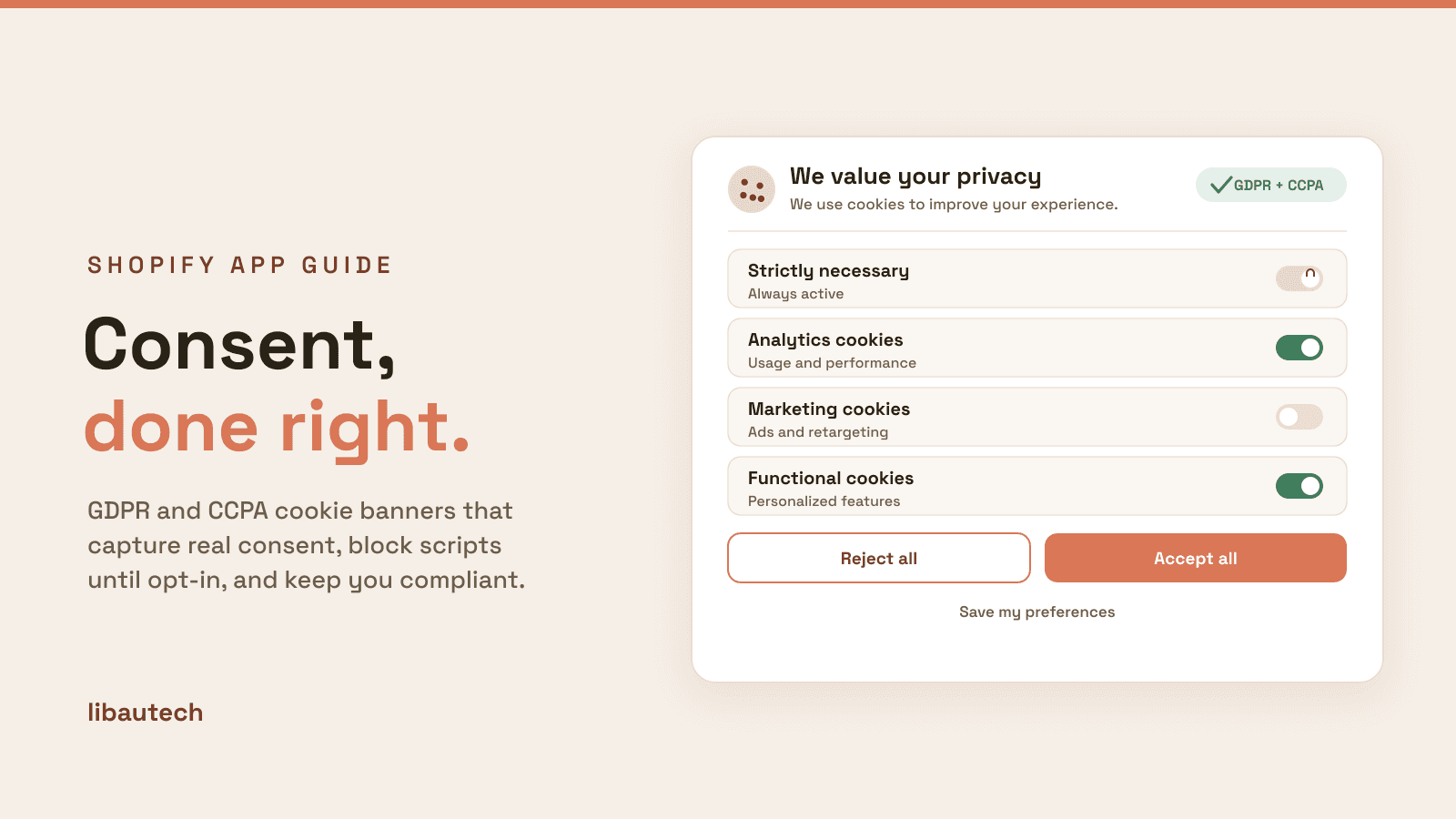
The best Shopify cookie consent apps in 2026 do far more than show a banner: they capture valid consent, block tracking scripts until a shopper opts in, and keep records to prove it, across GDPR, CCPA and a growing list of privacy laws. They cover four jobs: banner display, granular consent capture, script blocking before consent, and consent logging. Pandectes and Consentmo lead on rating and review depth, Avada is the best free banner, and recognized brands like CookieYes and CookieFirst round out the list. We do not make a consent app, so this is a neutral roundup ranked on merit. None of this is legal advice.
Key takeaways
- A banner alone is not compliance. Under GDPR you must actually block analytics and marketing scripts until the shopper opts in, and keep a record of their choice. Many stores show a banner that does nothing behind it, which does not protect them.
- Pandectes is the most-installed and best-reviewed here, a 5.0 across more than 2,800 reviews, with prior-consent script blocking and Google Consent Mode v2. Consentmo and Avada are strong alternatives, and Avada has the best free banner.
- The rules differ by region: GDPR in the EU and UK requires opt-in with reject as easy as accept and no pre-ticked boxes; CCPA and CPRA in California are opt-out, with a Do Not Sell or Share signal. If you sell across borders, use geo-targeted banners.
- Google Consent Mode v2 is effectively required to keep Google Ads and Analytics working for EEA and UK visitors. Pick an app that supports it. Ratings and pricing are read from the live App Store as of August 2026, and delisted apps such as iubenda have been removed.
On this page
What a cookie consent app does
Privacy laws require you to ask permission before loading cookies and trackers that are not strictly necessary, and to honor the answer. A cookie consent app handles that end to end, and the parts that matter go well beyond a pretty banner.
Show a consent banner, on the shopper's first visit, explaining your cookie use and offering clear Accept, Reject and Customize choices, styled to match your store and, ideally, translated for your markets.
Capture consent granularly, letting visitors approve or decline by category, necessary, analytics, marketing, preferences, rather than a single all-or-nothing button, which several laws require.
Block scripts before consent, the part most stores miss. A compliant app scans for and holds back analytics and marketing tags until the shopper opts in, so nothing tracks them before they agree.
Log consent and manage regions, keeping an auditable record of who consented to what and when, and showing the right banner and rules for each visitor's location.
Which consent job is yours
Name your main need and match it to a row.
| Your need | Best pick | Why |
|---|---|---|
| A complete, proven consent app | Pandectes | The most-installed, with script blocking and Consent Mode v2. |
| Granular consent across many regions | Consentmo | Category-level consent and geo-targeted banners. |
| A good free GDPR banner | Avada | A clean, well-rated banner at no cost. |
| Multi-region banners on a budget | Consentik | Region-aware banners with a free plan. |
| A recognized global brand | CookieYes or CookieFirst | Established consent platforms with wider track records. |
How we ranked these
We do not make a consent app, so nothing on this list is ours and there is no bias to disclose. We ranked on whether the app actually blocks scripts before consent, granular and geo-targeted consent, Google Consent Mode v2 support, consent logging, banner customization, rating and review depth, and price. We do not treat a banner that only displays a message as compliant, because it is not. Ratings and pricing are from the live Shopify App Store as of August 2026. Note that some enterprise consent platforms, such as Cookiebot, Osano, OneTrust and Ketch, are powerful but have thin or poorly rated Shopify listings, so they are better evaluated directly rather than by their app-store presence. This article is general information, not legal advice; confirm your obligations for the regions you sell to.
The 8 best cookie consent apps compared
| App | Rating | Reviews | Price | Best for |
|---|---|---|---|---|
| Pandectes GDPR Compliance | 5.0 | 2,891 | Free plan available | The all-round leader |
| Consentmo GDPR Compliance | 5.0 | 1,872 | Free plan available | Granular, multi-region consent |
| Avada GDPR Cookies Consent | 5.0 | 843 | Free plan available | The best free banner |
| Consentik GDPR Cookie Banner | 4.8 | 263 | Free plan available | Multi-region banners on a budget |
| Complianz Consent | 4.4 | 265 | Free plan available | A recognized consent framework |
| Hulk GDPR Cookie Consent Bar | 4.9 | 32 | Free plan available | A simple bar from HulkApps |
| CookieYes GDPR Cookie Banner | 4.8 | 7 | Free plan available | A recognized global brand |
| CookieFirst Consent | 5.0 | 6 | From $9/mo | Automatic scanning and languages |
Ratings and pricing verified from live listings, August 2026. CookieYes and CookieFirst are established global consent brands with smaller Shopify review bases; we note that rather than hide it.
The apps, ranked
1. Pandectes GDPR Compliance
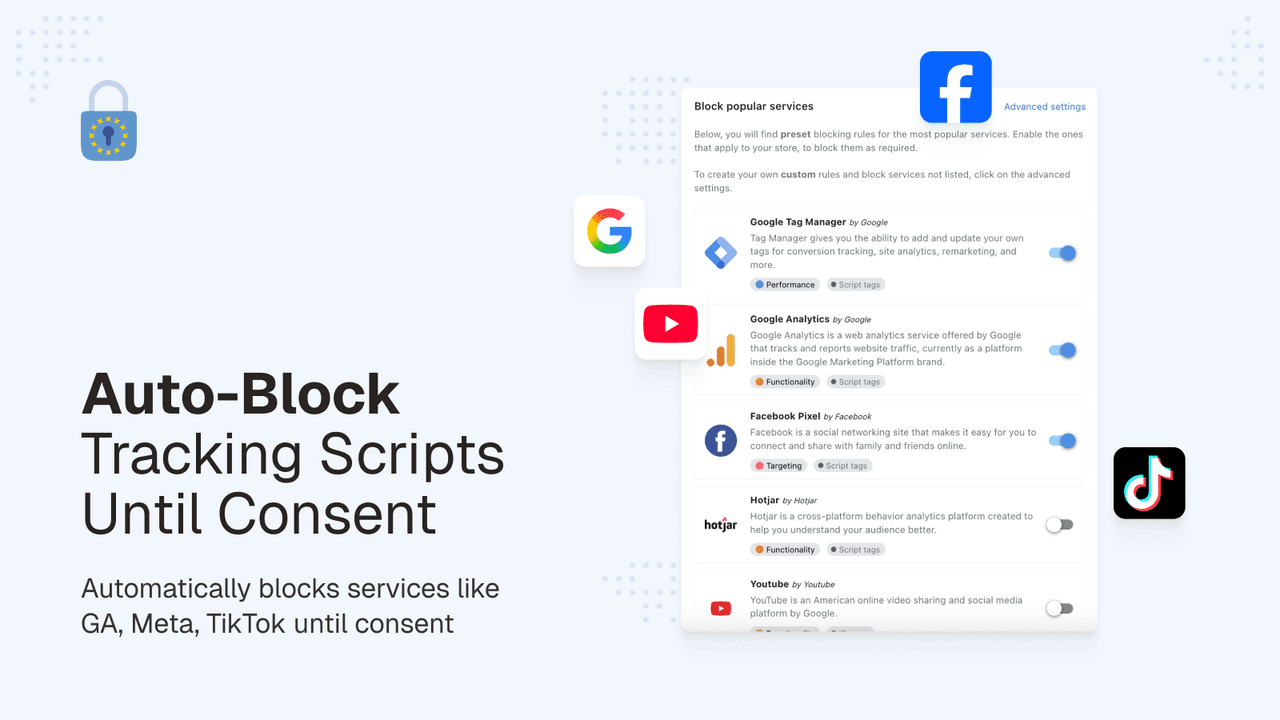
Pandectes GDPR Compliance (5.0 across more than 2,800 reviews) is the most-installed and best-reviewed consent app on Shopify. It delivers geo-targeted GDPR, CCPA and multi-region banners, granular category consent, genuine prior-consent script blocking, Google Consent Mode v2, and consent logging, on a free plan.
Strengths: the deepest review base at a perfect rating, real script blocking rather than a display-only banner, Consent Mode v2, and responsive support, all starting free.
Watch-outs: the full multi-region and logging features sit on paid tiers, and the breadth means a short setup to configure correctly.
Best for: most stores wanting a complete, proven consent solution. Free plan available.
2. Consentmo GDPR Compliance
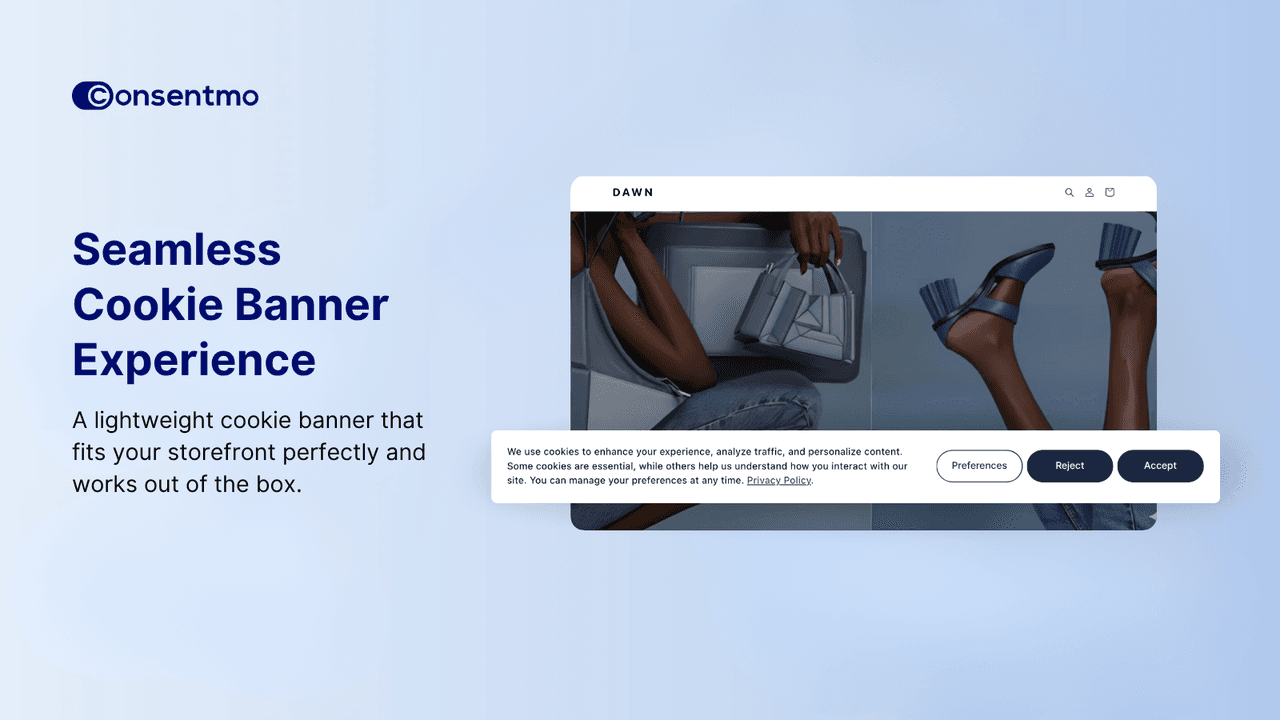
Consentmo GDPR Compliance (5.0 across more than 1,800 reviews) is a close second, with category-level consent, geo-targeted banners covering many jurisdictions, script blocking, Consent Mode v2 and a consent log for records. It is a strong pick for stores selling across multiple regions.
Strengths: a 5.0 across a deep review base, broad jurisdiction coverage, granular consent and consent records, with a free plan to start.
Watch-outs: as with Pandectes, the deepest features are paid, and configuring per-region rules takes a little time.
Best for: multi-region stores wanting granular consent and records. Free plan available.
3. Avada GDPR Cookies Consent
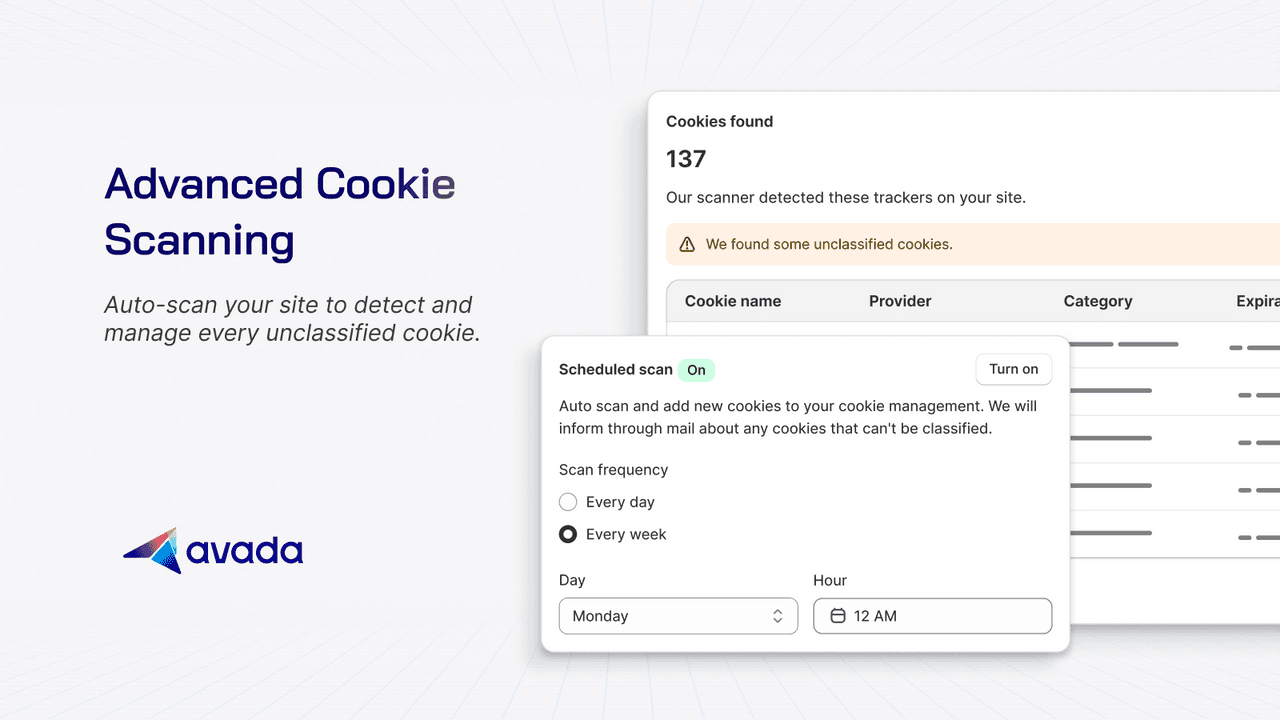
Avada GDPR Cookies Consent (5.0 across more than 800 reviews) is the best free option: a clean, well-rated consent banner with customization, consent modes and a genuinely usable free plan, from the well-known Avada team.
Strengths: a 5.0 rating, a polished banner, and a strong free tier, ideal for stores that want solid consent at no cost.
Watch-outs: its consent-logging and advanced region features are lighter than Pandectes or Consentmo, so confirm it covers every region you need.
Best for: stores wanting a good free GDPR banner. Free plan available.
4. Consentik GDPR Cookie Banner
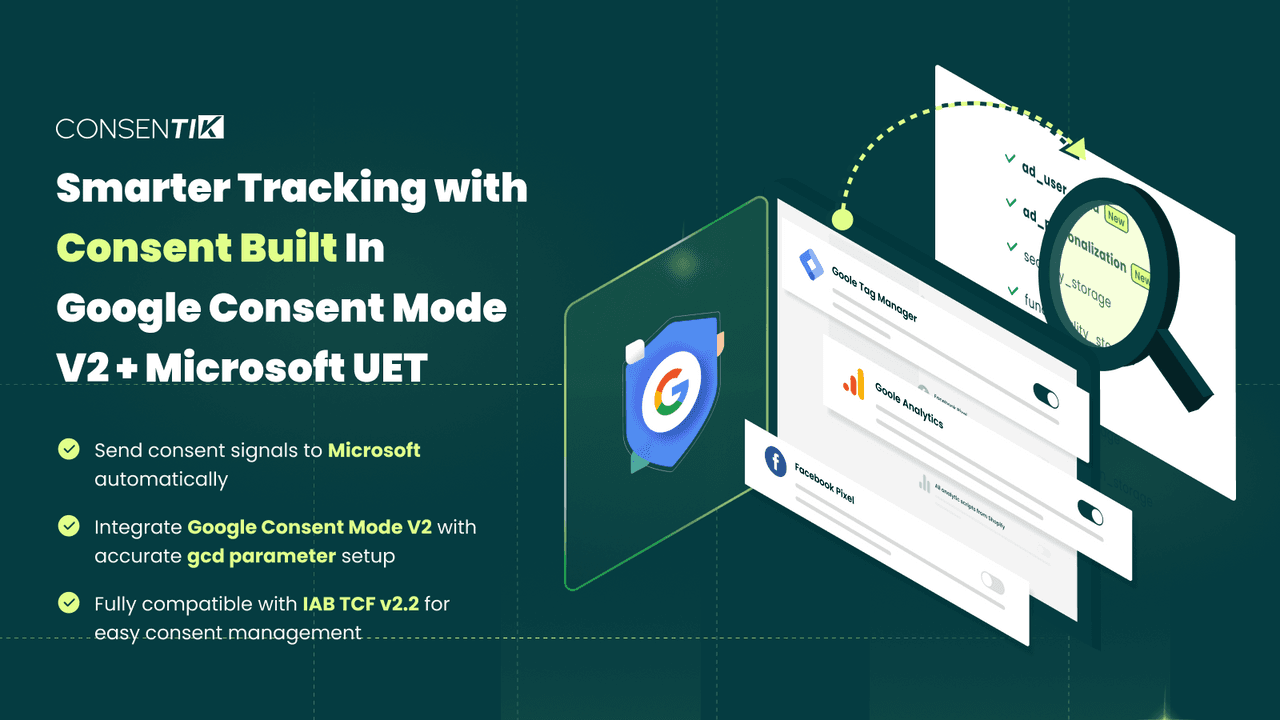
Consentik GDPR Cookie Banner (4.8 across more than 260 reviews) provides region-aware consent banners, Google Consent Mode support and customization, with a free plan and a solid review base, making it a good-value pick for stores selling across several regions.
Strengths: region-aware banners and Consent Mode support at an accessible price, with a real review base behind it.
Watch-outs: a slightly lower rating than the top three, so verify its script blocking and logging meet your needs.
Best for: multi-region stores wanting consent on a budget. Free plan available.
5. Complianz Consent
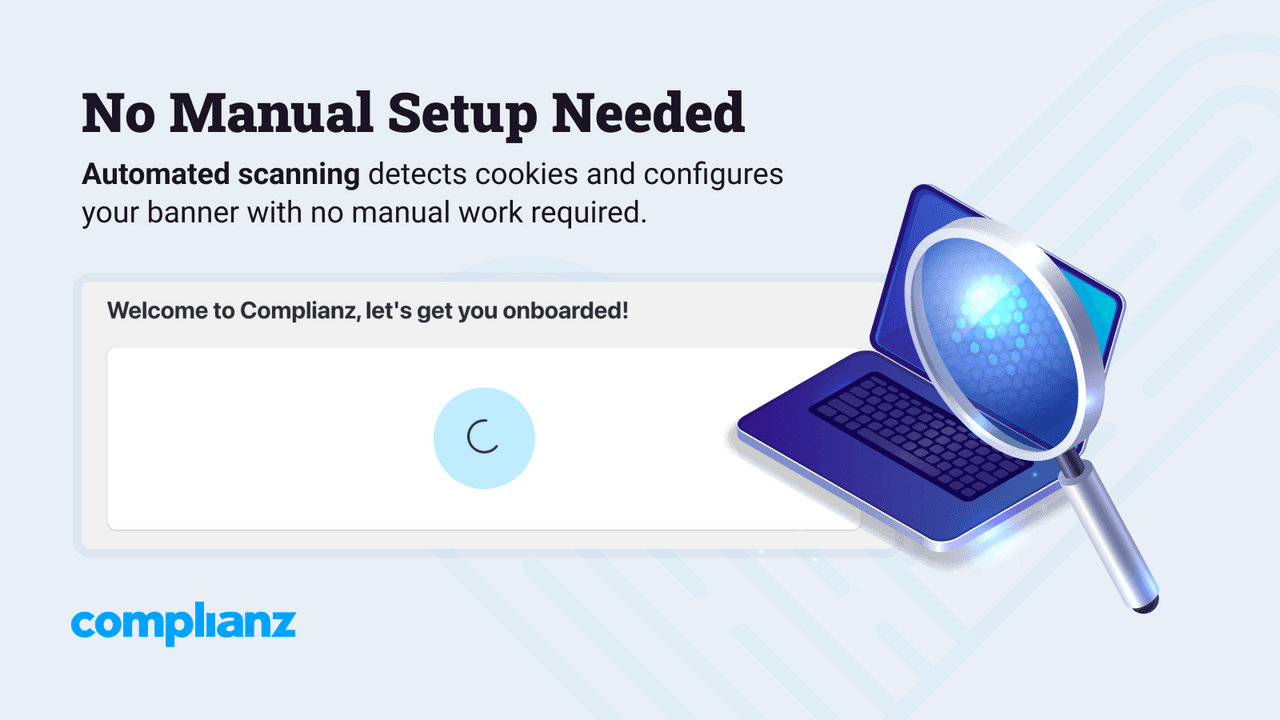
Complianz Consent (4.4 across more than 260 reviews) comes from the well-known Complianz privacy brand and offers configurable, region-specific consent with documentation, appealing to stores that want an established framework behind their banner.
Strengths: a recognized privacy brand, region-specific configuration, and a solid review base.
Watch-outs: a lower rating than the leaders here, so test the Shopify implementation carefully against your setup.
Best for: stores wanting a recognized consent framework. Free plan available.
6. Hulk GDPR Cookie Consent Bar
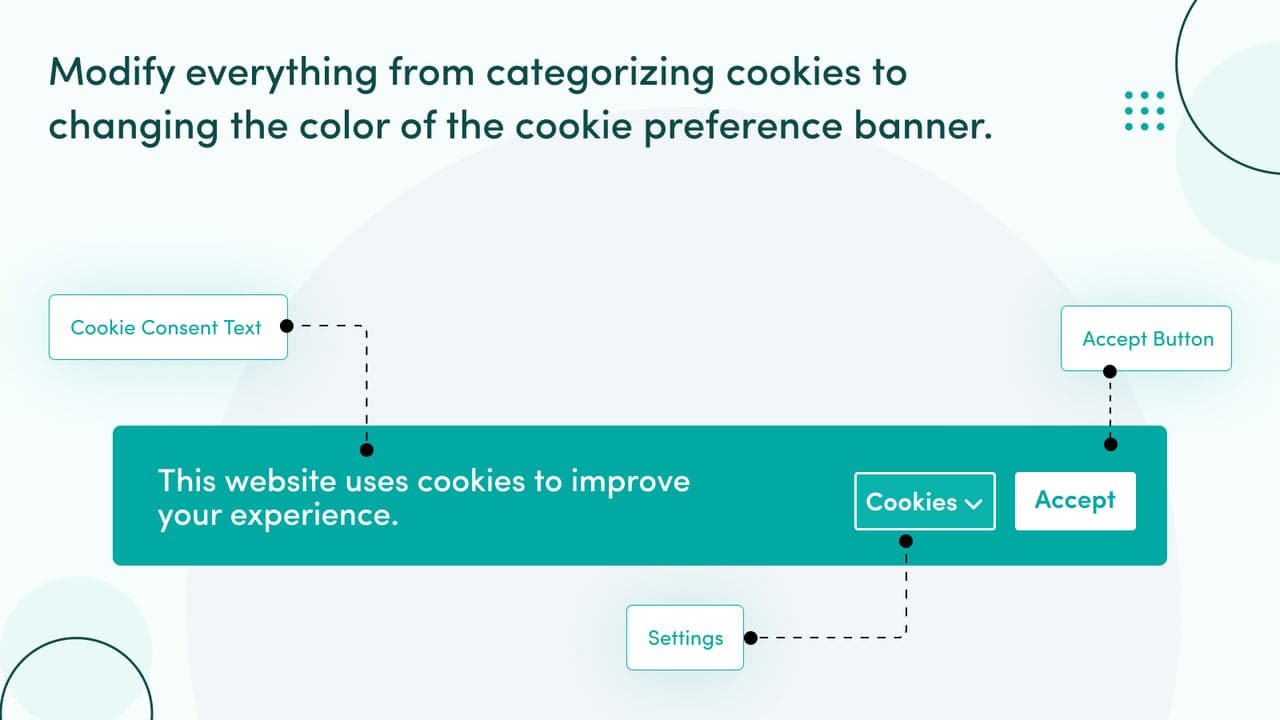
Hulk GDPR Cookie Consent Bar, by HulkApps (4.9 across roughly 30 reviews), is a straightforward, well-rated consent bar for stores that want a clean GDPR notice without a heavy platform, from an established Shopify app maker.
Strengths: a high rating, simple setup, and the reassurance of a large, established developer.
Watch-outs: a smaller review base and a lighter feature set, so confirm it blocks scripts and logs consent if you need those.
Best for: stores wanting a simple, reliable consent bar. Free plan available.
7. CookieYes GDPR Cookie Banner
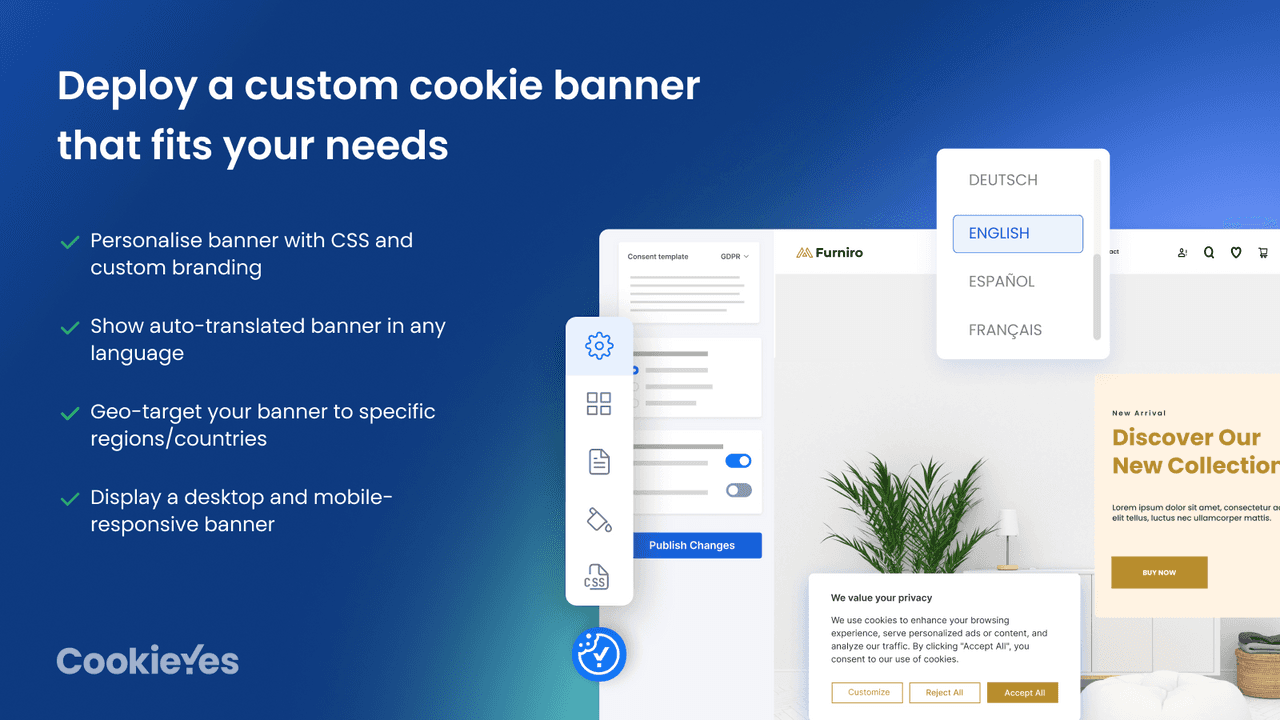
CookieYes GDPR Cookie Banner (4.8 across a small base of 7 reviews on Shopify) is the Shopify app from CookieYes, a widely used global consent platform. It brings automatic cookie scanning, multi-language banners and consent logging from a product with a large track record beyond Shopify.
Strengths: a recognized global brand, automatic scanning and multi-language support, and consent records, backed by a mature wider platform.
Watch-outs: its Shopify review base is small, so lean on the broader product reputation and test the Shopify integration yourself.
Best for: stores that want an established global consent brand. Free plan available.
8. CookieFirst Consent
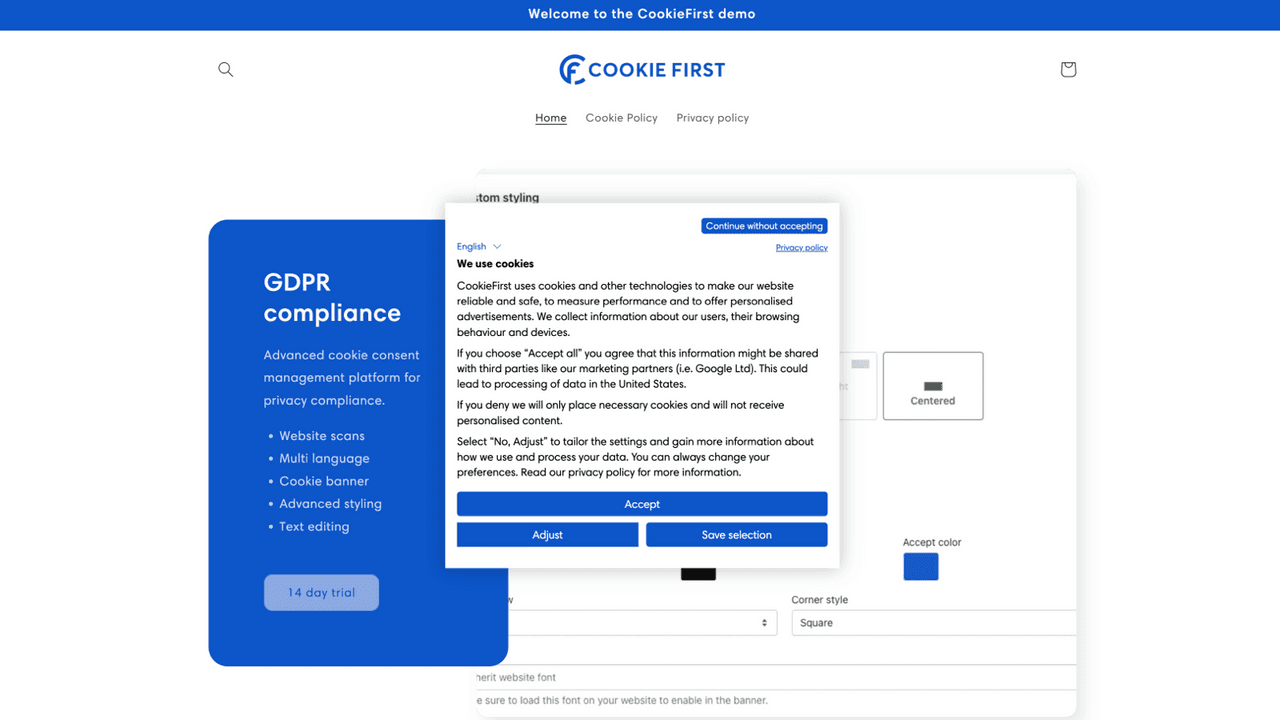
CookieFirst (5.0 across a small base of 6 reviews on Shopify) is another established European consent platform, offering automatic cookie scanning, banners in many languages, and consent statistics, aimed at stores that want a professional consent tool with broad language coverage.
Strengths: automatic scanning, strong multi-language support and consent reporting, from a recognized consent provider.
Watch-outs: a small Shopify review base and a paid starting price, so evaluate it against the free leaders for your needs.
Best for: multi-language stores wanting a professional consent platform. From $9/mo.
Which cookie consent app to choose
Best overall: Pandectes, the most-installed, with real script blocking and Consent Mode v2.
Best for multi-region consent: Consentmo.
Best free banner: Avada.
Best budget multi-region option: Consentik.
Best recognized global brand: CookieYes or CookieFirst.
Which cookie consent app fits your store?
Pick what you need most and we will point you to the best fit. We do not make a consent app, so every pick here is chosen on merit. None of this is legal advice; check your obligations for the regions you sell to.
Common cookie consent mistakes
Showing a banner that blocks nothing. The most common mistake. A banner that displays a message but still loads analytics and marketing tags before consent is not compliant. Make sure your app actually holds scripts back until the shopper opts in.
Making reject harder than accept. Under GDPR, declining must be as easy as accepting, with no pre-ticked boxes and no dark patterns. Give equal, clear Accept and Reject options on the first layer.
Skipping Google Consent Mode v2. Without it, Google Ads and Analytics lose data, and in some cases stop working, for EEA and UK visitors. Use an app that supports Consent Mode v2 and configure it.
Using one banner for every country. GDPR is opt-in; California's CCPA and CPRA are opt-out; other regions differ again. A single banner rarely fits all. Use geo-targeting so each visitor sees the right rules.
Keeping no record of consent. If you cannot show who consented to what and when, you cannot prove compliance. Choose an app that logs consent, and keep those records.
Think your app belongs on this list?
We review submissions against the same criteria we rank on and add the ones that qualify. If you build a Shopify app in this category, send it in.