
Best Shopify SEO Apps 2026
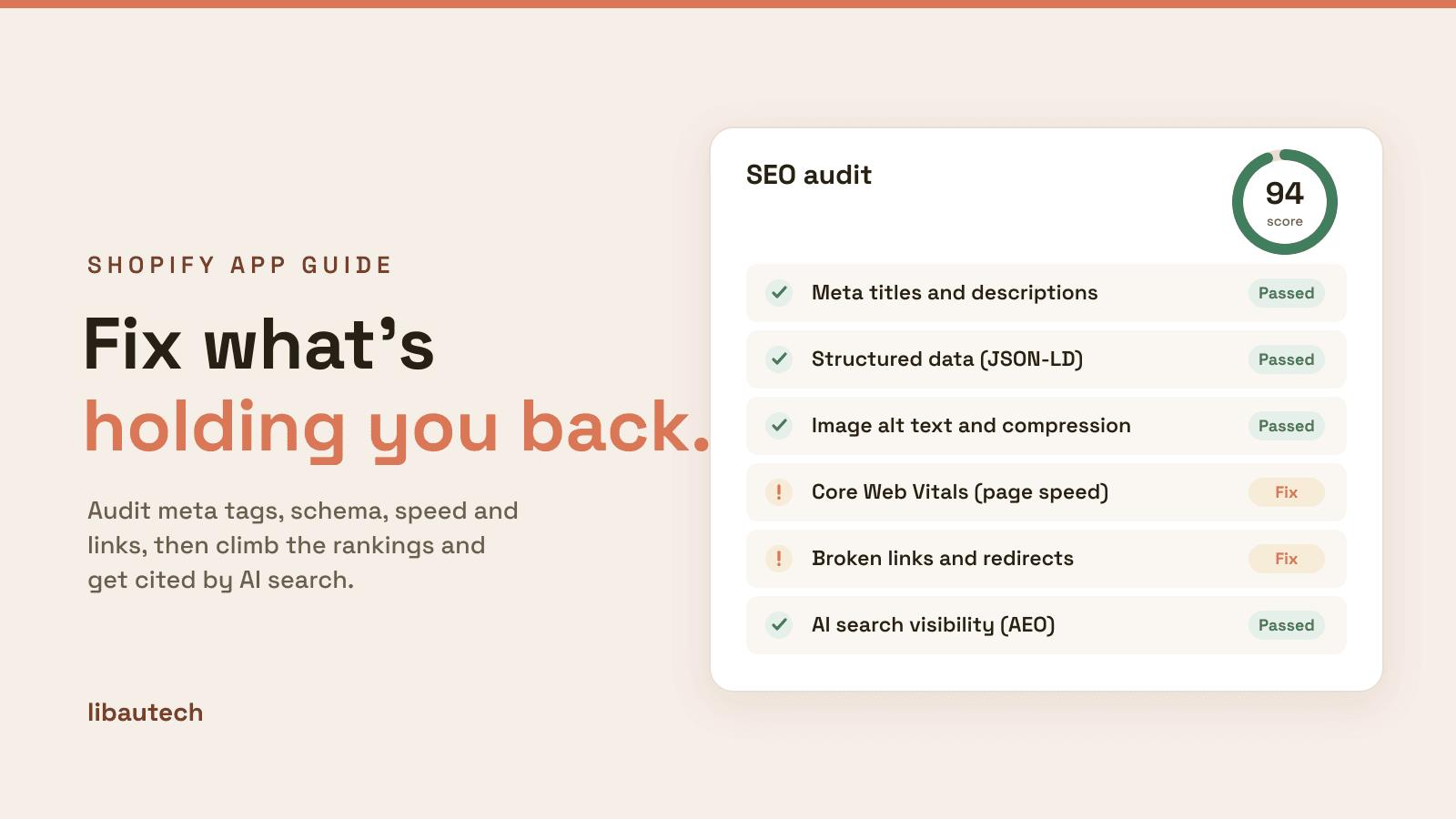
The best Shopify SEO apps in 2026 cover several jobs. For a hands-off all-in-one, Avada and Booster lead on review depth, Tiny SEO and SearchPie on speed and schema; for structured data, Smart SEO and JSON-LD for SEO; for meta and redirects, SEO Manager and Nabu; and for deep auditing, Plug In SEO. We also make Shoptank, which handles the newer job of AI search visibility, and include it last and disclosed. Most stores need one all-in-one plus, increasingly, an AI-search layer.
Key takeaways
- Shopify SEO splits into jobs: all-in-one optimization (speed, images, schema, meta), structured data, meta and redirect management, deep auditing, and the newer job of AI search visibility. No single app does everything best.
- Booster and Avada have the deepest review bases; Tiny SEO and SearchPie are strong all-in-ones; Smart SEO and JSON-LD lead on structured data; Plug In SEO is best for auditing.
- We make Shoptank, an AI search visibility app, and include it last, not first, because it is new and covers one specific job. Everything else is third-party, chosen on merit.
- Ratings are read from the live App Store as of August 2026, and several apps changed listing URLs or rebranded since this guide first published, which we have corrected.
On this page
The jobs of a Shopify SEO app
SEO on Shopify is not one task. It splits into all-in-one optimization (page speed and image compression, JSON-LD schema, meta tags, all in one app); structured data (deep JSON-LD so pages qualify for rich results); meta and redirect management (clean titles and descriptions, and 404 and 301 redirects that preserve link equity); deep auditing (finding and prioritizing what to fix); and, newly, AI search visibility (structuring your catalog so ChatGPT, Perplexity and Gemini can cite your products, sometimes called AEO or GEO).
Most stores start with an all-in-one, then add a specialist where they have a gap, structured data, redirects, or AI search.
Who needs which
| Your goal | Best pick | Why |
|---|---|---|
| Cover the basics in one app | An all-in-one (Avada, Booster, Tiny, SearchPie) | Most stores need speed, images, schema and meta before anything specialist. |
| Qualify for rich results | A structured-data app (Smart SEO, JSON-LD) | Clean JSON-LD drives stars, prices and breadcrumbs in search. |
| Manage meta and fix broken links | SEO Manager or Nabu | Meta control plus 404 and 301 redirects preserve rankings. |
| Be cited in AI shopping answers | An AI search visibility app | A new, growing channel as shoppers ask assistants for recommendations. |
How we ranked these
Most apps here are third-party, chosen on merit. One is ours: Shoptank, which handles AI search visibility, and we rank it last rather than first because it is new, with few reviews, and covers one specific emerging job. We say so plainly and place it honestly. We ranked on how well each app does its job, rating and review depth, native performance, and price. Ratings and pricing are read from the live Shopify App Store as of August 2026, and several apps changed listing URLs or rebranded since this guide first published, which we have corrected.
The 10 best SEO apps compared
| App | Rating | Reviews | Best for |
|---|---|---|---|
| Avada SEO & Image Optimizer | 4.9 | 4,329 | Hands-off AI audit and fixes |
| 404/301 URL Redirects by Nabu | 4.7 | 41 | Managing 404s and 301 redirects |
| Plug In SEO | 4.5 | 531 | Deep auditing and reporting |
| Smart SEO | 4.9 | 849 | Structured data and multi-language |
| SEO Manager | 4.7 | 389 | Hands-on meta and title control |
| Tiny SEO Speed Image Optimizer | 5.0 | 2,248 | All-in-one speed and images |
| JSON-LD for SEO | 4.9 | 351 | Advanced rich-result schema |
| SearchPie: SEO, Speed & Schema | 4.9 | 2,338 | A broad all-in-one suite |
| BOOSTER AI SEO + AEO Optimizer | 4.8 | 5,259 | The largest all-in-one install base |
| Shoptank | 5.0 | 2 | AI search visibility (AEO/GEO) |
Ratings verified from live listings, August 2026. Shoptank is our own app.
The apps, ranked
1. Avada SEO & Image Optimizer
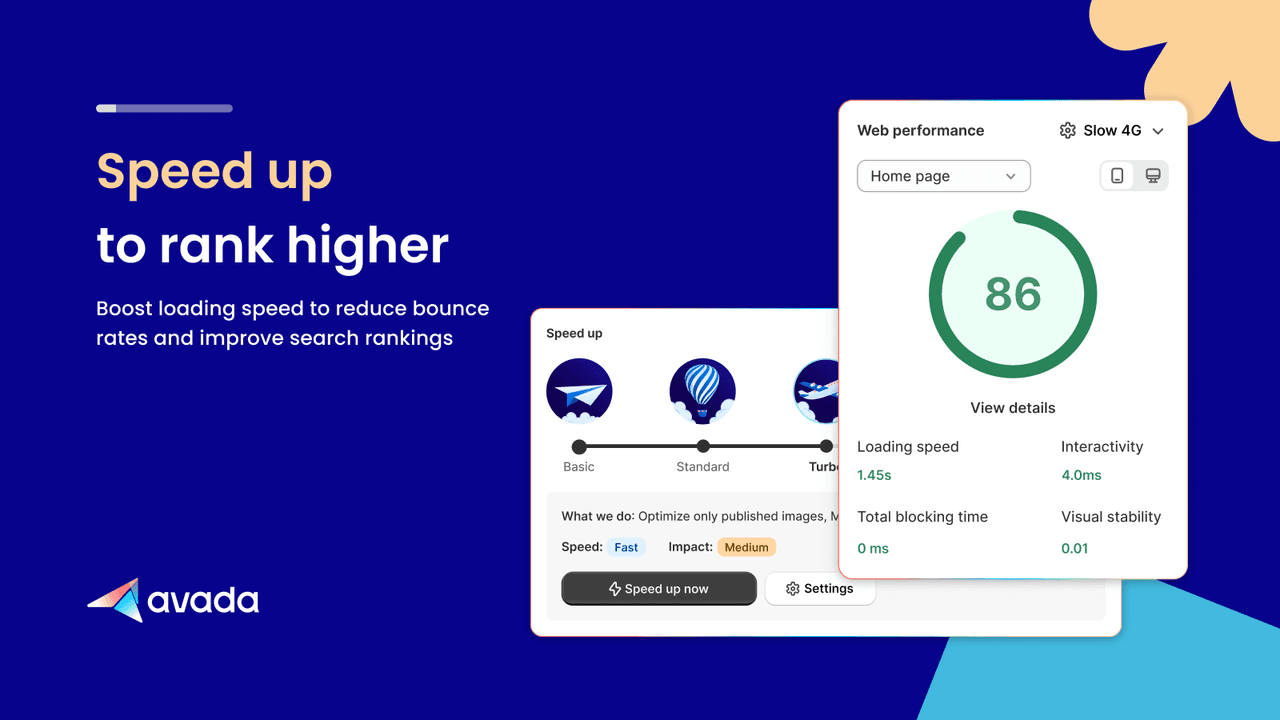
Avada SEO & Image Optimizer (4.9 across roughly 4,329 reviews) is the hands-off all-in-one: an AI-driven audit that surfaces and fixes issues with one click, plus image optimization, meta management and structured data.
Strengths: one of the largest review bases here, with automated audits and fixes that suit stores that will not do manual SEO.
Watch-outs: automated fixes still need a human eye for edge cases, and advanced features sit on paid tiers.
Best for: most stores wanting SEO found and fixed with minimal effort. Free plan, then paid tiers.
2. 404/301 URL Redirects by Nabu
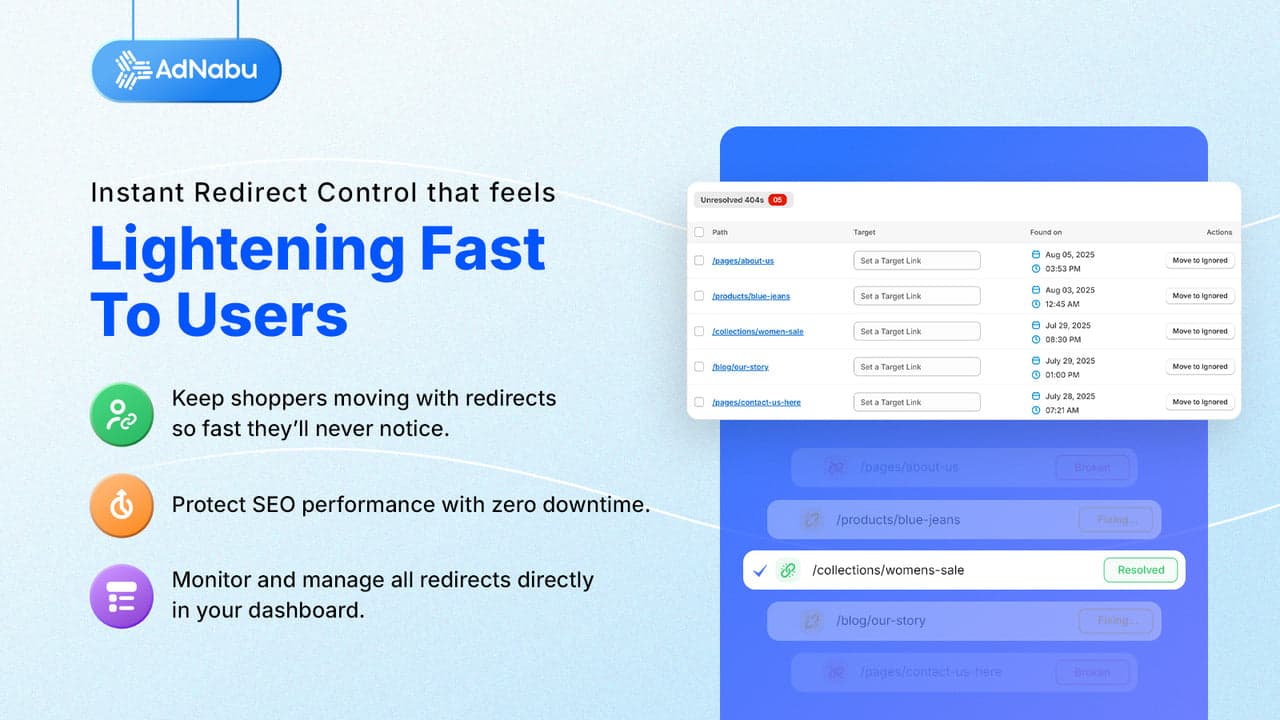
404/301 URL Redirects by Nabu (4.7 across roughly 41 reviews) is a focused redirect manager: it finds 404 errors and creates 301 redirects in bulk, so link equity and rankings survive URL changes, migrations and deleted products.
Strengths: the cleanest way to fix broken links and preserve SEO value when URLs change, a common gap the all-in-ones handle only lightly.
Watch-outs: a single-purpose tool with a small review base, so it complements a broader SEO app rather than replacing it.
Best for: stores changing URLs or migrating that need clean redirects. Free plan, then paid tiers.
3. Plug In SEO
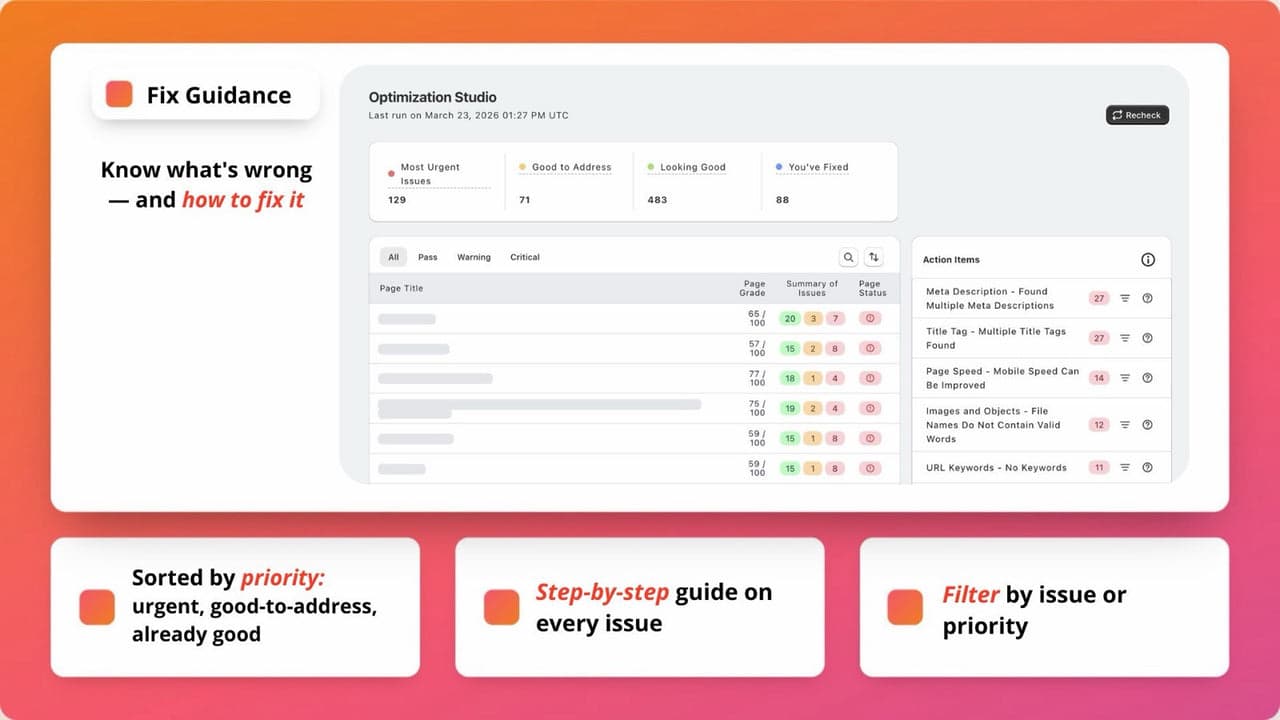
Plug In SEO (4.5 across roughly 531 reviews) audits your store and tells you exactly what to fix, missing meta descriptions, broken links, slow pages and structural issues, with ongoing monitoring.
Strengths: a clear, prioritized to-do list and ongoing monitoring, good for merchants who want to understand and fix issues themselves.
Watch-outs: it reports and guides more than it auto-fixes, so it suits a hands-on merchant.
Best for: stores that want a deep audit and a clear fix list. Free plan, then paid tiers.
4. Smart SEO
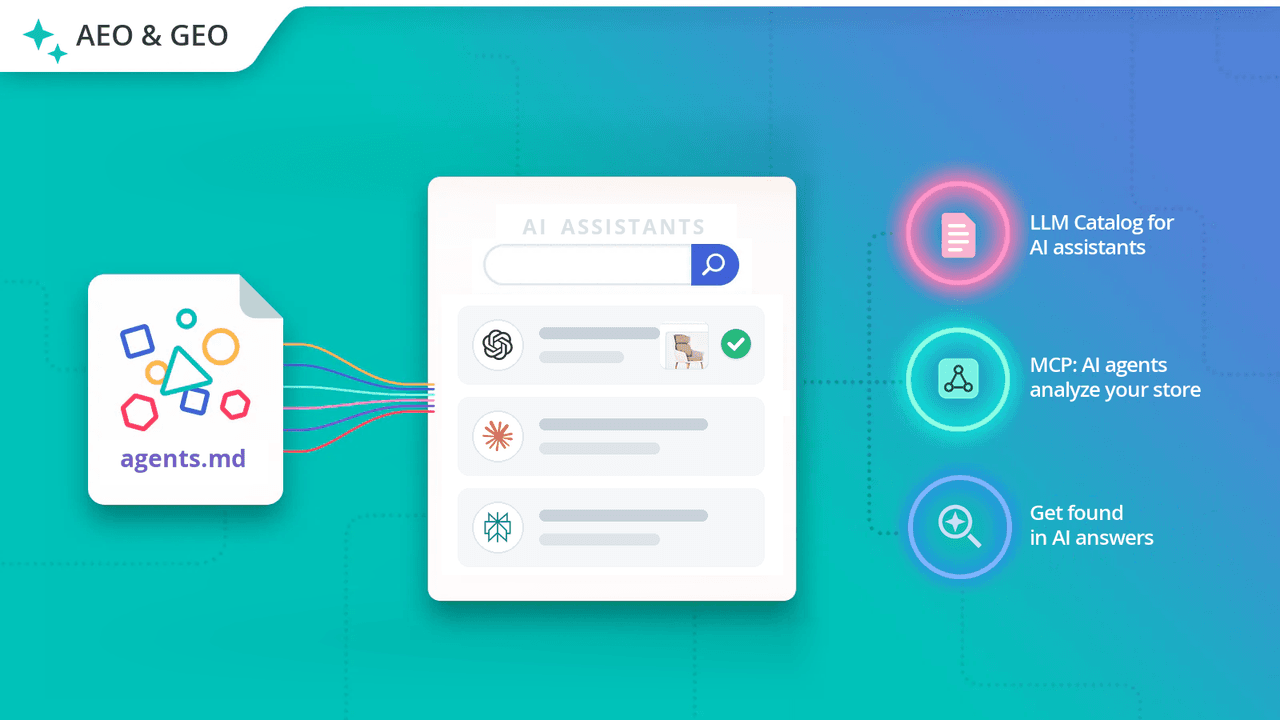
Smart SEO (4.9 across roughly 849 reviews) specializes in structured data: JSON-LD schema for products, articles and breadcrumbs, plus multi-language schema and automated meta tags and alt text.
Strengths: a strong structured-data toolkit that drives rich results across markets, with a high rating.
Watch-outs: narrower than the full all-in-ones, so you may pair it with a speed or image app.
Best for: stores that want rich results through clean structured data. Free plan, then paid tiers.
5. SEO Manager
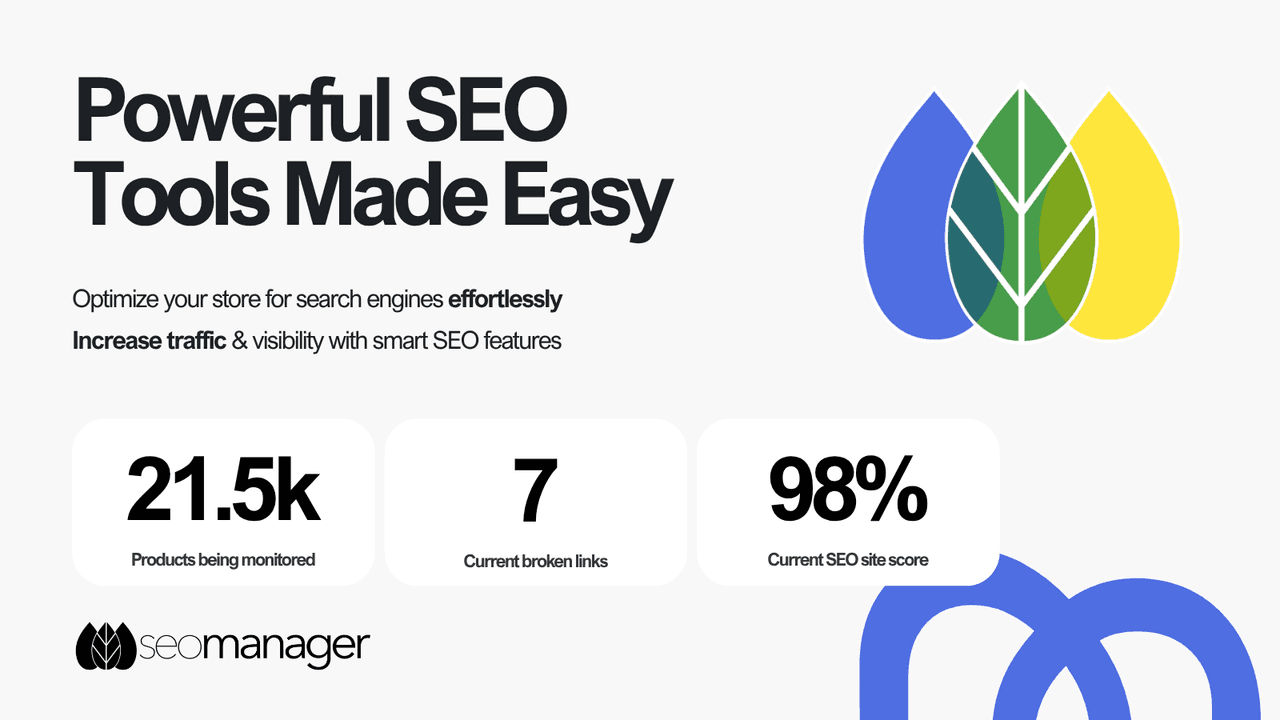
SEO Manager, by venntov (4.7 across roughly 389 reviews), is the hands-on control panel: edit meta titles and descriptions, manage sitemaps and structured data, and see real-time SEO issues and Google search feedback.
Strengths: granular manual control for merchants who want to write their own meta and monitor issues in one place.
Watch-outs: more hands-on than the automated all-in-ones, so it rewards a merchant who will do the work.
Best for: stores that want direct control over meta and titles. Paid, with a trial.
6. Tiny SEO Speed Image Optimizer
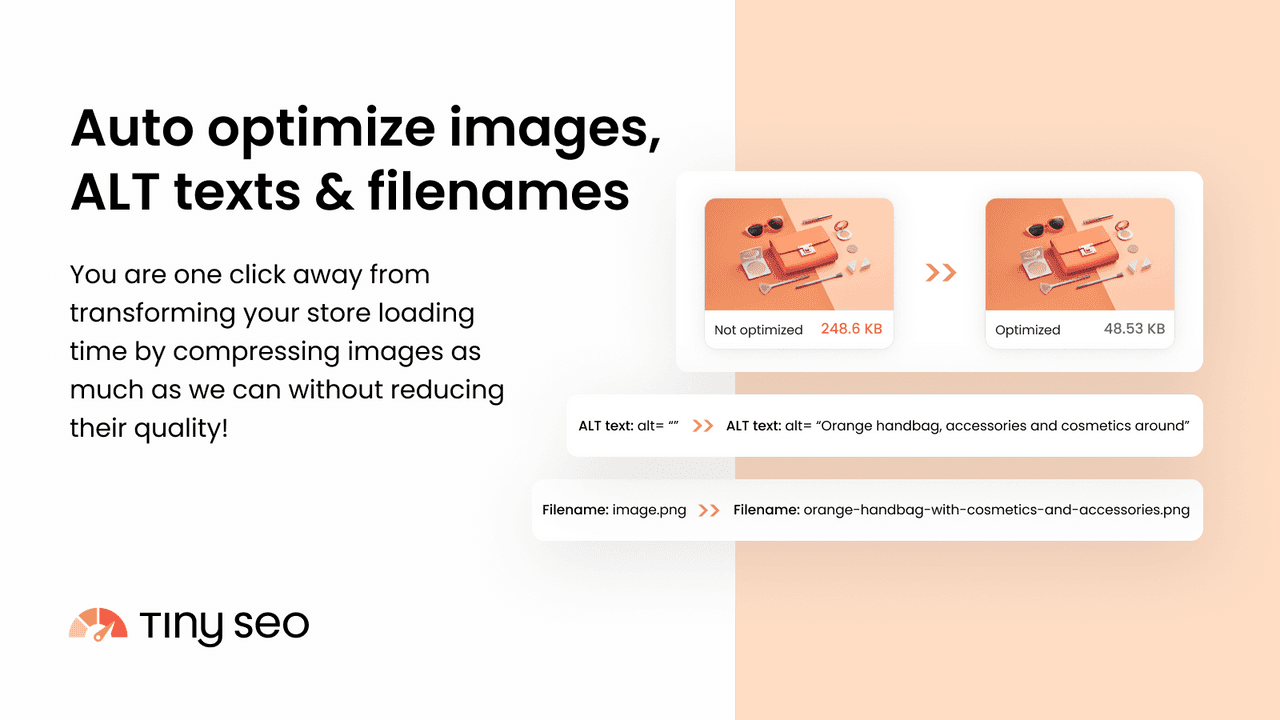
Tiny SEO Speed Image Optimizer, by TinyIMG (5.0 across roughly 2,248 reviews), bundles the core jobs: image compression, page-speed improvements, JSON-LD schema, meta management and broken-link fixing, at a near-perfect rating.
Strengths: a genuine all-in-one with the highest rating here, so most stores cover speed, images and structured data without stacking apps.
Watch-outs: the breadth means more settings, and the heaviest optimization is on paid tiers.
Best for: stores wanting a top-rated all-in-one for the basics. Free plan, then paid tiers.
7. JSON-LD for SEO
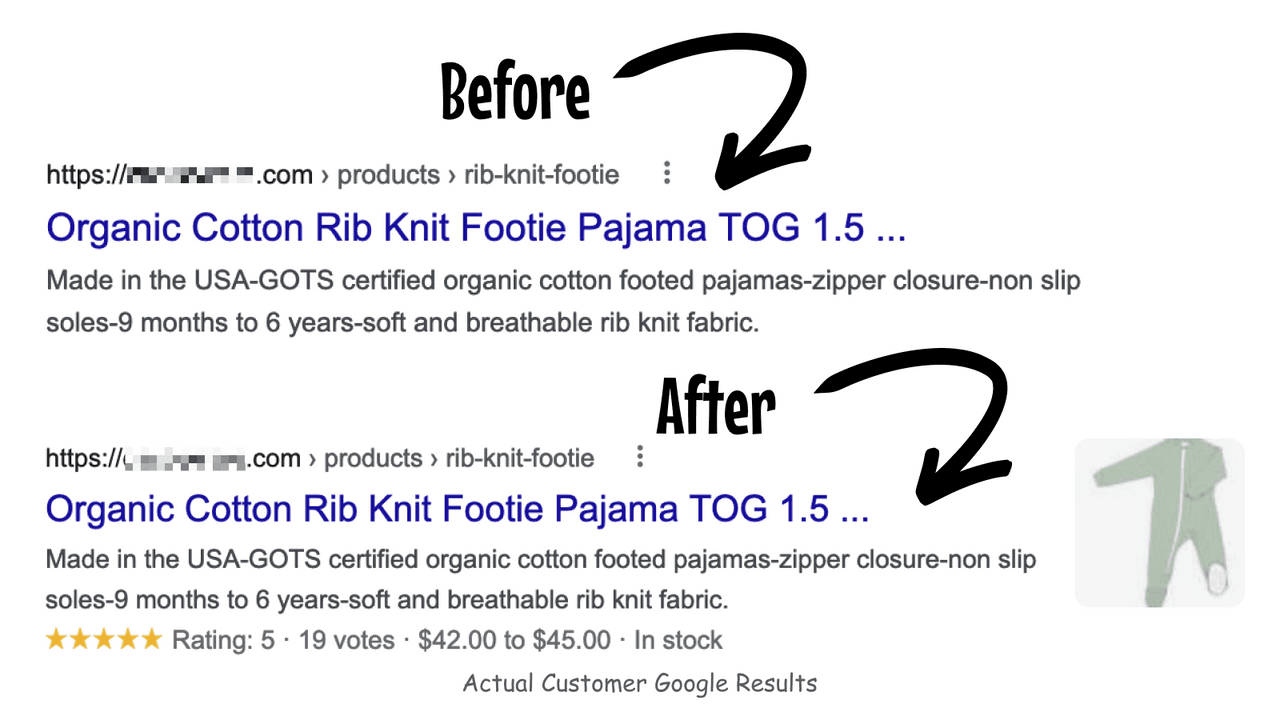
JSON-LD for SEO (4.9 across roughly 351 reviews) is the advanced structured-data specialist: comprehensive JSON-LD markup for products, reviews, FAQs, articles and more, aimed at maximizing rich-result eligibility.
Strengths: the deepest, most standards-accurate schema here, favored by SEO-serious stores that want every rich-result type covered.
Watch-outs: single-purpose and technical, so it suits stores that already handle speed and meta elsewhere.
Best for: stores that want maximum rich-result schema coverage. Paid, with a trial.
8. SearchPie: SEO, Speed & Schema
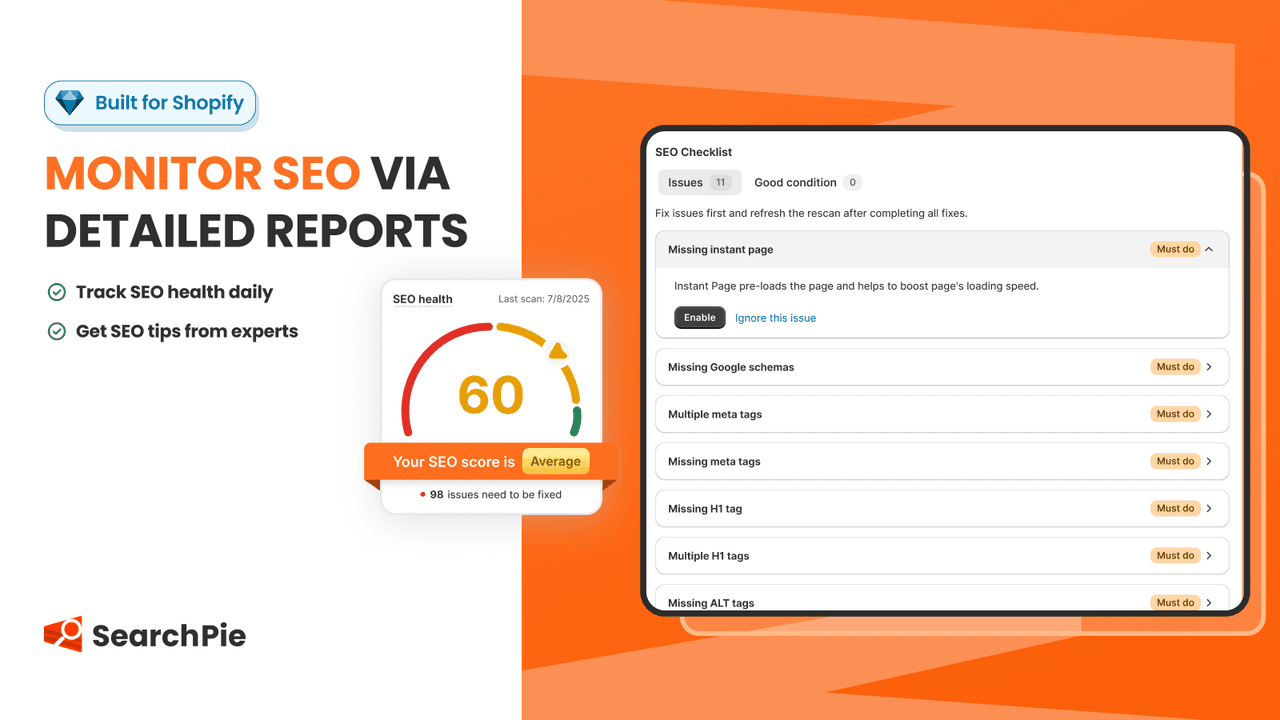
SearchPie: SEO, Speed & Schema (4.9 across roughly 2,338 reviews), formerly SEO Booster, is a broad all-in-one covering meta optimization, schema, speed, image compression and SEO reporting from one dashboard.
Strengths: a wide feature set with a strong rating and deep review base, a capable all-in-one alternative to Avada and Tiny.
Watch-outs: the breadth overlaps the other all-in-ones, so pick one rather than running several.
Best for: stores wanting a broad all-in-one SEO suite. Free plan, then paid tiers.
9. BOOSTER AI SEO + AEO Optimizer
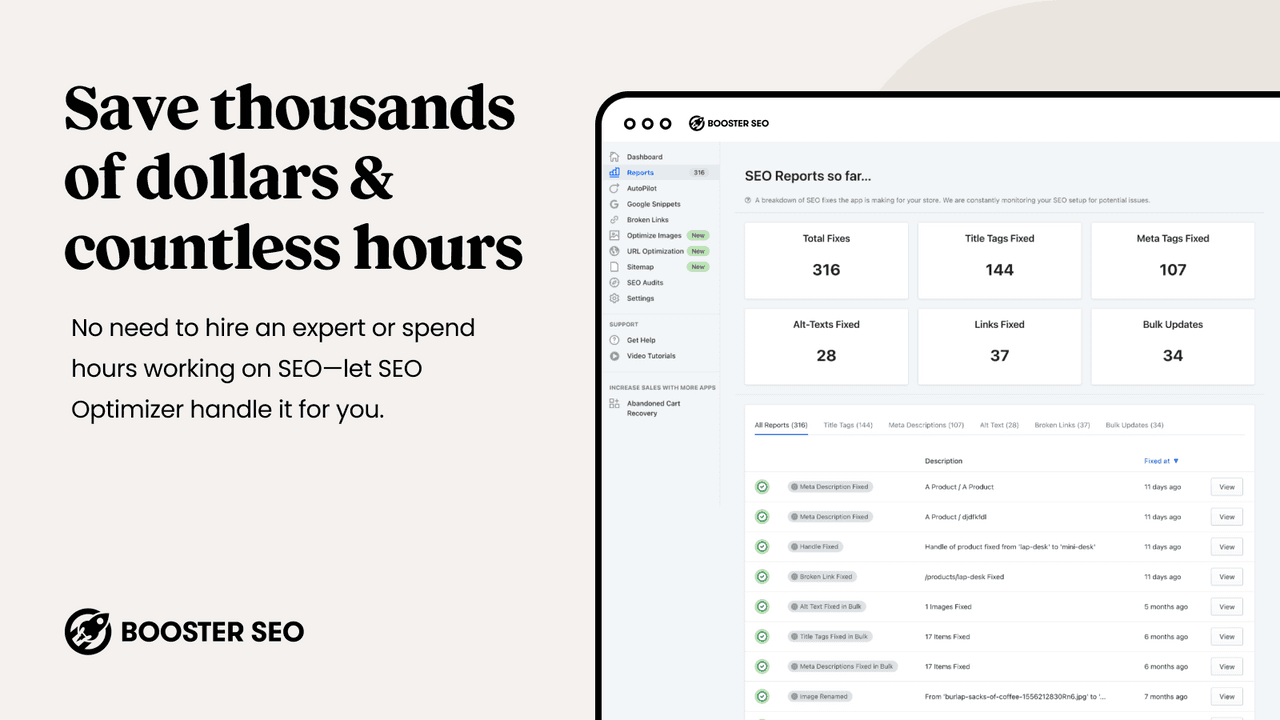
BOOSTER AI SEO + AEO Optimizer (4.8 across more than 5,259 reviews), formerly Booster SEO Image Optimizer, is a long-standing all-in-one with the largest review base here, now adding answer-engine optimization (AEO) alongside meta, schema and image tools.
Strengths: the deepest install base and track record of any app on this list, with a broad feature set and a growing AI-search angle.
Watch-outs: like the other all-in-ones it overlaps its peers, and the sheer feature breadth takes time to configure.
Best for: stores that want the most-proven all-in-one with an AEO angle. Free plan, then paid tiers.
10. Shoptank
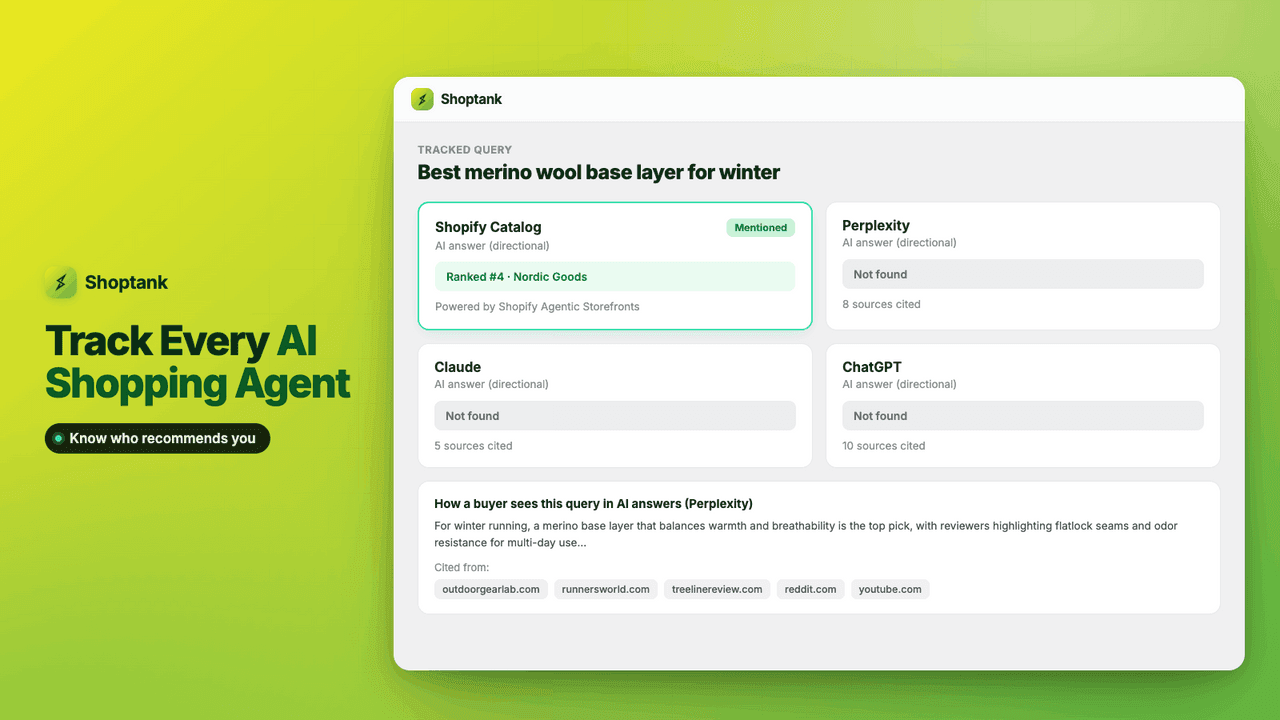
Shoptank (our app, 5.0 across 2 reviews, Built for Shopify) covers the newer AI search visibility job: it structures your catalog and content with AI-readable schema and an llms.txt layer so ChatGPT, Perplexity and Gemini can find and cite your products in shopping answers, and it reports where you rank in those answers.
Strengths: purpose-built for the AI-search channel that traditional SEO apps do not directly target, a genuine and growing gap as shoppers ask assistants for recommendations.
Watch-outs: we will be straight, it is new with only a handful of reviews, and it does one specific job. It complements a traditional SEO app rather than replacing it, and there is no permanent free plan.
Best for: stores that want to be cited in AI shopping answers alongside their traditional SEO. From $14.99/mo.
Which SEO app to choose
Best hands-off all-in-one: Avada or Booster, the deepest track records; Tiny SEO for the highest rating.
Best structured data: Smart SEO or JSON-LD for SEO.
Best meta and redirect control: SEO Manager and Nabu.
Best deep audit: Plug In SEO.
Best AI search visibility: Shoptank, our app, as a complement to a traditional SEO app.
Which SEO app fits your store?
Pick what you need most and we will point you to the best fit. Most picks are third-party apps chosen on merit; the AI-search option is our own app, and we say so.
Common Shopify SEO mistakes
Ignoring page speed. Unoptimized images and heavy apps slow Core Web Vitals, a Google ranking signal. Compress images and keep the app stack lean.
Skipping structured data. Without JSON-LD schema, your products miss rich results (stars, prices, breadcrumbs) that lift click-through even at the same position.
Breaking links without redirects. Changing URLs or deleting products without 301 redirects throws away the rankings those pages earned. Use a redirect manager.
Running two all-in-ones at once. Two apps both editing meta or schema conflict and can double-inject markup. Pick one all-in-one, plus specialists for distinct jobs.
Treating AI search as traditional SEO. Being cited by ChatGPT or Perplexity uses related but different signals from ranking on Google. Get the fundamentals right first, then add an AI-search layer.
Think your app belongs on this list?
We review submissions against the same criteria we rank on and add the ones that qualify. If you build a Shopify app in this category, send it in.