
8 Best Shopify Web Push Apps (2026)
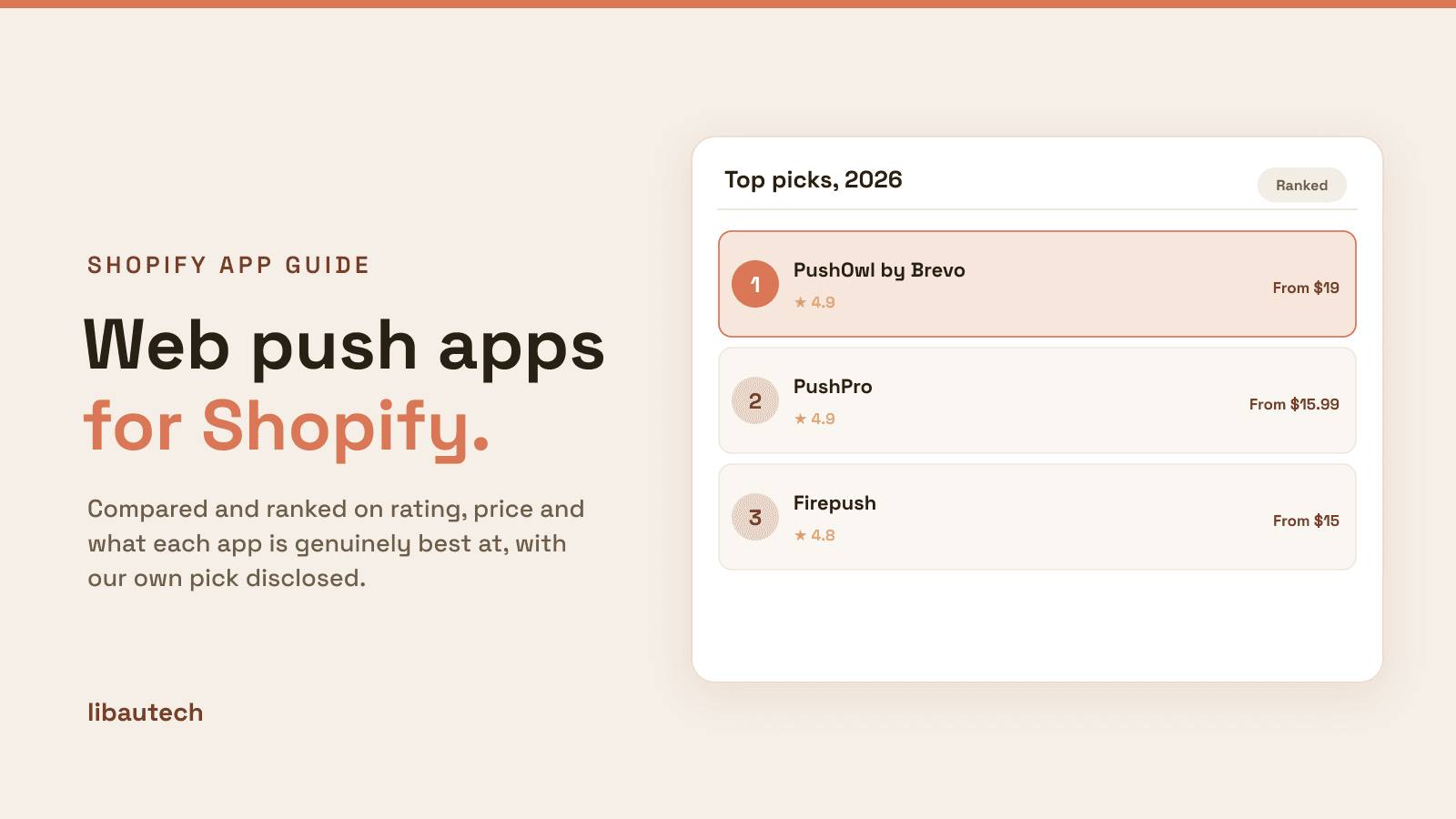
Last updated: April 2026 · Pricing and ratings verified from live Shopify App Store listings on April 30, 2026. Reviewed by the Libautech team — builders of Built for Shopify apps used by 5,000+ merchants across 50+ countries.
Key Takeaways
- Shopify web push apps split into three distinct jobs that competitor blogs treat as one. Pure web push apps (PushOwl, PushPro, Aimtell) deliver browser-based notifications across desktop and Android. Multi-channel push platforms (Hextom, Firepush, One) bundle web push with SMS, WhatsApp, and email under one platform. Messenger/social re-engagement apps (Mata, Recart) use Facebook Messenger and Instagram DMs to reach customers through social channels.
- Web push opt-in conversion runs 5-15% of unique visitors versus 2-5% for email signups. The friction is lower (one-click browser permission vs typing email address), but the channel is also less personal and more rejection-prone. Realistic abandoned cart recovery via web push runs 8-18% of pushed carts versus 5-12% for email.
- Web push has a critical limitation: iOS Safari does not support web push for websites. Apple introduced limited web push for installed PWAs in iOS 16.4 (2023), but Shopify storefronts are not PWAs by default. This means web push notifications reach desktop users (Chrome, Edge, Firefox, Safari macOS) and Android users only — iPhone users in Safari are unreachable through web push.
- For stores with majority-iPhone traffic (apparel, beauty, lifestyle in US/UK/Australia where iOS market share is 50-60%+), pure web push captures only desktop and Android users — leaving over half the audience unreachable. Multi-channel platforms with SMS or WhatsApp reach the iPhone audience that web push misses, often at higher per-message cost but with broader coverage.
- Pricing in this category varies dramatically by layer. Pure web push apps offer free tiers up to 500-1,000 subscribers and paid plans from $19-49/mo. Multi-channel platforms charge per message ($0.01-0.06 per SMS plus monthly platform fees of $19-99/mo). Messenger apps are typically free with paid premium tiers from $19-49/mo. The cost math depends entirely on subscriber volume and message frequency.
- The biggest web push mistake is over-messaging. Aggressive push schedules drive opt-out rates to 30-50% per month, destroying the long-term subscriber base in exchange for short-term campaign clicks. Best-in-class web push programs send 1-2 promotional pushes per week plus triggered cart-recovery and back-in-stock messages — frequency that maintains opt-in rates and lifetime engagement.
Who Needs a Web Push App, and Why?
Web push notifications reach subscribers on their device without an email address, which makes them a cheap, high-converting channel for cart recovery, back-in-stock alerts and promotions. Someone opts in with one click, and you can reach them again even if they never gave you their email. Open and click rates typically beat email.
You need one if you want another owned channel beyond email and SMS, recover abandoned carts, or announce drops and sales. If your audience is tiny or you already saturate them on other channels, add it carefully.
The Three Jobs of Shopify Web Push Apps
Most roundups of Shopify web push apps lump together pure web push tools, multi-channel push platforms, and Messenger/social re-engagement apps as if they're solving the same problem. They are not. A pure web push app delivers browser notifications via the Web Push protocol — customers click "Allow" in their browser, the app pushes notifications even when the browser tab is closed. A multi-channel push platform combines web push with SMS, WhatsApp, and email under one platform with unified subscriber lists and orchestrated campaigns. A Messenger/social app uses Facebook Messenger or Instagram DMs to re-engage customers through social channels rather than browser notifications. Different channels, different opt-in mechanics, different deliverability rates, different cost structures.
The honest framing: Shopify web push apps break into three distinct jobs. Most stores need exactly one approach, and picking the wrong layer wastes budget on channels that don't reach the actual audience.
The first job is pure web push notifications — browser-based notifications via the Web Push protocol delivered to desktop browsers (Chrome, Edge, Firefox, Safari macOS) and Android browsers. The mechanics: one-click "Allow notifications" prompt on the storefront, customer subscribes without typing email, app sends notifications that appear in the browser even when the tab is closed. PushOwl, PushPro, and Aimtell lead this layer. The right pick when stores want low-friction subscriber growth and the audience skews desktop and Android.
The second job is multi-channel push platforms — unified marketing platforms combining web push, SMS, WhatsApp, email, and sometimes Facebook Messenger under one subscriber list and one campaign orchestration system. The mechanics: stores collect subscribers across multiple channels through one popup or signup flow, then deliver campaigns via the optimal channel per subscriber (web push when available, SMS when not, email as fallback). Hextom, Firepush, and One lead this layer. The right pick for stores wanting consolidated multi-channel marketing rather than separate apps per channel.
The third job is Messenger and social re-engagement — reaching customers through Facebook Messenger, Instagram DMs, or other social messaging channels rather than browser notifications. The mechanics: customer clicks a Messenger or Instagram opt-in button (one-click via Facebook authorization), app sends marketing messages through the Messenger API. Mata and Recart lead this layer. The right pick for stores with strong Facebook/Instagram audiences where social channels reach customers more reliably than browser push.
This post ranks 8 apps across the three jobs based on verified April 2026 Shopify App Store data and what each one actually solves.
Web push apps stack with broader retention tools. See our guides on best Shopify email marketing and SMS apps for the broader email/SMS layer that complements web push, best Shopify loyalty and rewards apps for the related customer retention layer, and best Shopify customer account and loyalty apps for the broader engagement context where web push fits.
Quick Comparison: 8 Best Shopify Web Push Apps (2026)
| App | Rating | Free Plan | Paid From | Layer | Best For |
|---|---|---|---|---|---|
| PushOwl by Brevo | ⭐ 4.9 (3,200+) | Yes | $19/mo | Pure web push | Most-installed pure web push, Brevo ecosystem |
| PushPro Web Push Notifications | ⭐ 4.9 (300+) | Yes | $15.99/mo | Pure web push | Affordable web push with automation flows |
| Aimtell Web Push | ⭐ 4.6 (50+) | Free trial | $29/mo | Pure web push | Advanced segmentation, behavioral triggers |
| Hextom: WhatsApp, SMS & Push | ⭐ 4.9 (1,200+) | Yes | $19/mo | Multi-channel | Web push + WhatsApp + SMS unified platform |
| Firepush: SMS & Web Push | ⭐ 4.8 (700+) | Yes | $15/mo | Multi-channel | SMS + web push + email, established platform |
| One: All-in-One Marketing | ⭐ 4.9 (1,500+) | Yes | $12.99/mo | Multi-channel | Web push + email + SMS + popups, broad scope |
| Mata: Bulk Facebook Messages | ⭐ 4.9 (200+) | Yes | $19.99/mo | Messenger/social | Facebook Messenger + Instagram DMs, social re-engagement |
| Recart: SMS Marketing + AI | ⭐ 4.7 (5,500+) | Free trial | $299/mo | Messenger/social | SMS + Messenger AI agent, large established platform |
Layer 1: Pure Web Push Notification Apps
This layer is for stores wanting browser-based push notifications via the Web Push protocol — desktop browsers (Chrome, Edge, Firefox, Safari macOS) and Android browsers. The mechanics: one-click "Allow notifications" prompt on the storefront, customer subscribes without typing email, app sends notifications that appear in the browser even when the tab is closed. The right pick when stores want low-friction subscriber growth and the audience skews desktop and Android. Three apps lead this layer.
1. PushOwl by Brevo
Best for: Shopify stores wanting the most-installed pure web push app on the Shopify App Store with comprehensive automation flows, ecosystem integration with Brevo's broader marketing platform, and the largest review base in the layer.
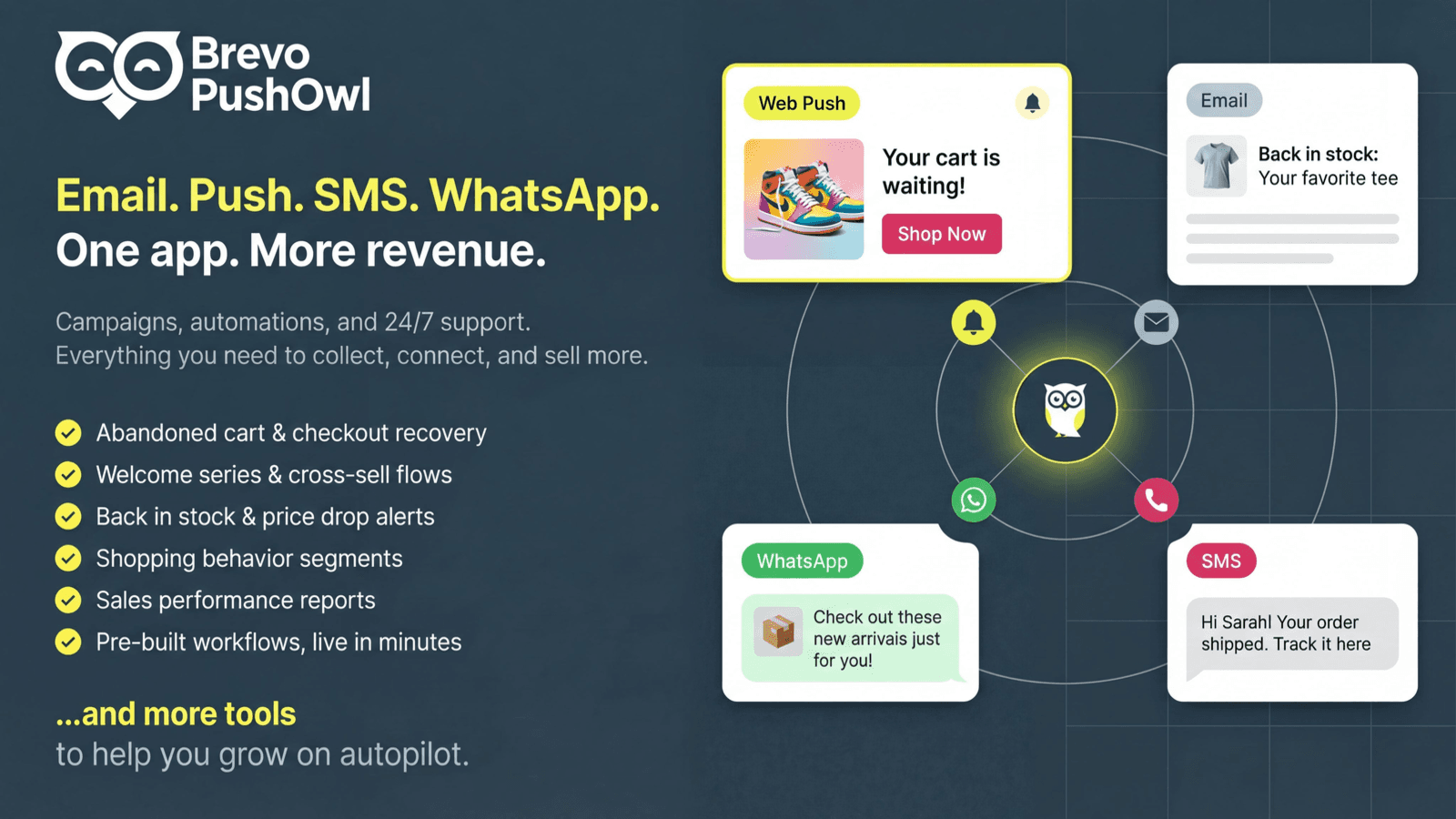
PushOwl holds 4.9 stars across 3,200+ reviews — the dominant pure web push app on Shopify with one of the largest review bases in the broader retention/marketing category. The positioning is comprehensive web push with deep integration into Brevo's (formerly Sendinblue) broader marketing ecosystem covering email, SMS, and CRM. For stores already using Brevo's email marketing or CRM tools, PushOwl provides consolidated subscriber management and unified campaign orchestration across channels.
The automation flow library matters specifically for stores wanting to launch web push without manual campaign building. PushOwl ships pre-built automation flows for the standard web push use cases: abandoned cart recovery (3-message sequence), back-in-stock alerts, price-drop notifications, browse abandonment, welcome series, and post-purchase follow-up. Stores can launch all five flows within an hour of installing rather than building each campaign from scratch.
Core features: web push notifications across Chrome, Edge, Firefox, Safari macOS, Android browsers; abandoned cart recovery flows with multi-message sequences; back-in-stock alerts with automated triggering; price-drop notifications when product prices change; welcome series for new subscribers; segmentation by purchase behavior and browsing patterns; A/B testing for push messages; integration with Brevo's broader marketing ecosystem; analytics dashboard with revenue attribution.
Where it falls short: pricing scales meaningfully with subscriber count — stores with 10,000+ subscribers face significant monthly costs that exceed simpler alternatives. iOS Safari subscribers cannot receive web push (Apple platform limitation), so stores with majority-iPhone audiences see lower reach than the 3,200+ review base implies. Some merchant reviews flag occasional UI complexity from the Brevo-integration architecture.
Pricing: Free plan available (up to 500 subscribers). Paid plans from $19/mo.
2. PushPro Web Push Notifications
Best for: small-to-mid Shopify stores wanting affordable web push with focused automation flows — the budget-friendly entry into the pure web push layer with most of PushOwl's core functionality at lower cost.
PushPro holds 4.9 stars across 300+ reviews. The positioning is focused web push at a meaningfully accessible entry tier ($15.99/mo) with the automation flows that matter most: abandoned cart recovery, back-in-stock alerts, welcome series, and price-drop notifications. For stores starting with web push or running smaller subscriber lists where PushOwl's premium tiers don't justify their cost, PushPro covers the standard use cases at lower monthly investment.
The narrow scope is the strength. Where PushOwl bundles broader Brevo ecosystem features that some stores never use, PushPro focuses on web push specifically and ships at a price that fits stores with $1,000-10,000/month revenue where the broader feature set wouldn't earn its cost.
Core features: web push notifications across desktop and Android browsers; abandoned cart recovery flows; back-in-stock alerts with auto-triggering; price-drop notifications; welcome series for new subscribers; segmentation by basic customer attributes; integration with Shopify Online Store 2.0 themes; merchant dashboard with campaign analytics.
Where it falls short: smaller installed base than PushOwl. Less sophisticated segmentation than Aimtell. No broader marketing ecosystem integration like PushOwl's Brevo connection. Best for stores starting with web push rather than mature retention programs needing advanced segmentation.
Pricing: Free plan available. Paid plans from $15.99/mo.
3. Aimtell Web Push
Best for: Shopify stores wanting advanced behavioral segmentation and event-based triggering for web push — the right pick for stores with sophisticated retention strategies and developer-level data infrastructure.
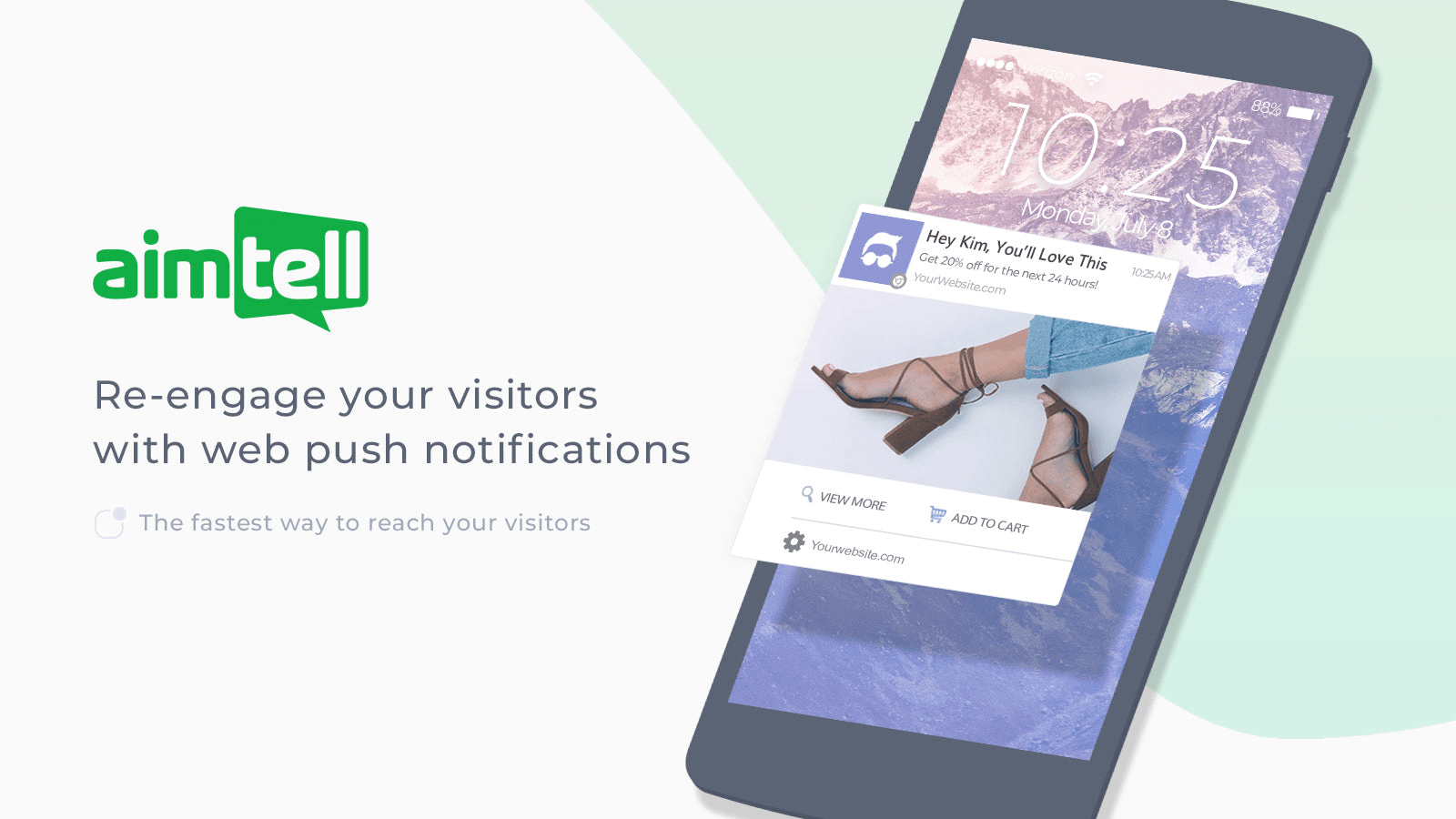
Aimtell holds 4.6 stars across 50+ reviews. The positioning is advanced segmentation and behavioral triggering: rather than the simpler PushOwl/PushPro model of cart-recovery and welcome series, Aimtell lets merchants define custom events ("viewed Product X 3+ times," "abandoned cart with $200+ value," "opened email but didn't click within 48 hours") and trigger web push based on event combinations. For stores running sophisticated retention strategies with developer-level data infrastructure, this granular triggering captures conversion opportunities simpler tools miss.
The behavioral targeting matters specifically for high-AOV stores. A store selling $500+ products converts at low single-digit rates and benefits from converting low-volume, high-intent visitors with precise messaging. Aimtell's event-based triggers ("visited pricing page 3+ times" + "didn't convert in 30 days") surface exact-fit re-engagement opportunities that broader cart-recovery flows miss.
Core features: web push notifications across desktop and Android browsers; advanced behavioral segmentation with custom event definitions; event-based triggering with multi-condition logic; A/B testing for push variants; segmentation by URL patterns, custom attributes, behavioral history; integration with Shopify Online Store 2.0 themes; analytics dashboard with cohort-level reporting.
Where it falls short: smaller installed base (50+ reviews) than PushOwl or PushPro — less historical track record at scale. Setup complexity is real for stores without dedicated marketing operations resources. Pricing entry point ($29/mo) higher than PushPro for stores not using the advanced segmentation. Best for sophisticated retention programs rather than simple use cases.
Pricing: Free trial. Paid plans from $29/mo.
The Honest Trade-Off: iOS Safari Web Push Reality
Worth saying explicitly: web push has a critical platform limitation that competitor blogs rarely mention. iOS Safari does not support standard web push for websites. Apple introduced limited web push for installed PWAs in iOS 16.4 (March 2023), but Shopify storefronts are not PWAs by default — they're standard websites. This means web push notifications reach desktop users (Chrome, Edge, Firefox, Safari macOS) and Android users only. iPhone users browsing in Safari are unreachable through web push.
The reach math depends on audience composition. In US, UK, Australia, and Canada, iOS market share runs 50-60%+ — meaning over half of mobile traffic to Shopify storefronts is unreachable via web push. In Eastern Europe, Latin America, India, and Southeast Asia where Android dominates, web push reaches 70-85% of mobile audiences. For US/UK/AU stores, this is the dominant reason to consider multi-channel platforms (web push + SMS + email) over pure web push tools — SMS reaches the iPhone audience that web push misses.
The signal that pure web push is sufficient: audience skews desktop or Android, and web push subscribers correlate with high-value behavior. The signal that multi-channel is required: majority-iPhone audience and SMS or WhatsApp reach the customers web push can't.
Layer 2: Multi-Channel Push Platforms
This layer combines web push with SMS, WhatsApp, email, and sometimes Facebook Messenger under one platform. The mechanics: stores collect subscribers across multiple channels through one popup or signup flow, then deliver campaigns via the optimal channel per subscriber (web push when available, SMS when not, email as fallback). The right pick for stores wanting consolidated multi-channel marketing rather than separate apps per channel — especially stores with mixed iOS/Android audiences where pure web push misses iPhone users. Three apps lead this layer.
4. Hextom: WhatsApp, SMS & Push
Best for: Shopify stores wanting unified WhatsApp + SMS + web push under one platform with automated cart recovery, back-in-stock alerts, and broad multi-channel campaign orchestration from an established Shopify ecosystem vendor.
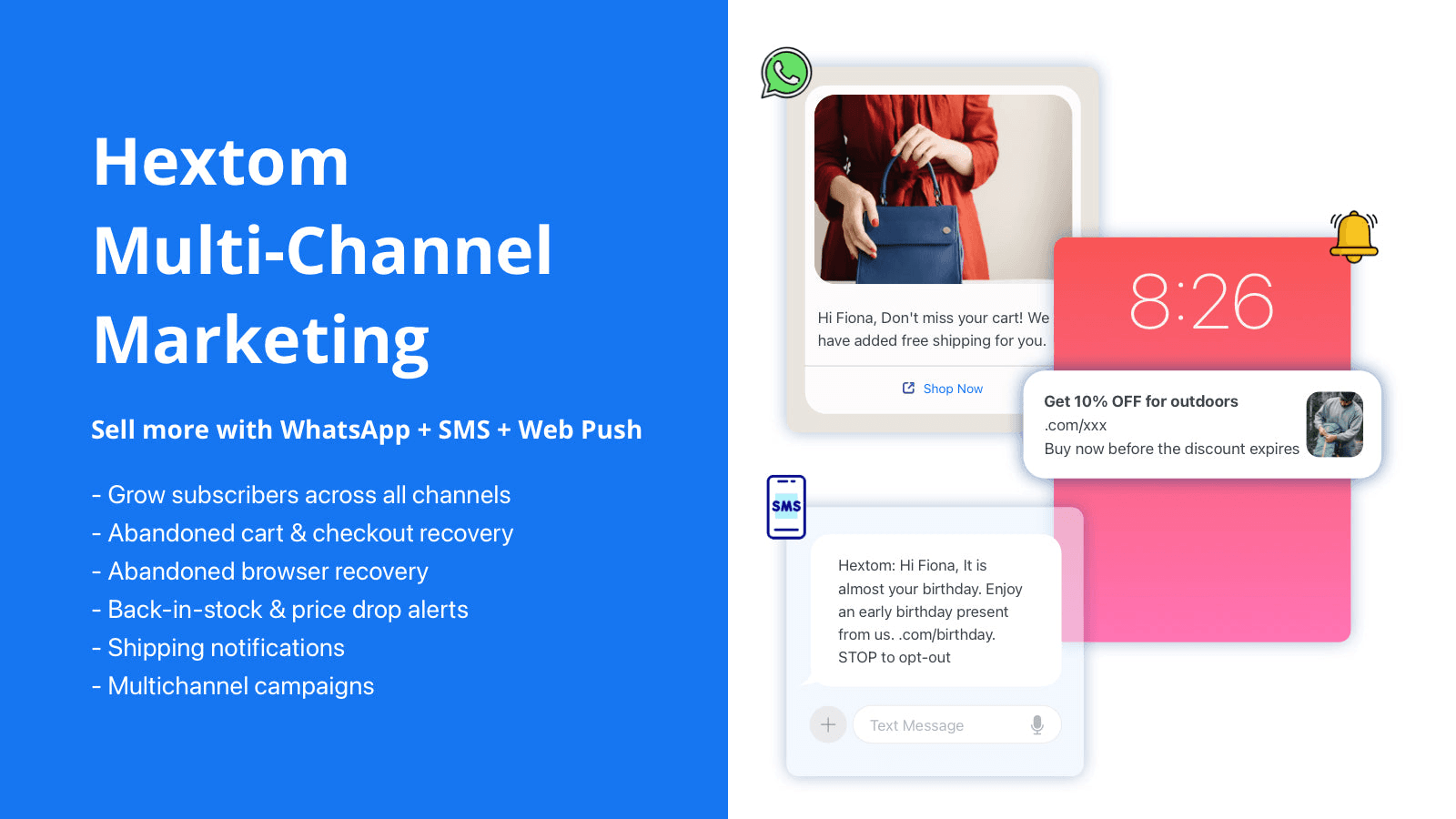
Hextom holds 4.9 stars across 1,200+ reviews — one of the largest review bases in the multi-channel push platform layer. The positioning combines three channels (WhatsApp, SMS, web push) with shared subscriber management, unified campaign orchestration, and smart delivery rules that pick the optimal channel per subscriber. For stores with global audiences where WhatsApp dominates in Latin America/Southeast Asia/parts of Europe and SMS dominates in US/UK, this multi-channel coverage handles regional preferences without managing separate apps per channel.
The Hextom ecosystem advantage matters specifically for stores already using Hextom's other Shopify apps (Hextom Free Shipping Bar, Hextom Smart Search, Hextom Mega Menu, Hextom Translate). Consolidated vendor relationships across multiple essential apps simplify operations and often unlock bundled discounts versus separate vendor relationships per category.
Core features: WhatsApp, SMS, and web push under one platform; subscriber growth popups across channels; abandoned cart recovery automated across all three channels; back-in-stock alerts; price-drop notifications; smart delivery rules selecting optimal channel per subscriber; A/B testing across channels; multi-language support; integration with Shopify Online Store 2.0 themes; Hextom ecosystem integration with other Hextom apps; merchant dashboard with channel-level analytics.
Where it falls short: pricing scales aggressively with message volume — high-volume SMS or WhatsApp campaigns can run $500-2,000/mo at scale. Setup complexity is meaningful for stores configuring all three channels with proper segmentation. Some merchant reviews flag occasional smart-delivery routing decisions that don't match merchant expectations.
Pricing: Free plan available. Paid plans from $19/mo plus per-message fees on SMS and WhatsApp.
5. Firepush: SMS & Web Push
Best for: established Shopify stores wanting SMS, web push, and email under one long-running multi-channel platform with established deliverability infrastructure and broad campaign orchestration.
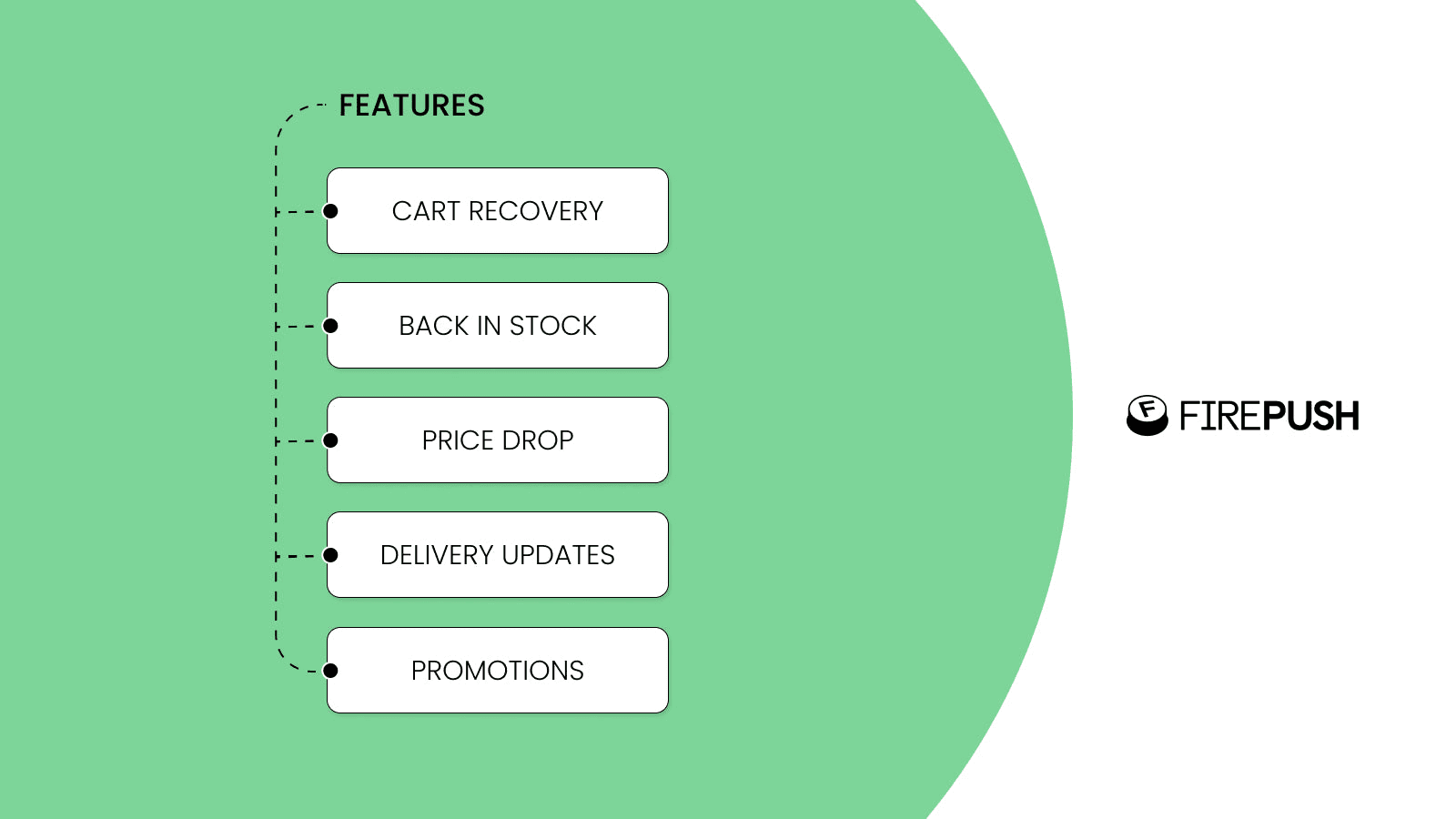
Firepush holds 4.8 stars across 700+ reviews. The positioning is established multi-channel marketing combining SMS, web push, and email under one platform with established deliverability infrastructure. The 700+ review base reflects long-term adoption across categories: established DTC brands, growing ecommerce stores, and merchants migrating from email-only marketing to multi-channel coverage.Where Hextom focuses on the WhatsApp + SMS + push combination, Firepush focuses on SMS + web push + email — different channel mix targeting markets where WhatsApp adoption is lower (US, UK, Australia) and email remains a primary channel. For stores with North American or Western European customer bases, Firepush's SMS + email + push combination matches market expectations better than WhatsApp-centric alternatives.
Core features: SMS, web push, and email under one platform; abandoned cart recovery across all three channels; subscriber growth popups; segmentation by purchase behavior and engagement; A/B testing for campaigns; integration with Shopify Online Store 2.0 themes; merchant dashboard with channel-level analytics; established deliverability infrastructure for SMS.
Where it falls short: 4.8-star rating reflects more polish gaps than Hextom or PushOwl — some merchant reviews flag occasional UI complexity and support response delays. Pricing scales with message volume similar to Hextom. Less ecosystem integration than Hextom for stores using broader vendor stacks.
Pricing: Free plan available. Paid plans from $15/mo plus per-message SMS fees.
6. One: All-in-One Marketing
Best for: Shopify stores wanting the broadest multi-channel scope — web push, SMS, email, popups, and on-site notifications all under one unified marketing platform with one subscriber list.
One holds 4.9 stars across 1,500+ reviews. The positioning is broadest-scope multi-channel marketing: web push, SMS, email, signup popups, on-site notifications (banners, badges, urgency timers), and post-purchase upsell campaigns under one platform with one unified subscriber list. For stores wanting to consolidate multiple marketing apps into one platform, One handles more of the marketing surface area than narrower multi-channel tools.
The all-in-one angle matters specifically for stores fighting app sprawl. A typical Shopify store running email marketing (Klaviyo at $50-200/mo), web push (PushOwl at $19-99/mo), SMS (separate app at $19-100/mo), and popups (Privy or similar at $15-49/mo) easily spends $103-448/mo across four apps. One's $12.99-99/mo pricing for all four functions consolidates the cost while reducing operational complexity.
Core features: web push, SMS, email, popups, on-site notifications under one platform; unified subscriber list across all channels; abandoned cart recovery flows across channels; back-in-stock and price-drop alerts; signup popups with discount incentives; on-site banners and urgency timers; A/B testing across channels; integration with Shopify Online Store 2.0 themes; merchant dashboard with cross-channel analytics.
Where it falls short: broad scope means depth in any single channel may be shallower than dedicated tools — sophisticated email marketing programs may find Klaviyo's segmentation and template library superior, sophisticated SMS programs may find Postscript or Attentive's deliverability superior. Best for stores prioritizing consolidation over depth.
Pricing: Free plan available. Paid plans from $12.99/mo plus per-message fees.
Layer 3: Messenger and Social Re-Engagement
This layer reaches customers through Facebook Messenger, Instagram DMs, or other social messaging channels rather than browser notifications. The mechanics: customer clicks a Messenger or Instagram opt-in button (one-click via Facebook authorization), app sends marketing messages through the Messenger API. Different channel from web push and SMS, different opt-in friction, different deliverability characteristics. The right pick for stores with strong Facebook/Instagram audiences where social channels reach customers more reliably than browser push. Two apps lead this layer.
7. Mata: Bulk Facebook Messages
Best for: Shopify stores with strong Facebook and Instagram audiences wanting Messenger + Instagram DM re-engagement campaigns — the right pick for social-first brands where customers prefer Messenger over email or SMS.
Mata holds 4.9 stars across 200+ reviews. The positioning is focused Facebook Messenger and Instagram DM marketing for Shopify stores where social audiences are the primary engagement channel. Customers click a one-click Messenger opt-in (via their existing Facebook authorization — no email or phone number required), and Mata sends marketing messages through Facebook's Messenger API.
The opt-in friction is meaningfully lower than email or SMS. Customers don't type an email address or phone number — they click "Allow" once and they're subscribed. For stores where checkout-stage friction matters and social audiences already engage with the brand on Facebook/Instagram, Messenger opt-in often outperforms email signup popups by 2-3x.
Core features: Facebook Messenger opt-in with one-click subscription; Instagram DM marketing for opted-in subscribers; abandoned cart recovery via Messenger sequences; back-in-stock and price-drop alerts; weekly campaign automation; bulk messaging campaigns; integration with Shopify Online Store 2.0 themes; merchant dashboard with Messenger campaign analytics.
Where it falls short: Messenger marketing requires Facebook's policy compliance — message frequency limits, content rules, and the 24-hour messaging window after customer interaction restrict campaign flexibility versus SMS or web push. Smaller installed base (200+ reviews) than Recart. Best for stores with active Facebook/Instagram presence rather than email-first or SMS-first retention programs.
Pricing: Free plan available. Paid plans from $19.99/mo.
8. Recart: SMS Marketing + AI
Best for: established Shopify stores at $1M+ annual revenue wanting AI-powered SMS marketing combined with Facebook Messenger campaigns — the enterprise-tier pick from one of the largest established platforms in this category.
Recart holds 4.7 stars across 5,500+ reviews — one of the largest review bases in the broader SMS and Messenger marketing category. The positioning is AI-powered SMS marketing combined with Messenger campaigns under one platform, with the AI layer handling personalization, optimal-time delivery, and content variation across the subscriber base. For established Shopify stores at $1M+ annual revenue with mature retention programs, Recart's AI infrastructure delivers personalization that smaller tools can't match.
The pricing structure reflects the enterprise positioning. Recart's $299/mo entry tier excludes smaller stores by design — the platform is built for stores doing meaningful SMS volume where the AI personalization compounds over thousands of monthly campaigns rather than dozens. For stores at the right scale, the AI layer typically delivers 15-30% higher conversion rates than rule-based SMS platforms.
Core features: AI-powered SMS marketing with personalization and optimal-time delivery; Facebook Messenger campaigns; abandoned cart recovery flows; SMS subscriber growth popups; segmentation by purchase behavior and engagement; A/B testing across SMS variants; integration with Shopify Online Store 2.0 themes; enterprise-tier dedicated account management; advanced analytics with cohort-level reporting.
Where it falls short: pricing entry point ($299/mo) excludes stores below $1M ARR — smaller stores get more value from cheaper alternatives. 4.7-star rating reflects mixed reviews on pricing transparency and contract terms. Some merchant reviews flag aggressive pricing tier increases as merchants scale.
Pricing: Free trial. Paid plans from $299/mo.
Which Web Push App to Choose
For most-installed pure web push with comprehensive automation flows: PushOwl by Brevo. 4.9 stars, 3,200+ reviews, $19/mo entry, the default pick for pure web push at any scale.
For affordable pure web push with focused automation: PushPro Web Push Notifications. 4.9 stars, $15.99/mo, the budget-friendly pick for smaller stores.
For advanced behavioral segmentation and event-based triggering: Aimtell Web Push. 4.6 stars, sophisticated triggers, the right pick for high-AOV stores with developer resources.
For unified WhatsApp + SMS + web push platform: Hextom: WhatsApp, SMS & Push. 4.9 stars, 1,200+ reviews, the right pick for global audiences with WhatsApp adoption.
For SMS + web push + email under one established platform: Firepush: SMS & Web Push. 4.8 stars, 700+ reviews, the North American/Western European multi-channel pick.
For broadest multi-channel scope (web push + SMS + email + popups + on-site): One: All-in-One Marketing. 4.9 stars, 1,500+ reviews, the consolidation pick for stores fighting app sprawl.
For Facebook Messenger and Instagram DM re-engagement: Mata: Bulk Facebook Messages. 4.9 stars, the social-first pick for brands with strong Facebook/Instagram audiences.
For enterprise-tier AI-powered SMS + Messenger at $1M+ ARR: Recart: SMS Marketing + AI. 4.7 stars, 5,500+ reviews, the enterprise pick for established stores.
For most Shopify stores in this category, the honest framing is layer-first. Stores with desktop or Android-skewing audiences and small budgets should start with pure web push (PushOwl or PushPro) because the opt-in friction is lower and the cost is contained. Stores with majority-iPhone audiences need multi-channel platforms (Hextom, Firepush, One) because pure web push leaves over half the mobile audience unreachable. Stores with strong Facebook/Instagram audiences should add Messenger re-engagement (Mata or Recart) on top of either layer. The most common web push mistake is picking pure web push for an iPhone-heavy audience and never understanding why open rates and conversion underperform expectations.
How We Ranked These Apps
This ranking is based on four criteria applied to every Shopify web push app tested in 2026. First, Shopify App Store rating and verified review volume as of April 30, 2026 — the strongest signal of long-term merchant satisfaction at scale. Second, fit-to-job for which of the three layers each app actually solves (pure web push, multi-channel platform, or Messenger/social re-engagement) rather than treating these as a single category. Third, pricing structure and total cost at realistic merchant volumes — a $19/mo pure web push tool and a $299/mo enterprise SMS+Messenger platform handle different scopes, and the math depends on which layer the store actually needs. Fourth, channel reach and platform coverage, since merchant satisfaction depends on whether the app reaches the actual audience (the iOS Safari limitation matters dramatically for US/UK/AU stores).
Every pricing and feature figure in this post was verified directly from each app's live Shopify App Store listing on April 30, 2026. App pricing structures change — always confirm current pricing on the official listing before installing. Ratings and review counts reflect the Shopify App Store at the time of our last update.
Frequently Asked Questions
What is a Shopify web push app?
A Shopify web push app handles one of three distinct jobs. Pure web push apps (PushOwl, PushPro, Aimtell) deliver browser-based notifications via the Web Push protocol across desktop browsers and Android. Multi-channel push platforms (Hextom, Firepush, One) bundle web push with SMS, WhatsApp, and email under one platform. Messenger/social re-engagement apps (Mata, Recart) use Facebook Messenger and Instagram DMs to reach customers through social channels.
What is the best Shopify web push app in 2026?
Depends on the layer. For pure web push: PushOwl by Brevo (4.9 stars, 3,200+ reviews, most-installed) or PushPro ($15.99/mo budget). For advanced segmentation: Aimtell. For multi-channel platforms: Hextom (WhatsApp + SMS + push), Firepush (SMS + email + push), or One (broadest all-in-one scope). For Messenger/social: Mata (Facebook Messenger + Instagram DMs) or Recart (enterprise AI-powered SMS + Messenger). Pick the layer first.
How much do Shopify web push apps cost?
Entry tiers range from free (most apps offer free plans up to 500-1,000 subscribers) to $15.99-29/mo for pure web push paid plans. Multi-channel platforms run $12.99-29/mo plus per-message fees ($0.01-0.06 per SMS, $0.03-0.10 per WhatsApp). Enterprise-tier Messenger/SMS platforms like Recart start at $299/mo. The right app costs less than $50/mo for most stores once the layer is identified.
Does iOS support web push notifications?
Limited support. Apple introduced web push for installed PWAs in iOS 16.4 (March 2023), but Shopify storefronts are not PWAs by default — they're standard websites. This means web push notifications reach desktop users (Chrome, Edge, Firefox, Safari macOS) and Android users only. iPhone users browsing in Safari are unreachable through web push. For US/UK/AU stores with majority-iPhone audiences, this critical limitation drives the choice toward multi-channel platforms with SMS coverage.
What is the difference between web push and SMS marketing?
Different channels with different mechanics. Web push uses the Web Push protocol to deliver browser notifications (one-click opt-in, no personal data required, free message delivery, limited to desktop and Android). SMS uses cellular networks to deliver text messages to mobile phones (opt-in requires phone number, $0.01-0.06 per message in US/EU, reaches all mobile platforms including iPhone). For stores with iPhone-heavy audiences, SMS reaches customers web push misses; for desktop or Android audiences with budget constraints, web push delivers similar engagement at far lower per-message cost.
What conversion rates can stores expect from web push?
Realistic abandoned cart recovery via web push runs 8-18% of pushed carts versus 5-12% for email. Welcome series web push opens at 60-80% in the first 24 hours versus 20-30% for email. Back-in-stock alerts convert at 25-40% on the matched product (highest of any channel because intent is verified). The trade-off: web push subscriber lists decay faster than email (browser permission revocation), and aggressive push schedules drive opt-out rates of 30-50% per month if frequency exceeds 2-3 messages per week.
How often should stores send web push notifications?
Best-in-class web push programs send 1-2 promotional pushes per week plus triggered cart-recovery and back-in-stock messages. This frequency maintains opt-in rates and lifetime engagement. Aggressive schedules (daily promotional pushes) drive opt-out rates to 30-50% per month, destroying the long-term subscriber base in exchange for short-term campaign clicks. The right cadence varies by category — fashion and beauty can sustain higher frequency than B2B or considered purchases.
Do I need a separate web push app if I'm using Klaviyo or another email platform?
Depends on the platform. Klaviyo includes basic web push functionality on premium tiers, so existing Klaviyo customers may not need a separate app for simple web push campaigns. For sophisticated segmentation, A/B testing, or multi-channel orchestration that combines web push with SMS or WhatsApp, a dedicated web push app or multi-channel platform delivers more depth than email-platform-bundled web push features. Check your existing email platform's web push capabilities before adding another app.
What is Facebook Messenger marketing?
Facebook Messenger marketing reaches customers through Facebook's Messenger platform rather than email, SMS, or web push. Customers opt in by clicking a one-click button (via their existing Facebook authorization), and merchants send marketing messages through the Messenger API. Opt-in friction is lower than email or SMS, but Facebook's policy compliance (message frequency limits, content rules, 24-hour messaging window after customer interaction) restricts campaign flexibility. Best for stores with active Facebook/Instagram presence rather than email-first programs.
Will web push apps slow down my Shopify store?
Modern web push apps load opt-in widgets asynchronously with minimal page-speed impact. The notification permission prompt appears after the page is interactive and doesn't block initial render. Built for Shopify-certified apps in this category have been audited for Shopify performance standards. Always test page speed before and after install with Google PageSpeed Insights to confirm impact on your specific theme.
Think Your App Belongs on This List?
We update these lists as new tools launch and existing ones improve. If you are a developer building a Shopify web push, multi-channel marketing, or Messenger marketing app and want your app considered for inclusion, submit it here — tell us what your app does, who it is for, and include a link to your Shopify App Store listing. We review every submission.