
8 Best Shopify 3PL Solutions (2026)
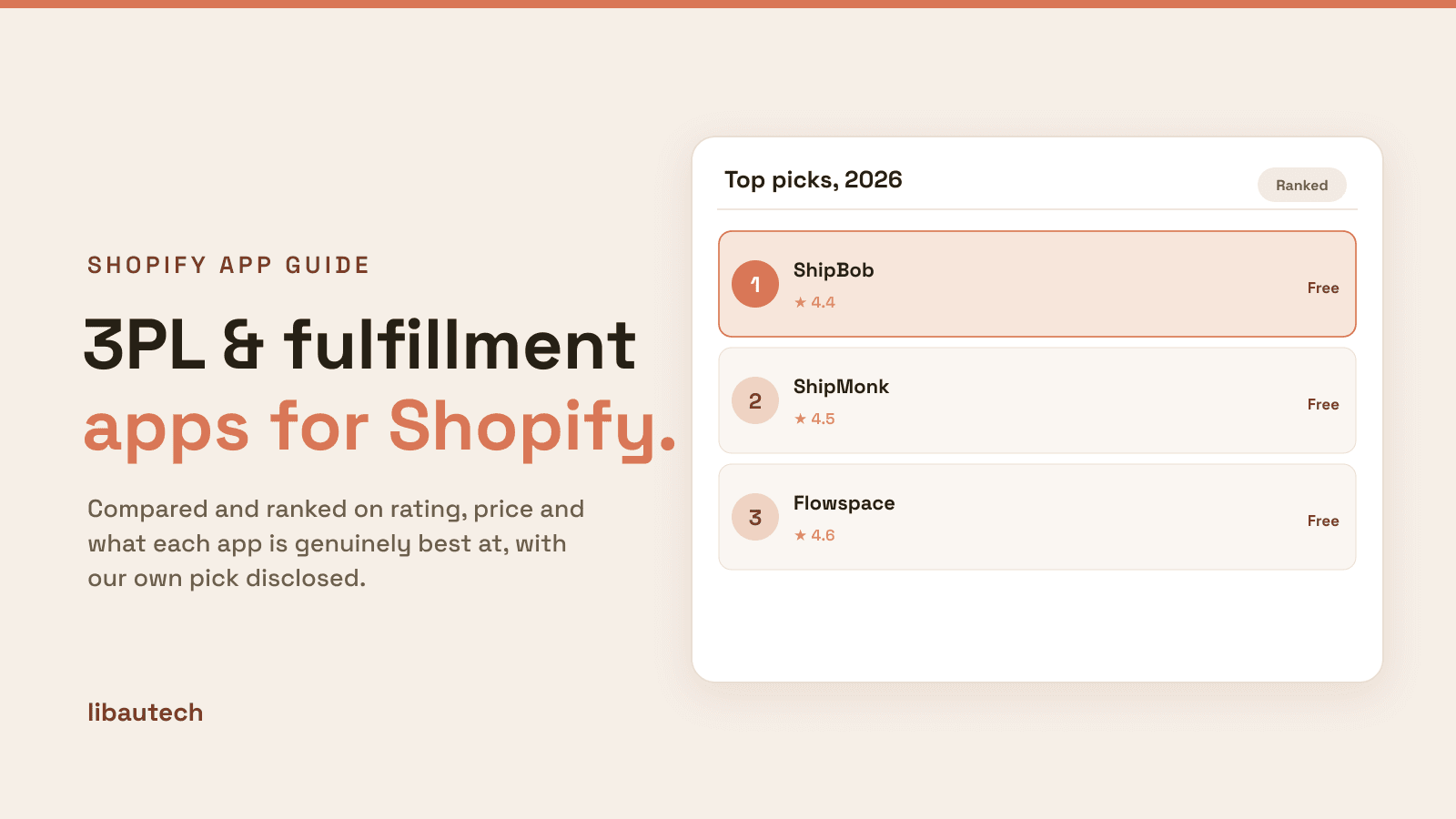
Last updated: April 2026 · Pricing and ratings verified from live Shopify App Store listings on April 30, 2026. Reviewed by the Libautech team — builders of Built for Shopify apps used by 5,000+ merchants across 50+ countries.
Key Takeaways
- Shopify 3PL apps split into three completely different jobs that competitor blogs treat as one. Full-service 3PL operators (ShipBob, ShipMonk, Flowspace) actually warehouse your inventory and pick/pack/ship orders. Marketplace fulfillment integrations (Amazon MCF, Veeqo) route Shopify orders through Amazon's or other marketplaces' fulfillment networks. Regional carrier/pickup-point integrations (Packeta, Sendcloud) connect Shopify to specific regional shipping networks without warehousing.
- Full-service 3PLs charge for storage, picking, packing, and shipping plus markup on carrier rates. Realistic costs run $4-8 per order all-in for stores doing 500-5,000 orders/month, dropping below $4 at higher volumes through negotiated carrier rates. Most stores break even on outsourced 3PL versus self-fulfillment around 200-300 orders/month.
- Amazon MCF (Multi-Channel Fulfillment) is the cheapest fulfillment option for stores already selling on Amazon and using FBA — same inventory, same warehouses, just routed to Shopify orders. The catch: Amazon MCF doesn't ship in unbranded packaging by default, and Buy With Prime is a separate program with separate economics.
- Regional pickup-point apps (Packeta in Central/Eastern Europe, Sendcloud across EU) drive 15-25% conversion lift on European stores because customers prefer pickup locations over home delivery. Critical for Czech Republic, Slovakia, Poland, Hungary, Baltic states, and broader EU markets where pickup networks are deeply embedded in consumer behavior.
- The most common 3PL mistake is choosing the wrong layer. Stores that need inventory storage shouldn't pick a regional carrier app; stores that need pickup-point integration shouldn't pick a full-service 3PL. Identify what job needs solving first — storage and shipping, marketplace routing, or regional carrier connection — then pick the app within the layer.
- Pricing models vary dramatically across layers. 3PL operators charge per-order plus storage. Marketplace integrations are free or low-cost on the app but the fulfillment cost lives in the marketplace's pricing. Regional carrier apps are typically free or under $20/mo with shipping cost passed through to customers.
Who Needs a 3PL App, and Why?
A third-party logistics app connects your store to a fulfilment provider like ShipBob or ShipMonk, so orders flow to their warehouses and ship automatically while inventory syncs back. It lets you outsource picking, packing and shipping as you grow.
You need one if shipping orders yourself is becoming the bottleneck, you want faster nationwide delivery, or you are scaling past what your own space can handle. Low order volume can stay self-fulfilled.
The Three Jobs of Shopify 3PL Apps
Most roundups of Shopify 3PL apps lump together full-service 3PL operators, marketplace fulfillment integrations, and regional carrier integrations as if they're the same product. They are not. A full-service 3PL physically stores your inventory and ships orders for you. A marketplace fulfillment integration routes orders through Amazon's or another marketplace's existing infrastructure. A regional carrier integration connects your Shopify store to a specific shipping network for label printing and pickup-point selection without any warehousing involved. Different mechanics, different vendor specializations, different cost structures.
The honest framing: Shopify 3PL apps break into three distinct jobs. Most stores need exactly one approach, and picking the wrong layer wastes both money and operational complexity.
The first job is full-service 3PL operators — third-party companies that warehouse your inventory, receive incoming stock, and pick/pack/ship orders on your behalf. The mechanics: you ship inventory to the 3PL's warehouses, they store it, your Shopify orders flow into their fulfillment system automatically, and they ship to customers using their negotiated carrier rates. ShipBob, ShipMonk, and Flowspace lead this layer for established 3PLs. The right pick when stores reach the volume where self-fulfillment time exceeds the cost of outsourcing (typically 200-300+ orders/month).
The second job is marketplace fulfillment integrations — routing Shopify orders through Amazon's, Walmart's, or other marketplaces' existing fulfillment infrastructure rather than a dedicated 3PL. The mechanics: inventory already in Amazon FBA gets routed to fulfill Shopify orders via Amazon Multi-Channel Fulfillment (MCF), or multi-channel order management apps coordinate fulfillment across Shopify and marketplace channels. Amazon MCF by WebBee, Easyship, and Veeqo lead this layer. The right pick for stores already heavily on Amazon, or operating across multiple marketplace channels.
The third job is regional carrier and pickup-point integrations — connecting Shopify to specific regional shipping networks for label printing, rate negotiation, and pickup-point selection without warehousing. The mechanics: the app integrates with a regional carrier's API, lets customers pick a pickup location at checkout, and exports labels for the merchant to print and ship. Packeta (Central/Eastern Europe) and Sendcloud (broader EU) lead this layer. The right pick for European, Eastern European, or other regional markets where customer preferences require local carrier integration.
This post ranks 8 apps across the three jobs based on verified April 2026 Shopify App Store data and what each one actually solves.
3PL apps stack with broader operational tools. See our guides on best Shopify shipping apps for the related label-printing and rate-shopping layer that complements 3PL fulfillment, best Shopify order tracking apps for the post-shipment visibility layer that sits downstream of fulfillment, and best Shopify delivery and pickup apps for the related local-delivery scheduling layer where pickup networks intersect with customer-facing slot pickers.
Quick Comparison: 8 Best Shopify 3PL Solutions (2026)
| App | Rating | Free Plan | Cost Model | Layer | Best For |
|---|---|---|---|---|---|
| ShipBob | ⭐ 4.4 (200+) | Free to install | Per-order + storage | Full-service 3PL | Largest US 3PL footprint, 50+ fulfillment centers |
| ShipMonk | ⭐ 4.5 (300+) | Free to install | Per-order + storage | Full-service 3PL | Tech-enabled 3PL, omnichannel, dedicated support |
| Flowspace | ⭐ 4.6 (50+) | Free to install | Per-order + storage | Full-service 3PL | On-demand warehouse network, flexible scale |
| Amazon MCF by WebBee | ⭐ 4.8 (300+) | Yes | Amazon FBA fees | Marketplace fulfillment | Routes Shopify orders through existing Amazon FBA |
| Easyship | ⭐ 4.4 (500+) | Yes | Per-shipment + tiers | Marketplace fulfillment | 250+ couriers, international shipping rate aggregation |
| Veeqo (Amazon-owned) | ⭐ 4.4 (200+) | Yes | Free shipping software | Marketplace fulfillment | Free Amazon-owned shipping platform with discounts |
| Packeta (Zasilkovna) | ⭐ 4.7 (150+) | Yes | Carrier rates passed through | Regional carrier | Czech Republic + Central/Eastern EU pickup network |
| Sendcloud | ⭐ 4.0 (200+) | Yes | Tiered + carrier rates | Regional carrier | EU-wide multi-carrier shipping platform |
Layer 1: Full-Service 3PL Operators
This layer is for stores that have outgrown self-fulfillment and need a third-party company to physically warehouse inventory and ship orders. The mechanics: merchant ships inventory to the 3PL's warehouses, the 3PL stores it, Shopify orders flow into the 3PL's system via the app integration, and the 3PL picks, packs, and ships using their negotiated carrier rates. Cost typically runs $4-8 per order all-in for stores in the 500-5,000 orders/month range, dropping below $4 at higher volumes. Three established operators lead this layer.
1. ShipBob
Best for: established Shopify stores doing 500+ orders/month wanting the largest US-focused 3PL footprint with international expansion options — ShipBob operates 50+ fulfillment centers across the US plus selected locations in Canada, UK, Australia, and EU.
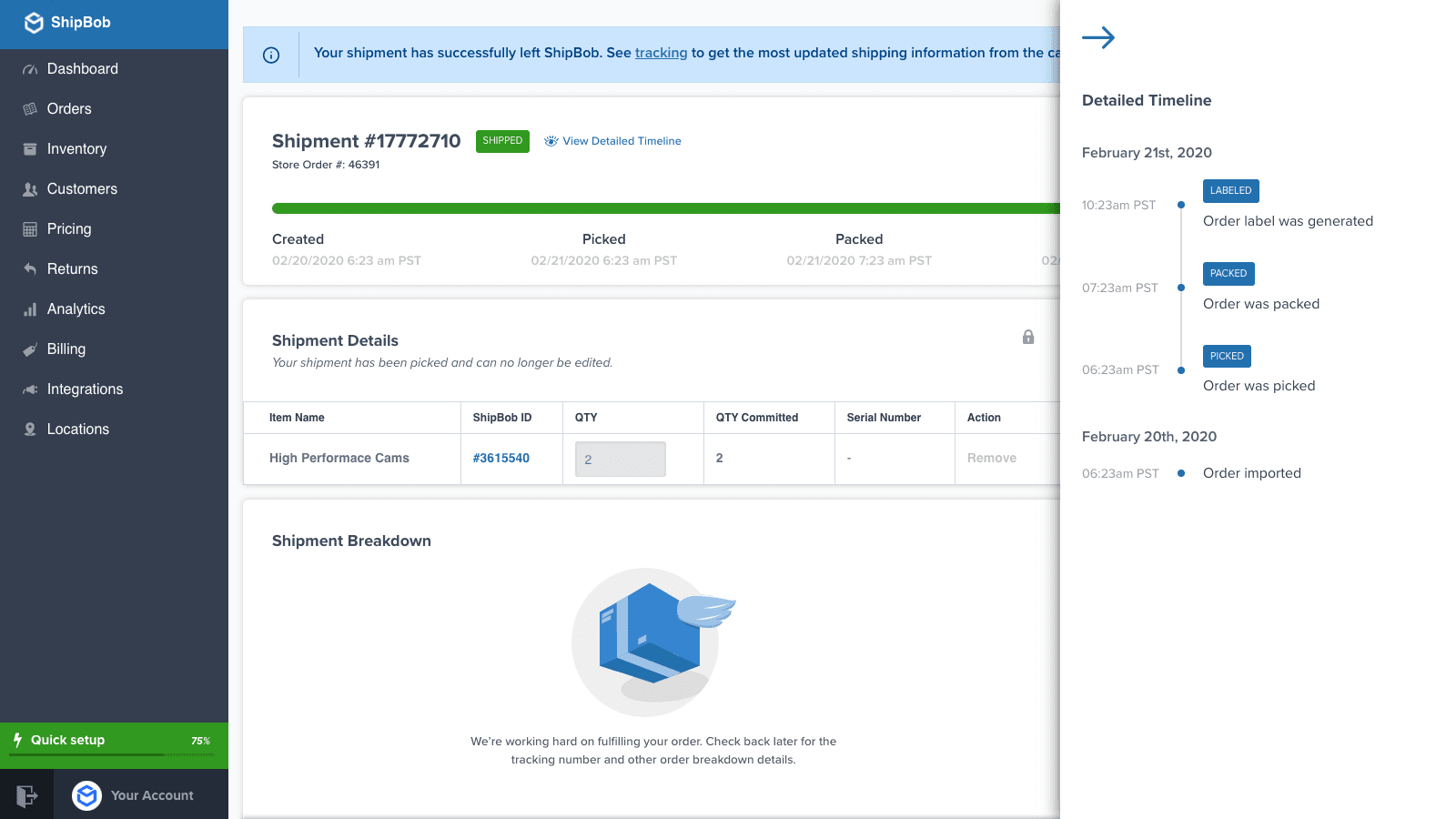
ShipBob holds 4.4 stars across 200+ reviews on the Shopify App Store and is one of the dominant 3PL operators for direct-to-consumer Shopify brands. The positioning is comprehensive US fulfillment with international expansion: 50+ fulfillment centers concentrated in the US (with major hubs in California, Texas, Pennsylvania, Florida, Illinois) plus international warehouses for stores expanding beyond the US market. The geographic footprint matters specifically for two-day shipping economics — ShipBob's distributed network lets stores split inventory across multiple locations to bring shipping costs down and delivery times to 2-3 days for most US ZIP codes.
The operational model is full-service: merchants ship inventory in (typically pallet quantities), ShipBob receives and stores it, Shopify orders integrate via the app, and ShipBob handles picking, packing, and shipping using negotiated rates with USPS, UPS, FedEx, and DHL. Per-order fulfillment costs run approximately $3-5 plus carrier shipping cost, with monthly storage at standard rates per pallet or per cubic foot. For stores doing $500K+ annual revenue, the math typically beats self-fulfillment once labor, real estate, and operational overhead are included.
Core features: 50+ fulfillment centers across US with international locations; multi-warehouse inventory distribution for 2-day shipping; native Shopify integration with order routing; negotiated carrier rates for USPS, UPS, FedEx, DHL; Shopify-friendly returns processing; B2B fulfillment support including retail and wholesale channels; analytics dashboard showing per-order costs and delivery performance; dedicated account management on enterprise tiers.
Where it falls short: 4.4-star rating reflects merchant complaints about pricing transparency — monthly invoices include line items merchants didn't anticipate (pallet receiving fees, kit assembly charges, returns handling). Some merchants report onboarding taking 4-6 weeks before fulfillment goes live, slower than smaller 3PLs. International fulfillment is available but pricing and SLAs vary significantly per warehouse. Not the right pick for stores under 200 orders/month where overhead doesn't justify the operational handoff.
Pricing: Free to install. Custom pricing based on order volume and storage needs.
2. ShipMonk
Best for: Shopify stores wanting tech-enabled 3PL with omnichannel fulfillment, dedicated support, and integrated software for order, inventory, and warehouse management under one platform.
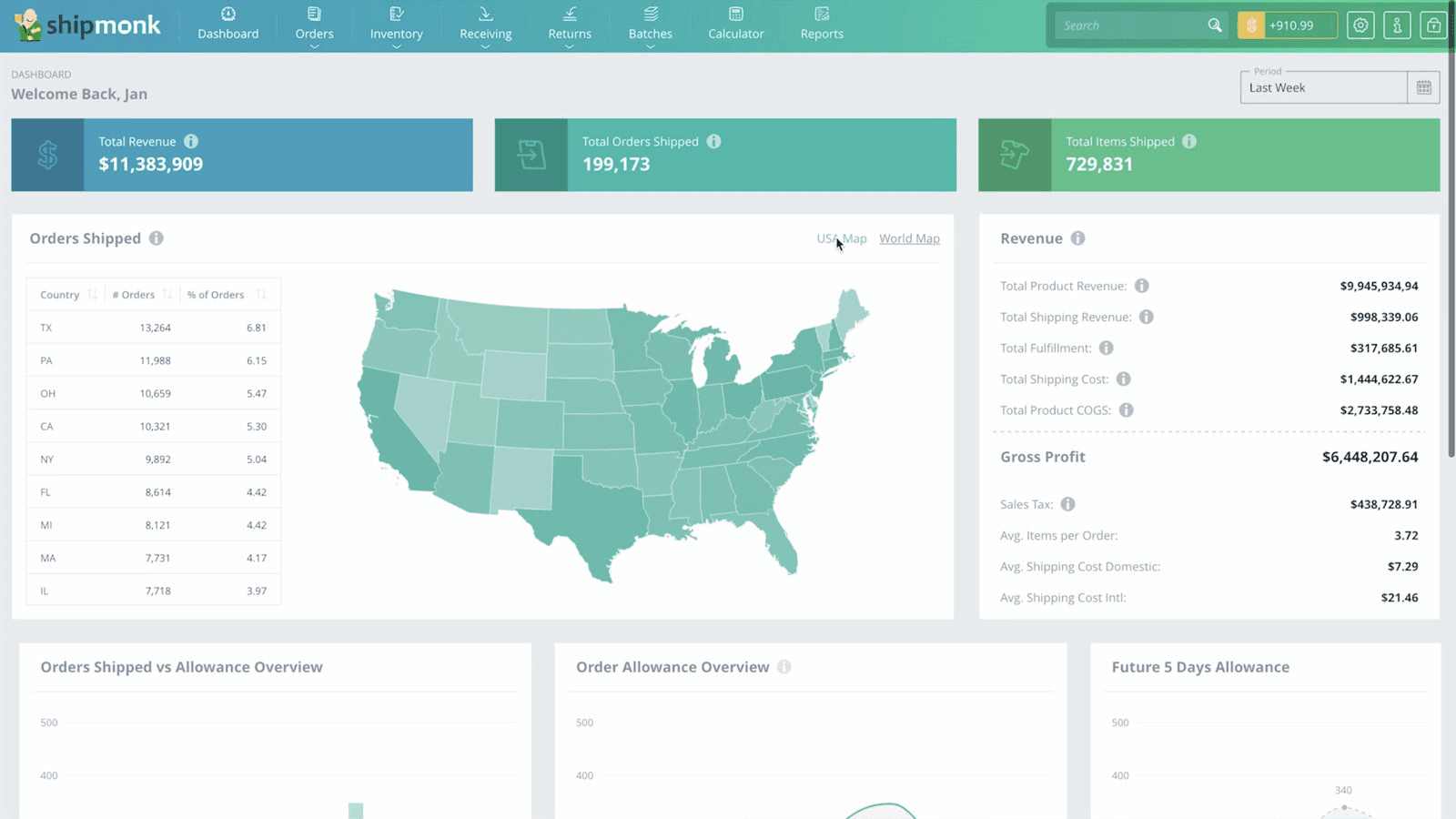
ShipMonk holds 4.5 stars across 300+ reviews. The positioning is tech-enabled 3PL: rather than treating warehousing and software as separate concerns, ShipMonk operates fulfillment centers running their proprietary order, inventory, and warehouse management software — giving merchants a unified dashboard across all fulfillment operations. For stores running multi-channel commerce (Shopify + Amazon + Walmart + retail), this consolidation simplifies operations versus juggling separate systems per channel.
The dedicated support model differentiates from larger 3PLs. ShipMonk assigns a "Happiness Engineer" to each merchant account — a single point of contact who handles fulfillment issues, billing questions, and operational changes. For stores valuing relationship-based service over hands-off automation, this human-touch model justifies the premium versus larger competitors.
Core features: tech-enabled fulfillment centers with proprietary OMS/IMS/WMS software; discounted carrier shipping rates negotiated at scale; proactive shipping management with anomaly alerts; dedicated Happiness Engineer per merchant; omnichannel integration across Shopify, Amazon, Walmart, and other channels; B2B fulfillment with retail compliance; real-time inventory visibility; returns processing and customization.
Where it falls short: smaller fulfillment center footprint than ShipBob — fewer warehouse locations means longer shipping distances for some markets and higher per-order shipping costs. Pricing not publicly listed; merchants negotiate per-account terms which creates uncertainty for stores comparison-shopping. Some merchant reviews flag occasional delays during peak periods (Q4, BFCM) when ShipMonk's network operates at capacity.
Pricing: Free to install. Custom pricing based on volume and services.
3. Flowspace
Best for: Shopify stores wanting flexible 3PL with on-demand warehouse network access — the right pick when fulfillment volume varies seasonally or when expansion into new geographies needs warehousing without long-term commitments.
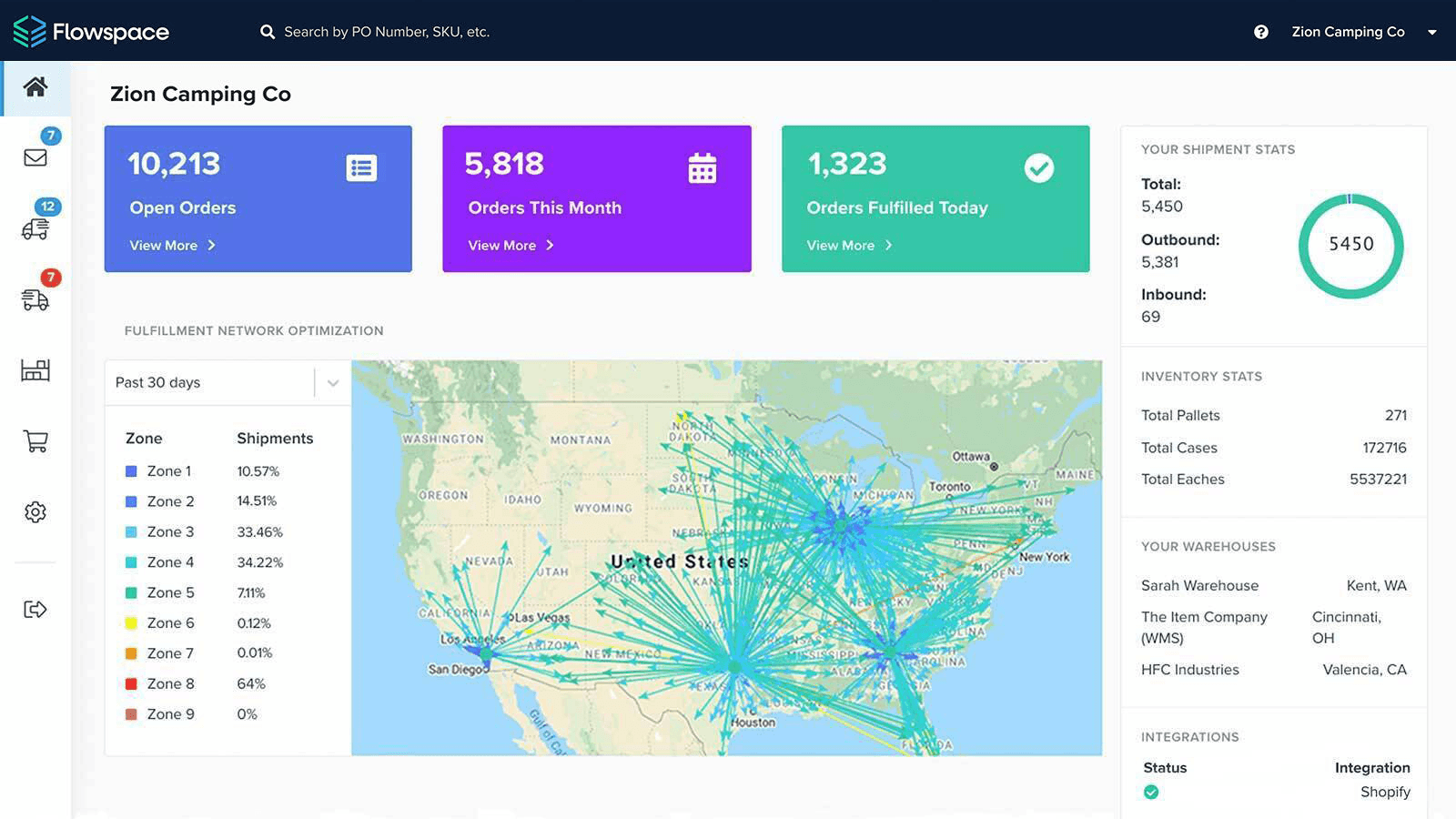
Flowspace holds 4.6 stars across 50+ reviews. The differentiating positioning is on-demand warehouse network access: rather than locking merchants into specific Flowspace-owned facilities, Flowspace operates a network of partner warehouses across the US that merchants access flexibly — add a new warehouse for a holiday push, expand into a new region without long-term contracts, or scale capacity up and down as volume changes.
The flexibility advantage matters specifically for seasonal or DTC brands with volatile fulfillment volume. A Halloween-focused brand doing 80% of annual revenue in October needs 5x normal warehouse capacity for two months without paying for it the other ten. Flowspace's on-demand model handles this elasticity better than fixed 3PL contracts.
Core features: on-demand warehouse network across US; flexible capacity scaling without long-term commitments; Shopify integration with order routing; negotiated carrier rates; multi-warehouse inventory distribution; B2B and DTC fulfillment; analytics dashboard with cost transparency; faster onboarding than traditional 3PLs (typically 2-3 weeks).
Where it falls short: smaller installed base than ShipBob or ShipMonk — less historical track record at scale across complex multi-channel operations. Per-order pricing can run higher than larger 3PLs that achieve scale economies on their own facilities. International fulfillment less developed than ShipBob's footprint.
Pricing: Free to install. Custom pricing based on volume and warehouse mix.
The Honest Trade-Off: Outsourced 3PL vs Self-Fulfillment
Worth saying explicitly: 3PL outsourcing isn't always the right answer. For stores under 200-300 orders/month, self-fulfillment from home, garage, or small studio space is typically cheaper than 3PL costs after accounting for storage, per-order fees, and carrier markups. The break-even point shifts up if you have free or cheap labor (founder-fulfilled, family-fulfilled) and shifts down if you're paying retail labor rates and warehouse leases.
The signal that 3PL is worth the switch: fulfillment time is consuming founder hours that should go to growth activities, OR shipping costs from your single location are losing customers to faster competitors with distributed inventory, OR storage capacity at home/studio is hitting limits. The signal that 3PL is premature: you can still pack orders in batch on weekends without it taking too much time. Test the math before committing.
Layer 2: Marketplace Fulfillment Integrations
This layer routes Shopify orders through existing marketplace fulfillment infrastructure rather than dedicated 3PL operations. Different mechanics from full-service 3PLs: the marketplace already has your inventory (in Amazon FBA, for example), and the integration apps coordinate routing Shopify orders through that infrastructure. The right pick for stores already operating heavily on Amazon or other marketplaces, or for stores wanting consolidated multi-channel order management. Three apps lead this layer.
4. Amazon MCF by WebBee
Best for: Shopify stores already selling on Amazon and using FBA — the cheapest fulfillment option that uses Amazon's existing inventory and warehouse network to ship Shopify orders without any new warehousing relationship.
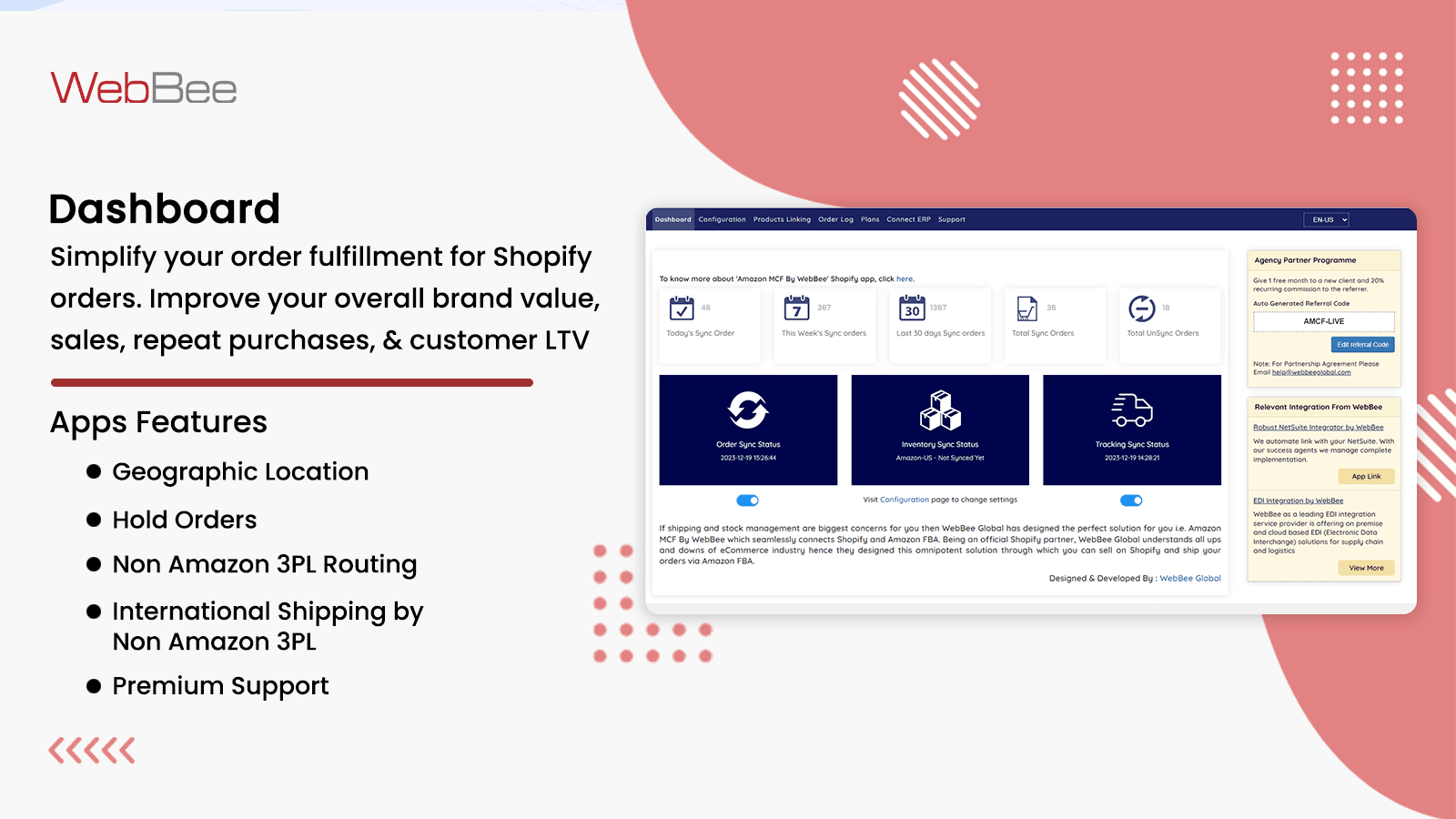
Amazon MCF by WebBee holds 4.8 stars across 300+ reviews and is one of the highest-rated fulfillment apps on the Shopify App Store. The positioning is straightforward: if inventory is already in Amazon FBA, Amazon MCF (Multi-Channel Fulfillment) lets that same inventory ship Shopify orders without merchant-side warehousing relationships. The WebBee integration handles order routing, inventory sync, and tracking notifications between Shopify and Amazon's MCF program.
The economics are typically the cheapest in this list. Amazon's FBA per-order fees ($3-7 depending on size and weight) include picking, packing, shipping, and customer service for non-Amazon orders — no additional 3PL contracts or storage commitments. For stores doing meaningful Amazon volume, MCF is essentially free incremental capacity (the warehouse cost is already paid for FBA), making it the lowest-marginal-cost fulfillment option available.
Core features: order routing from Shopify to Amazon MCF for fulfillment; inventory sync between Shopify and FBA; real-time shipment tracking from Amazon's network; non-Amazon order routing through external warehouses (ShipStation, etc.); Amazon Buy With Prime integration for stores opting in; buffer inventory management to prevent stockouts; multi-geography fulfillment across Amazon's global FBA network.
Where it falls short: Amazon MCF doesn't ship in unbranded packaging by default — stores with strong brand identity around unboxing experience need to upgrade to Buy With Prime or use a different 3PL. Amazon MCF delivery times are slower than FBA Prime by default (3-5 days standard, with 2-day available at higher cost). Stores not already on Amazon FBA can't use MCF — there's no path to fulfillment-only without becoming an Amazon seller. Some merchants flag occasional inventory routing issues when FBA stock runs low and MCF takes priority over Prime listings.
Pricing: Free to install. Fulfillment costs are Amazon FBA fees passed through.
5. Easyship
Best for: international Shopify stores wanting access to 250+ couriers globally with consolidated rate aggregation, customs documentation, and tax/duty calculations under one platform.
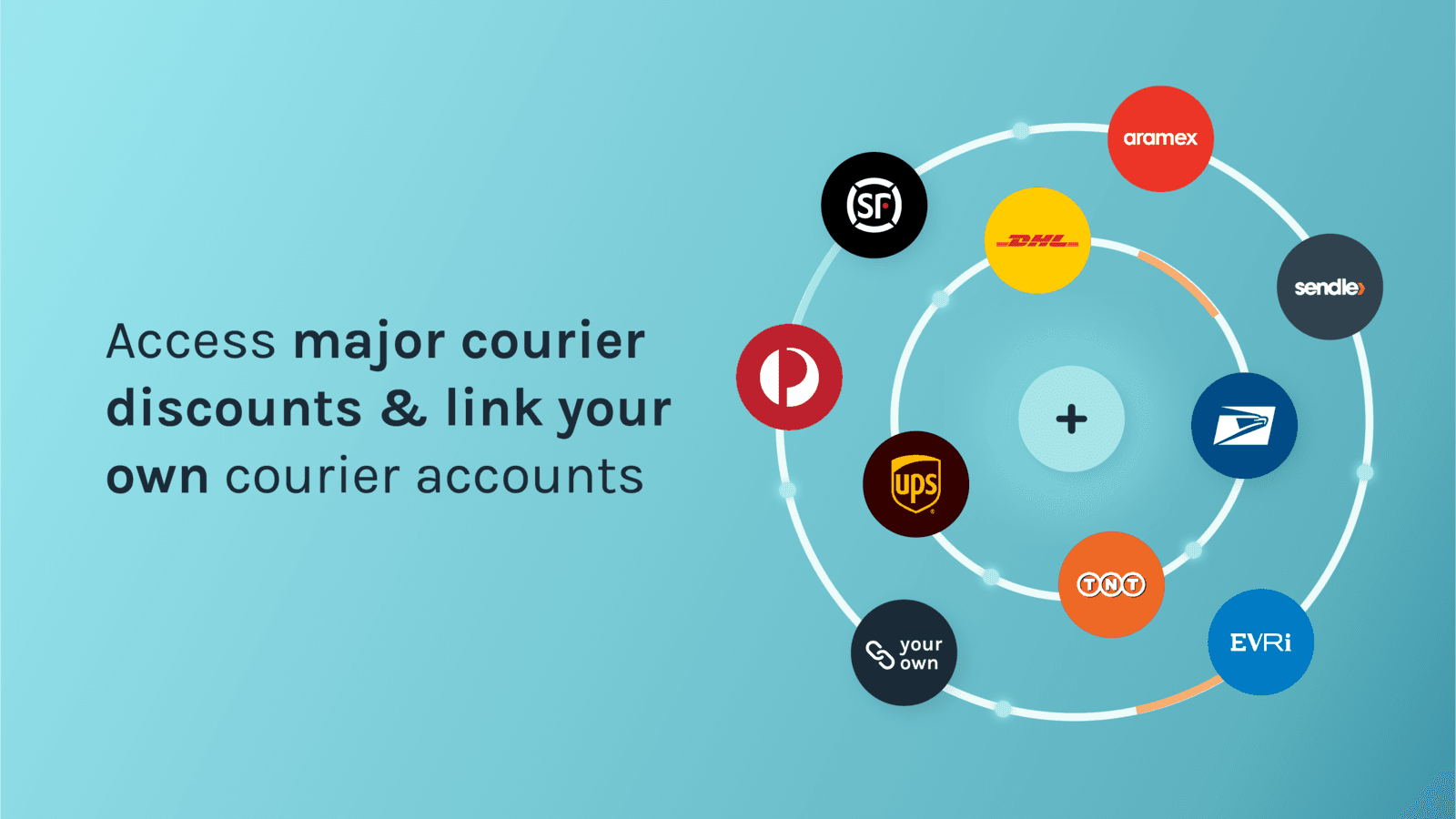
Easyship holds 4.4 stars across 500+ reviews. The positioning is international shipping rate aggregation: rather than committing to a specific 3PL or carrier, Easyship aggregates rates across 250+ couriers globally and lets merchants pick optimal rates per shipment based on destination, weight, and delivery speed. For stores shipping internationally where carrier choice varies dramatically by destination country, this rate-comparison approach often beats single-carrier or single-3PL lock-in.
The international focus matters specifically. A US-based store shipping to Australia might find DHL cheapest, to Japan might find Japan Post + a forwarder cheapest, and to Brazil might require a specialized international carrier — Easyship surfaces all options on each shipment rather than forcing one default. Tax and duty calculations at checkout are also stronger than most competitors, reducing customs surprises that drive returns and chargebacks.
Core features: 250+ courier integrations with aggregated rate shopping; international tax and duty calculations at checkout; customs documentation generation; multi-warehouse inventory tracking; Shopify integration with order routing; rate display at checkout for customer-paid shipping; brand customization on tracking pages and emails; analytics on per-shipment costs and carrier performance.
Where it falls short: not a 3PL in the traditional sense — doesn't physically warehouse inventory, only aggregates carrier rates and routes labels. Free tier limited to lower shipment volumes; pricing scales aggressively for high-volume stores. Some merchant reviews flag rate display inaccuracies between checkout estimates and actual carrier-billed rates, creating unexpected costs.
Pricing: Free plan available. Paid tiers from approximately $29/mo + per-shipment fees.
6. Veeqo (Amazon-owned)
Best for: Shopify stores wanting free shipping software with Amazon's negotiated carrier rates — Amazon acquired Veeqo in 2021 and now offers it free with discounted USPS, UPS, FedEx, and DHL rates available.
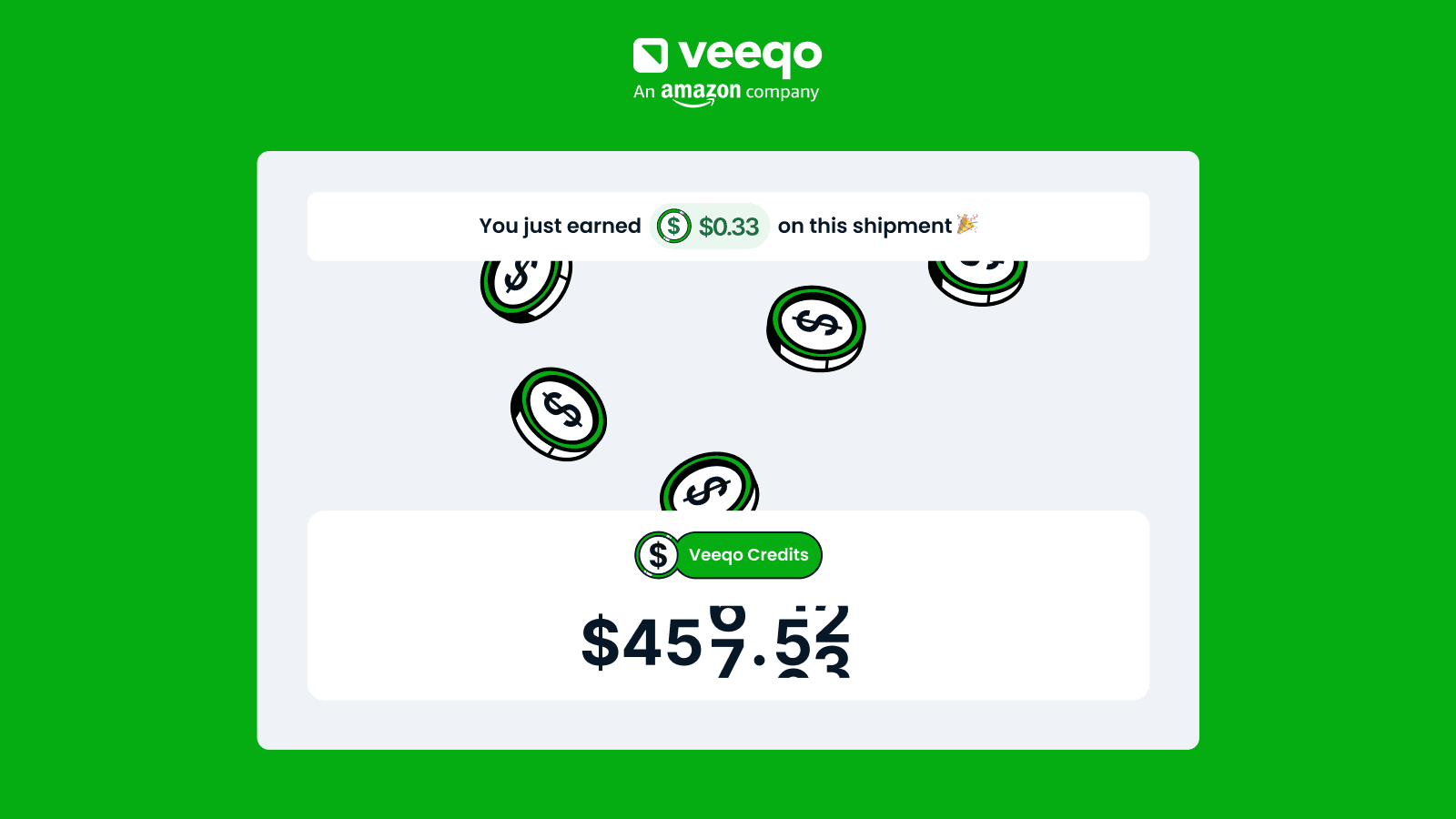
Veeqo holds 4.4 stars across 200+ reviews. The differentiating positioning is the Amazon ownership: since Amazon's acquisition in 2021, Veeqo offers its full multi-channel shipping platform free of charge to Amazon sellers and provides access to Amazon's negotiated carrier rates (typically 20-30% below standard published rates) through Veeqo's label-printing flow. For stores already on Amazon, this is a near-free shipping management platform with carrier discounts that smaller competitors can't match.
The free-software model breaks the typical SaaS pricing logic in this category. Where ShipStation, Easyship, and other shipping platforms charge $19-300+/mo for label printing and order management, Veeqo's $0/mo cost (in exchange for shipping with Amazon's rates) means most stores save money even if they only use a fraction of the features.
Core features: free multi-channel order management across Shopify, Amazon, eBay, Walmart, BigCommerce, Etsy; Amazon's negotiated carrier rates for USPS, UPS, FedEx, DHL; label printing from one dashboard; inventory tracking across channels; pick/pack workflows for warehouse teams; Amazon Buy with Prime support; rate-shopping at label generation; analytics on order and shipping performance.
Where it falls short: requires using Amazon's carrier rates to access the free pricing — stores wanting to use their own negotiated carrier accounts find limited support for those workflows. UI feels less polished than competitors at premium tiers despite being free. Customer support response times reflect the free-product economics. Some merchant reviews flag occasional sync issues during high-volume periods.
Pricing: Free with Amazon's discounted carrier rates.
Layer 3: Regional Carrier and Pickup-Point Integrations
This layer connects Shopify to specific regional shipping networks for label printing and pickup-point selection without warehousing. Different mechanics from 3PLs or marketplace fulfillment: the customer picks a pickup location at checkout (a Packeta point, a parcel locker, a partnered shop), the merchant exports labels and ships to that pickup location, and the carrier handles last-mile pickup. Critical for European markets where pickup-point networks dominate consumer shipping preferences. Two apps lead this layer.
7. Packeta (Zasilkovna) Connect
Best for: Shopify stores serving Czech Republic, Slovakia, Hungary, Poland, and broader Central/Eastern Europe — Packeta operates 9,900+ pickup points across the region with deep customer adoption.
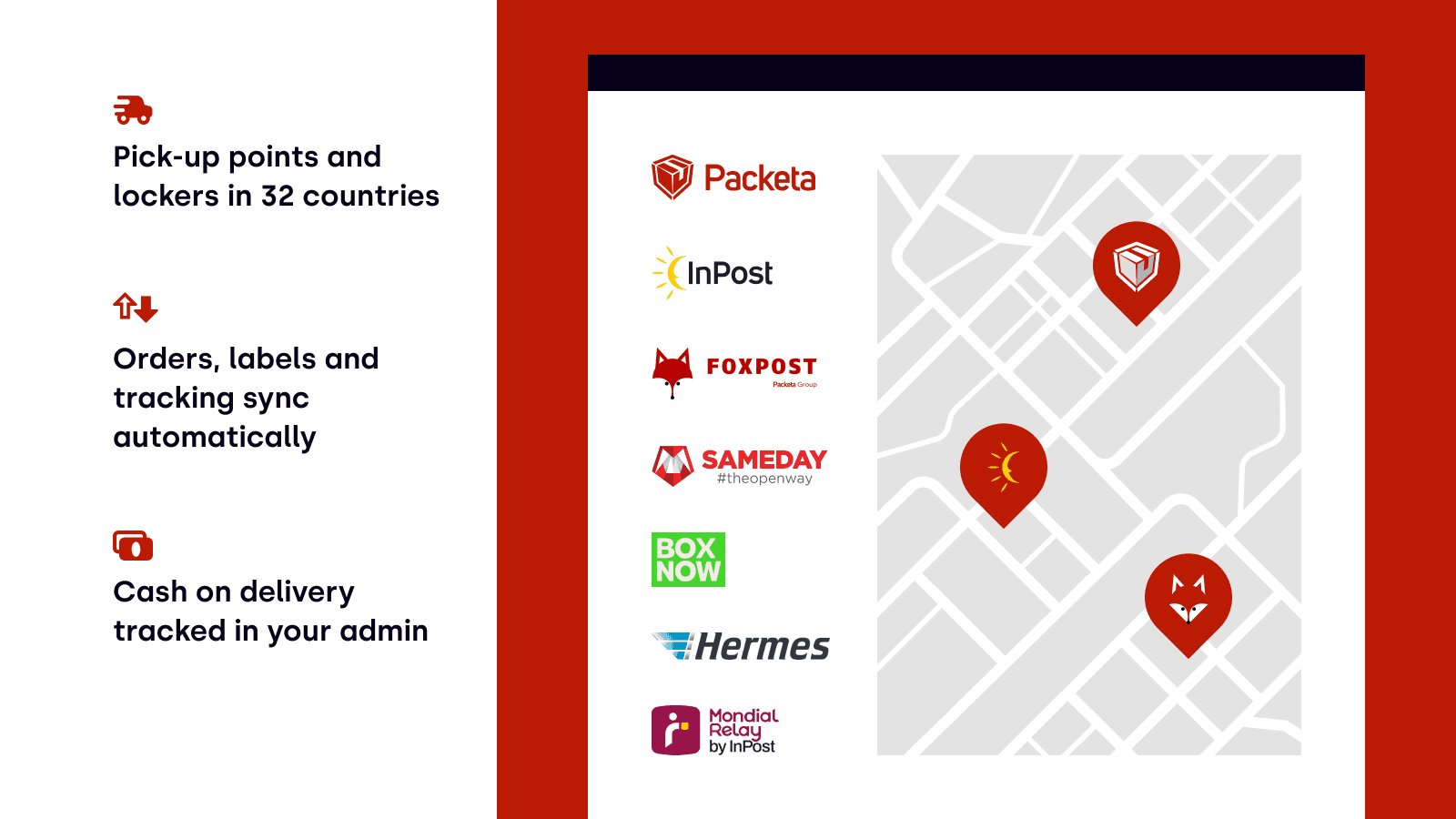
Packeta (Zasilkovna in Czech) holds 4.7 stars across 150+ reviews. The positioning is regional pickup-point dominance: Packeta operates 9,900+ pickup points across the Czech Republic, Slovakia, Hungary, Poland, Romania, and broader Central/Eastern European markets, with customer adoption deeply embedded in regional shipping behavior. For Shopify stores selling into these markets, Packeta integration isn't optional — customers expect it as the default delivery option, often above home delivery in stated preferences.
The customer-preference angle matters specifically. Czech and Slovak ecommerce consumers preferentially choose pickup points over home delivery for reasons combining cost (pickup-point shipping is typically cheaper than home delivery), convenience (pickup points are open evenings and weekends when home delivery isn't), and security (no failed delivery attempts or porch theft). Stores not offering pickup points lose conversion to competitors who do.
Core features: 9,900+ Packeta pickup points across Central/Eastern EU; pickup-point selector embedded in checkout; order export to Packeta with single-click batch processing; payment status tracking in Shopify admin; tracking number addition per order with real-time updates; checkout extension for native pickup-point block; multi-language support across the region; integration with Shopify Online Store 2.0 themes.
Where it falls short: regional focus means the app is irrelevant for stores outside Central/Eastern Europe. Other regional carriers (DPD, GLS, Posta) require separate apps in markets where Packeta isn't dominant. Some merchant reviews flag occasional sync delays between Packeta's tracking system and Shopify's order admin during high-volume periods.
Pricing: Free plan available. Carrier rates passed through to merchants and customers.
8. Sendcloud
Best for: Shopify stores serving the broader EU market wanting unified multi-carrier integration — Sendcloud aggregates 100+ EU carriers under one platform with checkout integration, label printing, and tracking.
Sendcloud holds 4.0 stars across 200+ reviews. The positioning is broader EU multi-carrier aggregation: rather than focusing on a single regional carrier like Packeta, Sendcloud connects Shopify to 100+ EU carriers (DHL, DPD, UPS, FedEx, PostNL, La Poste, GLS, Royal Mail, Bring, and many regional carriers) with unified checkout integration, label printing, and tracking. For pan-European Shopify stores serving customers across multiple EU countries, this consolidation handles the carrier diversity that no single regional integration can.
The pan-European scope matters specifically for cross-border DTC brands. A French apparel brand selling into Germany, Italy, Spain, and the Netherlands needs different optimal carriers per destination — Sendcloud surfaces these per-shipment without merchants needing direct carrier relationships in each market.
Core features: 100+ EU carrier integrations under one platform; pickup-point selector at checkout for participating carriers; label printing with negotiated rates; multi-warehouse routing for stores with EU fulfillment; tracking page with branding customization; returns portal with carrier integration; tax and customs documentation for cross-border shipments; integration with Shopify Online Store 2.0 themes.
Where it falls short: 4.0-star rating reflects merchant complaints about pricing transparency, contract lock-ins, and customer support response times — Sendcloud has been criticized for aggressive pricing tier increases as merchants scale. Setup complexity is real for stores with multiple carriers and warehouses. Less embedded in specific regional markets than Packeta is in Central/Eastern Europe.
Pricing: Free plan available. Paid tiers scale with shipment volume + carrier rates passed through.
Which 3PL Solution to Choose
For established US Shopify stores at 500+ orders/month wanting the largest US 3PL footprint: ShipBob. 4.4 stars, 50+ fulfillment centers, multi-warehouse 2-day shipping economics.
For tech-enabled 3PL with dedicated support and omnichannel fulfillment: ShipMonk. 4.5 stars, integrated software platform, Happiness Engineer per merchant.
For seasonal or volatile-volume DTC brands: Flowspace. 4.6 stars, on-demand warehouse network, flexible capacity scaling.
For Shopify stores already on Amazon FBA wanting cheapest incremental fulfillment: Amazon MCF by WebBee. 4.8 stars, uses existing Amazon inventory, lowest marginal cost.
For international shipping with rate aggregation across 250+ couriers: Easyship. 4.4 stars, customs documentation, tax/duty calculations.
For free shipping software with Amazon's negotiated carrier rates: Veeqo (Amazon-owned). 4.4 stars, free across all channels, 20-30% carrier discounts.
For Shopify stores serving Czech Republic and Central/Eastern Europe: Packeta (Zasilkovna) Connect. 4.7 stars, 9,900+ pickup points, deeply embedded customer adoption.
For broader EU multi-carrier integration: Sendcloud. 4.0 stars, 100+ EU carriers, pan-European cross-border shipping.
For most Shopify stores in this category, the honest framing is: identify the job first. Do you need someone to physically warehouse and ship inventory (full-service 3PL like ShipBob, ShipMonk, Flowspace)? Are you already on Amazon and want to use that infrastructure (Amazon MCF, Veeqo)? Or do you need regional carrier integration without warehousing (Packeta for CEE, Sendcloud for broader EU)? The most common 3PL mistake is mixing layers — picking a regional pickup-point app when warehousing is needed, or picking a full-service 3PL when only label printing matters. Match the app to the actual operational need.
How We Ranked These Apps
This ranking is based on four criteria applied to every Shopify 3PL solution tested in 2026. First, Shopify App Store rating and verified review volume as of April 30, 2026 — the strongest signal of long-term merchant satisfaction at scale. Second, fit-to-job for which of the three layers each app actually solves (full-service 3PL, marketplace fulfillment, or regional carrier integration) rather than treating these as a single category. Third, pricing transparency and total operational cost at realistic merchant volumes — a 3PL's per-order fee is just one component of the total cost, which also includes storage, receiving, returns, and carrier markup. Fourth, geographic footprint and integration depth, since merchant satisfaction depends on whether the 3PL covers the markets the store actually serves with appropriate shipping economics.
Every pricing and feature figure in this post was verified directly from each app's live Shopify App Store listing on April 30, 2026. 3PL pricing is typically negotiated per-merchant rather than publicly listed — always request a custom quote based on your specific volume, SKU profile, and geographic mix before committing. Ratings and review counts reflect the Shopify App Store at the time of our last update.
Frequently Asked Questions
What is a Shopify 3PL app?
A Shopify 3PL (third-party logistics) app handles one of three distinct jobs. Full-service 3PL operators (ShipBob, ShipMonk, Flowspace) physically warehouse your inventory and pick/pack/ship orders on your behalf. Marketplace fulfillment integrations (Amazon MCF, Veeqo, Easyship) route Shopify orders through marketplace or aggregated carrier infrastructure. Regional carrier integrations (Packeta, Sendcloud) connect Shopify to specific regional shipping networks for label printing and pickup-point selection without warehousing.
What is the best Shopify 3PL solution in 2026?
Depends on the layer. For full-service 3PL: ShipBob (4.4 stars, largest US footprint) or ShipMonk (4.5 stars, tech-enabled). For Amazon-routed fulfillment: Amazon MCF by WebBee (4.8 stars, cheapest if already on FBA). For free Amazon-owned shipping software: Veeqo (4.4 stars). For international rate aggregation: Easyship (4.4 stars, 250+ couriers). For Central/Eastern Europe pickup points: Packeta (4.7 stars). For broader EU multi-carrier: Sendcloud (4.0 stars). Pick the layer first.
How much does a Shopify 3PL cost?
Full-service 3PLs typically charge $4-8 per order all-in for stores in the 500-5,000 orders/month range, dropping below $4 at higher volumes through negotiated carrier rates. Costs include per-order fulfillment fees, storage fees per pallet or cubic foot, receiving fees on inbound shipments, and returns processing. Marketplace fulfillment apps are typically free to install with fulfillment costs in marketplace pricing (Amazon FBA fees of $3-7/order). Regional carrier apps are typically free or under $20/mo with shipping costs passed through to customers.
When does outsourcing to a 3PL make sense?
The break-even point is typically 200-300 orders/month. Below that volume, self-fulfillment from home or small studio space is usually cheaper after accounting for storage, per-order fees, and carrier markups — 3PL costs aren't justified by saved time when founder labor is free or cheap. Above 300 orders/month, 3PL economics typically beat self-fulfillment because labor costs, real estate costs, and operational overhead start exceeding 3PL fees. Test the math on your specific volume before committing.
Can I use Amazon FBA to fulfill Shopify orders?
Yes, through Amazon Multi-Channel Fulfillment (MCF). Apps like Amazon MCF by WebBee route Shopify orders through Amazon's existing FBA infrastructure — same inventory, same warehouses, just shipped to Shopify customers instead of Amazon customers. The economics are typically the cheapest fulfillment option for stores already on Amazon, since the warehouse cost is already paid for FBA. The catch: Amazon MCF doesn't ship in unbranded packaging by default, and Buy With Prime is a separate program with separate economics.
What is the difference between a 3PL and a shipping rate app?
Completely different. A 3PL physically warehouses your inventory and ships orders for you (ShipBob, ShipMonk, Flowspace). A shipping rate app connects to your inventory at your own warehouse and provides rate-shopping, label printing, and tracking for orders you ship yourself (Sendcloud, Easyship, Veeqo — in their software-only modes). Marketplace fulfillment integrations like Amazon MCF blur the line because they use Amazon's warehouses without you owning a 3PL relationship directly.
Do 3PLs ship internationally?
Most do, but coverage varies. ShipBob has international fulfillment centers in Canada, UK, Australia, and selected EU markets in addition to its US footprint. ShipMonk and Flowspace have growing international networks. Amazon MCF ships internationally where Amazon FBA operates. For pan-European fulfillment specifically, regional carrier integrations (Packeta for Central/Eastern Europe, Sendcloud for broader EU) cover the carrier-level integration but don't include warehousing. International 3PL economics differ significantly from domestic — verify per-warehouse pricing and SLAs before committing.
What is Amazon Buy With Prime?
Amazon Buy With Prime is a program where Amazon Prime members can use their Prime benefits (fast free shipping, free returns) when buying from non-Amazon Shopify stores that opt in. The program uses Amazon's MCF infrastructure for fulfillment, displays a Prime badge at checkout, and processes returns through Amazon's network. Economics are different from standard MCF — stores pay slightly higher fees in exchange for the Prime branding and customer trust uplift. For stores wanting unbranded packaging and conversion lift from Prime members, Buy With Prime is the right path through MCF infrastructure.
Which 3PL works best for Shopify Plus?
Most established 3PLs work cleanly with Shopify Plus, including ShipBob, ShipMonk, and Flowspace. Plus merchants typically negotiate enterprise terms with custom pricing, dedicated account management, and integration with Shopify Plus's B2B features for retail and wholesale fulfillment. Some 3PLs offer Plus-specific tiers with additional integrations into Shopify's enterprise ecosystem (Shopify Flow, advanced analytics). For Plus merchants specifically, evaluate based on geographic footprint, B2B fulfillment capabilities, and account management quality rather than just per-order pricing.
Will a 3PL slow down my Shopify store?
3PL apps load order data asynchronously through the Shopify integration and don't impact storefront performance — the only customer-facing performance effect is checkout shipping rate display, which all major 3PLs handle quickly through their rate APIs. The actual fulfillment performance depends on the 3PL's operational capacity and SLA terms, not the app's performance. Always test storefront and checkout speed before and after install to confirm no integration-level performance degradation.
Think Your 3PL Belongs on This List?
We update these lists as new tools launch and existing ones improve. If you operate a 3PL with a Shopify integration and want consideration for inclusion, submit your app here — tell us what your 3PL does, who it is for, your geographic footprint, and include a link to your Shopify App Store listing. We review every submission.